
Did you know that some house plants could be toxic to your pet? Oh yes. Not all indoor plants are safe to keep around your cats and dogs. Fortunately, many plants are non-toxic. But there are a few to look out for since they can make your pet sick.
Read on to find out which houseplants are safe for your pet and what to do if your cat (or dog) happens to have eaten from a poisonous plant.


Which Indoor Plants are Toxic? And Which are Not?
A lot of popular houseplants are considered unsafe for pets. Bummer. Before you purchase a plant make sure to find out if it is toxic.
In this article, I share some of my favorite pet-friendly house plants. For all other plants not mentioned in this article, you can visit the ASPCA site. It will tell you if the plant is poisonous and the clinical signs to watch out for. Like vomiting and excessive drooling.


Toxic Indoor Plants
Cats chew or eat grass to help with their digestion. When indoor cats don’t have access to fresh grass, they could decide to go for your plants.
That amazing fiddle leaf fig plant? On the toxic list. The popular Monstera Deliciosa is not safe for pets and the mini monstera? Also toxic. The Rubber plant, ZZ plant, Alocasia Polly, and those Snake plants? Yep. Toxic.
Even a plant with so many benefits like the Aloe plant could be unsafe for your cat.
And Lillies? Fuhgeddaboutit. Highly toxic.
The list goes on, so check your plant species on the ASPCA site for further details.
Non Toxic Indoor Plants
Luckily there are plenty of indoor plants that are safe to keep around your cat or other pets.
Here’s a list of non-toxic house plants, read on, or click on the names to see pictures and get more info on each of them below.
- African Violets – Saintpaulia
- Baby Rubber Plant – Peperomia Obtusifolia
- Boston Fern – Nephrolepis exaltata
- Moth Orchids – Phalaenopsis
- Nerve Plants – Fittonia
- Pilea Peperomioides
- Ponytail palm – Beaucarnea recurvata
- Prayer plants – The Maranta, Calathea, and Ctenanthe
- Spider plants – Chlorophytum comosum
- String of hearts – Ceropegia woodii
- Stromanthe sanguinea “Triostar”
- Venus flytrap – Dionaea muscipula
- And many succulents
This is by all means not a complete list of all the pet-friendly house plants. If your plant is not on this list, again, enter the name of your plant in the ASPCA database to be sure.


African Violets
African violets are one of the most popular flowering houseplants with many different varieties to choose from. These plants are small and grow well on a sunny kitchen windowsill.


Baby Rubber Plant
The Peperomia obtusifolia, or baby rubber plant is a popular, evergreen succulent type plant. It can handle some neglect, a bit of low light, and doesn’t really need very high humidity. And it is safe to keep around your pets!


Boston Fern
Not all ferns are non-toxic, but the lush, majestic Boston Fern is. Perfect for a bright bathroom, since this fern loves high humidity.


Moth Orchids
Bring some pet-safe color into your home with a pretty moth orchid. These plants do well in our centrally heated homes and grow beautiful flowers that can last for a long time.


Nerve Plants
Looking for a small plant with stunning leaf patterns? Get yourself a nerve plant. These fittonia plants come in different pretty color combinations and are perfect windowsill plants that won’t harm your pet.


Pilea Peperomioides
If you like plant propagation, the Pilea peperomioides, or Chinese money plant is a great choice! Mature plants grow many little pilea plant babies that are super easy to propagate.


Prayer Plants
If you want some tropical vibes, go for one of the Prayer plants. The Maranta, Calathea, and Ctenanthe plants open and close their leaves as if in prayer. Hence the name. They have wonderful patterned foliage and are not poisonous!


Stromanthe Sanguinea Triostar
The Stromanthe sanguinea Triostar is a gorgeous houseplant with pretty pink, green, and white foliage. Make sure to keep the humidity high around this plant otherwise, its leaves will quickly turn crisp with dry brown tips.


Spider Plant
The Spider Plant is a safe indoor plant. Its long, grass-like leaves make it a favorite of many plant-munching cats. And the baby spider plants cascading down from long shoots are very easy to propagate so you can make more plants!


Ponytail Palm
The Ponytail Palm can handle some low light and brings an interesting sculptural element to your home with its round trunk and long whimsical leaves. As with the spider plant, many cats are attracted to the grass-like leaves.


String of Hearts
Another hanging plant you can keep around your pets is the String of Hearts. This plant grows delicate heart-shaped leaves on long,

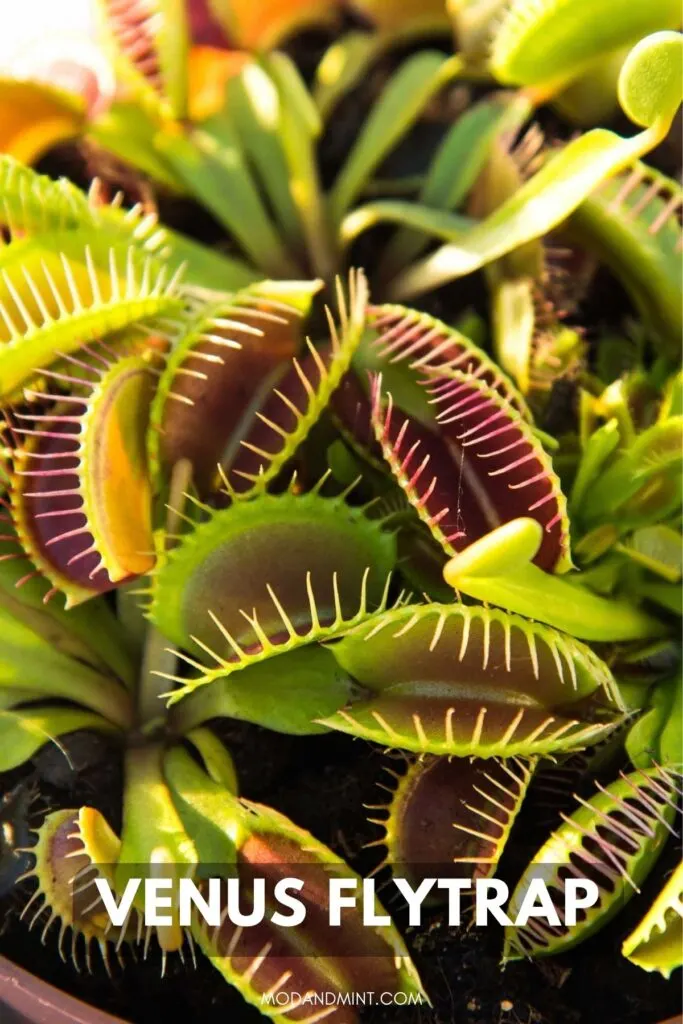
Venus Flytrap
The Venus flytrap is the most recognized and popular carnivorous plant. Their sweet-smelling nectar lures flies and other small insects, then it traps them in its leaves. Risky for small insects, but safe for cats and dogs.


Pet Safe Succulents
If you are more of a succulent type of person, go for a Fishbone cactus, Holiday cactus, air plants, or a pretty Echeveria. If you like them spiky get an easy-going Haworthia. You can find so many different shapes and sizes, you can start a pet-safe succulent collection!


Toxic Plants: Is There Need to Worry?
Something important to keep in mind when thinking about toxic houseplants: PET POISONINGS DUE TO PLANTS ARE VERY RARE.
Pets eating toxic plants is at number 6 in the ASPCA Top 10 Pet Toxins list of 2023.
More pets are getting sick from prescription and over-the-counter medications, and food like protein bars, onions, and grapes than they get sick from eating a plant.
Why is it that houseplants get such a bad rep here?
Did you know avocados are also toxic to cats? I never heard anyone about the dangers of having avocados in the house. And there are more reported cases of cats having toxic reactions after eating chocolate than after munching on plants.
That being said, we want to be safe. Obviously.


How to Keep Your Cat Away from your Plants?
When I bring in plants, toxic or non-toxic, I bring them in slowly, test-driving them first. See if our cat shows any interest. From there I decide to either not bring the plant in, keep it, out of reach, or just keep it because it is safe for both plant and cat.
There are a few things you can do to keep your pet away from your plants.
- The most obvious one is putting the plants out of reach. A high plant shelf or plant stand. Another great option is to hang the plant high enough so your cat can’t get to it.
- Grow some cat grass indoors for your cat. It is safe, but be aware that it can also cause your cat to vomit. This helps to get hairballs out. Exactly the purpose of eating plants in the first place.
You can purchase cat grass seeds to grow your own or buy pre-grown grass. - Pets, especially cats, are sensitive to smells and they dislike strong citrus-type scents. If you have some lemon or orange oil, add a few drops to a spray bottle with water. Shake and spray. Your plant. Don’t spray your cat. The essential oils will not harm your plants but will help in keeping your pet away from your houseplants.
What if Your Pet has Eaten from a Toxic Plant?
Don’t panic, but do act quickly. Because you have researched your plant before you brought it into your home, you can reassure yourself that while it might cause your cat or dog to be uncomfortable or sick, it won’t be the end of your pet.
Stay calm.
Maybe you caught your pet while it was munching on your plant, or you found the damaged plant and your pet acting differently than usual. Some signs of possible plant poisoning are vomiting, diarrhea, seizures, irregular heartbeat, or a loss of appetite.
If the worst-case scenario happens and your pet has eaten a lot from a toxic plant, contact your veterinarian or local Animal Poison Control Center asap.

