
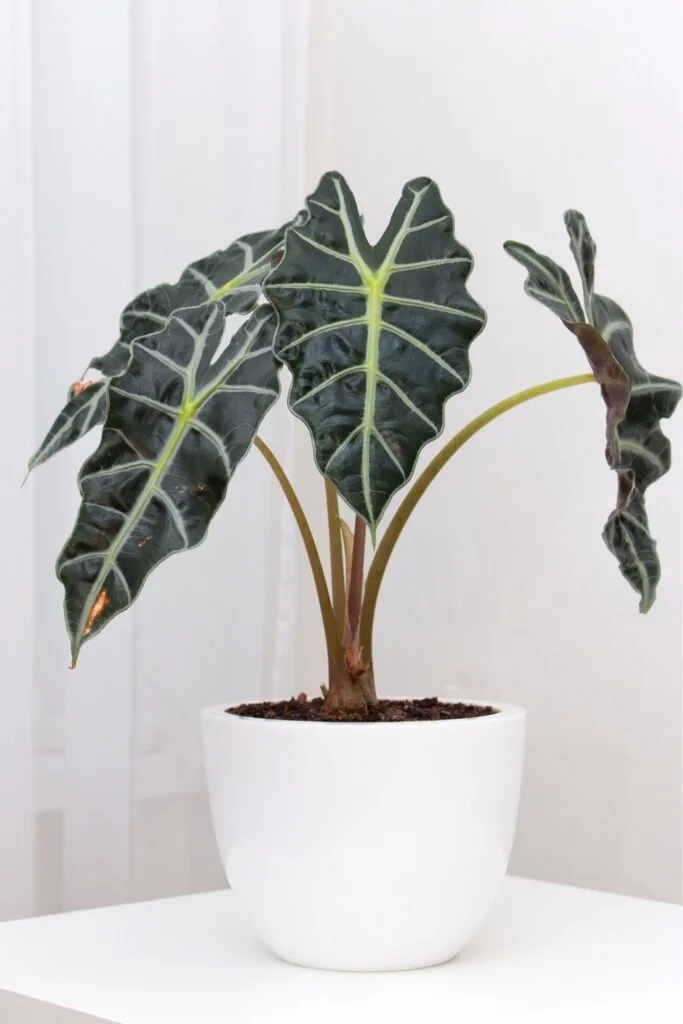
The Alocasia Polly (pronunciation alo-CAY-see-a) grows large, wavy-edged, arrowhead-shaped leaves that are real eyecatchers. It likes bright, filtered light, moist soil, high humidity, and warm temperatures.
You can grow the Alocasia Polly as an indoor plant, but it has some specific needs and is known to be a little difficult and fussy. Alocasias are a bit more care-intensive than most houseplants.


Want to buy an Alocasia Polly? Find it for sale on Amazon!
Indoor Alocasia Amazonica Polly Care Guide
The Alocasia × amazonica, is a hybrid Alocasia plant. It is unknown which Alocasia varieties were mixed to get this plant as a result.
The Alocasia x amazonica “Polly” is a more compact hybrid that can grow about 2 to 3 feet tall.
Don’t let the name fool you, Alocasia Amazonica does not grow in the rain forests of the Amazon. Never has. This hybrid was named in the 1950s after the Florida nursery it was created at, the “Amazon Nursery”.
Botanical name: Alocasia x amazonica “Polly” Common names: Alocasia Poly, the Alocasia x amazonica, African Mask Plant, or Elephant ear houseplant.
Further reading: Alocasia Baginda Dragon Scale Care Guide.

Related reading: Beginners Guide to Basic Houseplant Care.
Light


Alocasia plants are native to the tropical forests of Southeast Asia. There they grow in dappled or shaded light under the canopies of tall trees.
Indoors the best place is in a bright room a few feet away from the window. This will allow it to receive medium to bright, indirect sunlight.
Too much direct light can make the colors fade. Harsh sun can wilt and burn the leaves, turning them brown and crispy. Make sure to protect your plant from the sun with something like a sheer curtain.
Occasionally wipe the leaves with a soft cloth to remove any dust. This will help your plant so it can soak up as much light as possible.
Water


As tropical plants, Alocasia is used to grow on moist soil in a very warm and humid environment. So in your home, it will be a thirsty plant.
Water regularly to keep the soil consistently damp, but not soaking wet.
The best way to know when you should water is to stick your finger into the top inch of the soil. If it feels moist, don’t water but wait a few days and check again. If the soil feels dry, go ahead and water thoroughly until you see water coming through the drainage hole of the pot.
Alocasia does not want to sit in dry soil. If it gets too dry, your plant can go dormant in order to survive. Growth will slow down and leaves will fall off. More on this later.
If you are unsure if it is time to water or not, you can purchase a moisture meter to help you out and read up on How to water indoor plants for a quick refresher on houseplant watering.
In spring and summer, when your Alocasia Polly is actively growing, and the temperatures are higher with plenty of light, the plant will need to be watered quite often.
In winter when the days are shorter and less bright, your Alocasia needs much less water. Still make sure to not let the soil dry out completely.
Fertilizer
Use a diluted liquid fertilizer to feed your Alocasia Polly bi-weekly in spring and summer. Don’t fertilize in winter when the plant goes into dormancy.
Also never fertilize if your Alocasia Polly is having problems. Fertilizer is not plant medicine. It will only stress out an already stressed-out plant. Analyze, adjust, and when your plant recovers, continue your normal care routine.

Humidity
Alocasia plants are used to a warm and humid environment. At home, you will need to raise the humidity around your plant for it to grow well indoors.
You can occasionally mist your plant. But be aware that this only ups the humidity around your plant for a very short time.
Put your plant on a tray with water and pebbles so that the bottom of the pot doesn’t touch the water. The water will evaporate and up the humidity around your plant.
If you have a bathroom or kitchen with a bright window, your Alocasia Polly could grow very happy there. The steam from the shower or from cooking will provide your plant with the humidity it loves.
Another option is to get a small humidifier to put near your plant.
Dormancy
In winter your Alocasia Polly will go through a dormant period. As temperatures drop and days shorten, it will stop growing. Leaves may fade or yellow and fall off.
During this time it is important to keep the Polly in a warm spot in your home and reduce the watering but do not let the soil completely dry out.
Will your Alocasia grow back? Yes, even if your plant has lost all its leaves in winter, it can still grow back and perk up in the spring.
Soil and Repotting
Repot your Alocasia Polly when roots have filled the pot so much that it has become root bound, you usually see roots growing from the drainage holes on the bottom.
Every two to three years, the soil will have lost all of its nutrients and will need to be replaced with fresh potting soil. Repot even if your plant still has room to grow.
Use a pot one size bigger than the original. In a pot that is too large, the soil stays wet for too long for the roots to absorb.
Repotting is best done in spring. It is the beginning of the growing season and your plant will be full of energy and in the best condition to handle being repotted.
Need a repotting refresher? Read the article with all the tips on how to repot your plants.


Yellow Leaves on Alocasia Polly Plants
Typically, leaves turn yellow because the plant has been overwatered (watered too often). Especially if it is in combination with mushy brown stems or dropping leaves.
Hold off on watering to allow the top of the soil to dry out, and adjust your watering schedule going forward.
You can safely cut yellow leaves off your Alocasia, or remove leaves with brown, dried-out parts. These leaves will not recover or get their original green color back. With the right care, new leaves will grow.
Brown Leaf Tips and Edges
If the tips of the leaves turn crispy and brown, it is usually because the humidity is too low, or underwatering. Your plant could also be getting too much direct sunlight (sunburn spots) or too much fertilizer.
Investigate and adjust. Move your plant away from the window, or if the air is too dry, mist the leaves occasionally, set up a pebble tray or humidifier.
Is Alocasia Polly Toxic to Cats and Dogs?
Unfortunately, yes, the Alocasia Polly is mildly poisonous when ingested. It can cause irritation to the mouth, tongue, and lips, vomiting, and difficulty swallowing.
If you do bring in a toxic plant, such as the Alocasia Polly, and you have a cat or dog, make sure to keep this plant out of their reach.
It is quite rare for pets to get seriously hurt from eating plants. But it is always important to research and find out what type of plant you’re bringing home.
Learn more about the risks of toxic plants for your pets and whether or not you should be concerned.
Want more big leaf plants? Check out this list full of stunning big leaf houseplants!


More Foliage Plants
Looking for more foliage houseplants? Check out these other popular plant articles.