
Phalaenopsis Orchid Care for Beginners
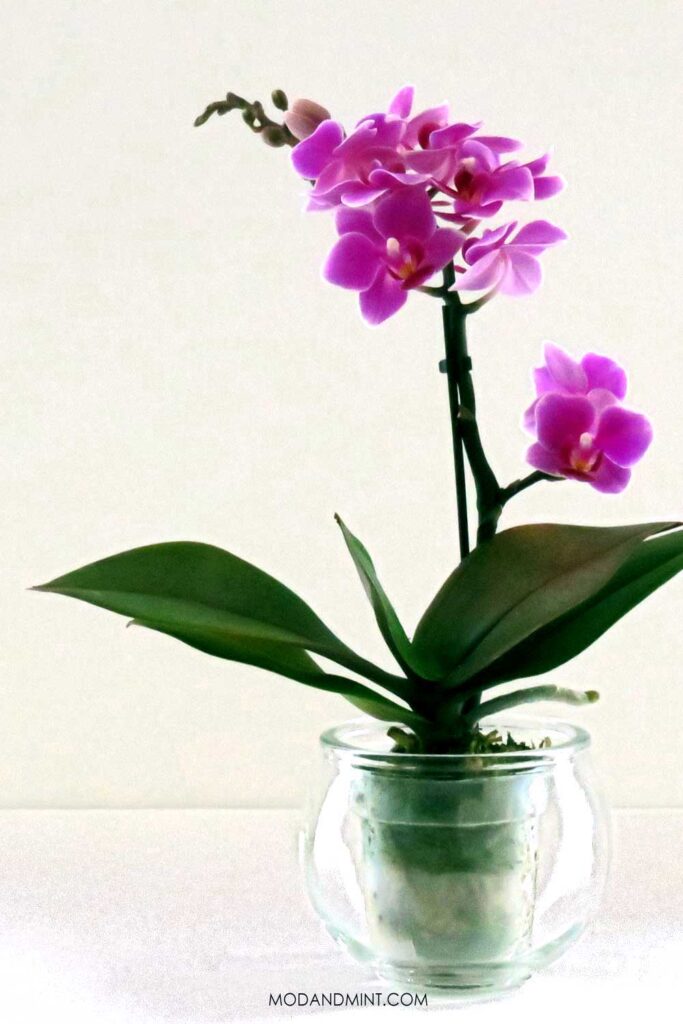
The Phalaenopsis orchid is a beautiful plant that grows delicate and elegant flowers in a variety of sizes and pretty colors. They are also called moth orchids and are the ones you see commonly available at plant shops and supermarkets.
If you provide your orchid with the right care, bright light, and enough humidity, it can grow beautiful flowers that will last for a long time.

Related reading: Common Orchid problems.
Want to buy a Phalaenopsis orchid? Find it for sale on Amazon. Watch out for listings that say “nearly natural”, “real touch” or “artificial” since that just means they’re fake. Look for “live” plants and carefully read the listing and reviews before you buy.
Phalaenopsis Orchids
There are around 30,000 (!) different types of orchids throughout the world. The Phalaenopsis belongs to the Orchidaceae family.
Moth orchids are often given as holiday gifts since they bloom during the holiday season and can grow well in our centrally heated homes.
Further reading: Basic house plant care.

Light Requirements
Orchids can grow in low-light conditions. However, the blooms will last longer if you provide bright, indirect light with maybe a bit of mild morning sunshine. The best place to put an orchid is near a south or east-facing window.
Watch out for too much direct sun light. It can dry out your plant and burn the flowers and leaves. Use a sheer curtain or move the orchid further away from the window.
During the darker days of winter, an artificial grow light can be helpful.
Watering
Don’t water your orchid too often. Let the potting medium dry out before watering.
It is easier to revive an underwatered orchid than it is to save one that has been overwatered. So when in doubt, wait.
Most orchids are sold in clear plastic pots. This helps you see whether the compost is still moist beneath the surface or if it needs watering. The potting mix looks darker when wet and lightens as it dries.
Also, inspect the roots. Green roots mean it still has enough water. When they turn a silver-grey or white color, they are ready to be watered.
Water generously, allowing the water to pour through the drainage holes from the bottom of the pot. Orchids don’t like cold water, so no ice cubes, please. Use tepid water instead.
Use a diluted liquid orchid fertilizer once a month in spring and summer with your watering.
In winter, light levels are lower and growth slows down. Stop fertilizing and reduce watering.
Humidity
Orchids like a warm and humid environment, especially when growing flowers and flower buds. Misting can help temporarily. Move your plant away from radiators or purchase a small humidifier.
Orchids like the humidity in a bright bathroom or kitchen. Very dry conditions can cause flowers to drop and overall wilting.

Do Orchids need Soil?
Most indoor orchids are air plants or epiphytes. In their natural habitat, they don’t grow in soil, but on trees or rocks where they feed on plant debris around their roots.
To mimic this, it is important to always use a well-draining potting medium specially mixed for orchids instead of standard potting soil. These mixes help with drainage and good airflow. A regular all-purpose potting mix is not airy enough and can suffocate the roots.
Repotting
Phalaenopsis orchids don’t need to be repotted often. Repot when the roots have filled the pot.
Refresh the potting medium every two to three years, even if your plant still has room to grow. The mix will have lost all of its nutrients and will need to be replaced
Cut off any rotted or dried out roots with clean sharp pruning shears.
Clear orchid pots are useful because you can see when it’s time to water. The clear plastic pots also allow the roots to absorb sunlight. Choose a pot one size bigger than the original pot.

Need a repotting refresher? Read the article with all the tips on how to repot your plants.
How to get Indoor Orchids to Bloom
Phalaenopsis orchids have some of the longest blooming cycles in the orchid genus. They can grow beautiful flowers that can last anywhere from 2 to 6 months!
To recognize a new flower spike, look for straight stems that are growing up from the base. Support it with a stake as it grows. Special orchid stakes and clips set can be useful.
Once a flower stem appears, increase feeding to every other week with a diluted liquid orchid fertilizer.
How to Encourage Orchids to Bloom Again
In nature, flower stems typically grow during the winter months, when the colder temperatures prompt flower buds to grow.
After your plant has finished flowering and all the blooms have fallen off, you can encourage it to rebloom. Potentially up to 2 or 3 times a year!
- Cut off the bare stem to make your orchid grow new flowers. Make your cut slightly above a node that is below any previous branch or bloom.
- If the existing stem is starting to turn brown or yellow, remove the entire flower spike.
- Move your plant to a cooler location. Keep it in bright, indirect light and give it time to rest.
- Water less and don’t fertilize during this time.
- Have patience and after about 1-3 months your orchid may bloom again.
You don’t have to cut off the flower spike (or stem). The flower spikes will eventually fall off naturally.

Aerial Roots
You might wonder why weird-looking roots are growing above the ground. These are called aerial or air roots and are quite normal. Many orchids form these air roots outside of their container.
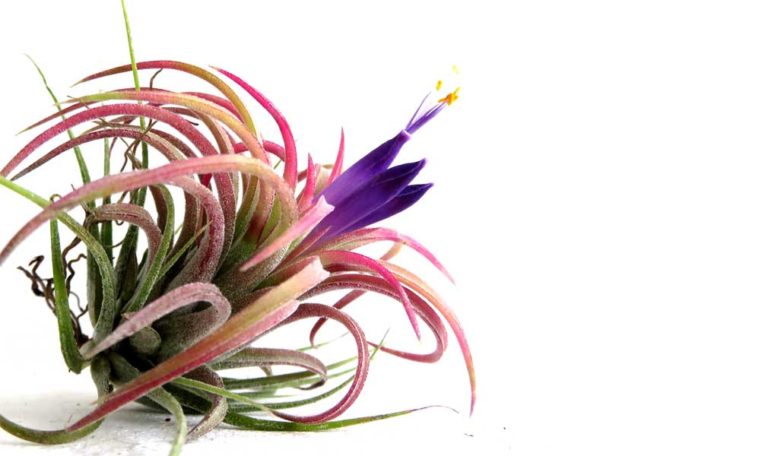
Phalaenopsis orchids are epiphytic plants, just like the Tillandsia air plants, fishbone cactus, and the Monstera deliciosa and adansonii plants.
Epiphytic plants grow aerial roots to absorb moisture and nutrients from the air. They also use them as anchors to hold onto the branches of the plants and trees they grow on.

What to Do with Air Roots on an Orchid?
You don’t have to do anything. As long as they are healthy, don’t cut them off or push them into the container. Simply let them be. No need to trim these roots.
In low humidity, air roots can turn yellow and shrivel. If they are completely dried out, you can cut away these roots.
The higher the humidity in the room, the more aerial roots the orchid will grow to absorb the moisture. In a dry environment, the aerial roots growth slows down.
Are Phalaenopsis Orchids Toxic to Cats?
Phalaenopsis orchids are considered non-toxic and safe to keep around cats and dogs.
Read more on the risks of toxic houseplants around your pets.




Hi thnks for the iñfo Susan
Thanks for information. I find it very useful 👌 👍
When repotting, the roots are looking all together and healthy.Upon carefully examining the roots I decided to simply place it in a bigger container, fresh bark and moss. Will it do well?
Hi, I just bought my first moth orchid, it’s in a 3 inch pot,I got it at the supermarket 4 days ago,the pot it is in has no drain holes, should I transfer it to a bigger pot? I read you shouldn’t use ice cubes to water it,but the tag on it says to water with 2 ice cubes. I just watered it just a little from the from the faucet because I don’t know how long ago it was watered.