
Echeveria plants are popular indoor succulents. They don’t need high humidity and their thick succulent leaves store water inside, making them very easy to care for.
These small beginner-friendly houseplants are perfect for spaces like dorm rooms, offices, and window sills. Just make sure it gets plenty of light!


Want to buy an Echeveria succulent? Discover plant growers that sell them on Amazon!
Echeveria Plants
Scientific name: Echeveria. Common names: Mexican snowball, Hens and Chicks.
Native to Mexico and South America, Echeverias like full sun, warm temperatures, low humidity, and not too much water.
Echeverias come in many different types and a variety of cultivars. They all grow leaves in stacked layers forming a tight rosette. The leaves are spoon-shaped and gray, green, purple, or blueish in color. Red when they get a lot of light. There’s a variety in texture and shape.
Exact plant care needs can vary between Echeveria species. But in general, the same instructions apply.
Need a succulent plant care refresher? Check out the Beginners Guide to Succulent Care.

Light Requirements
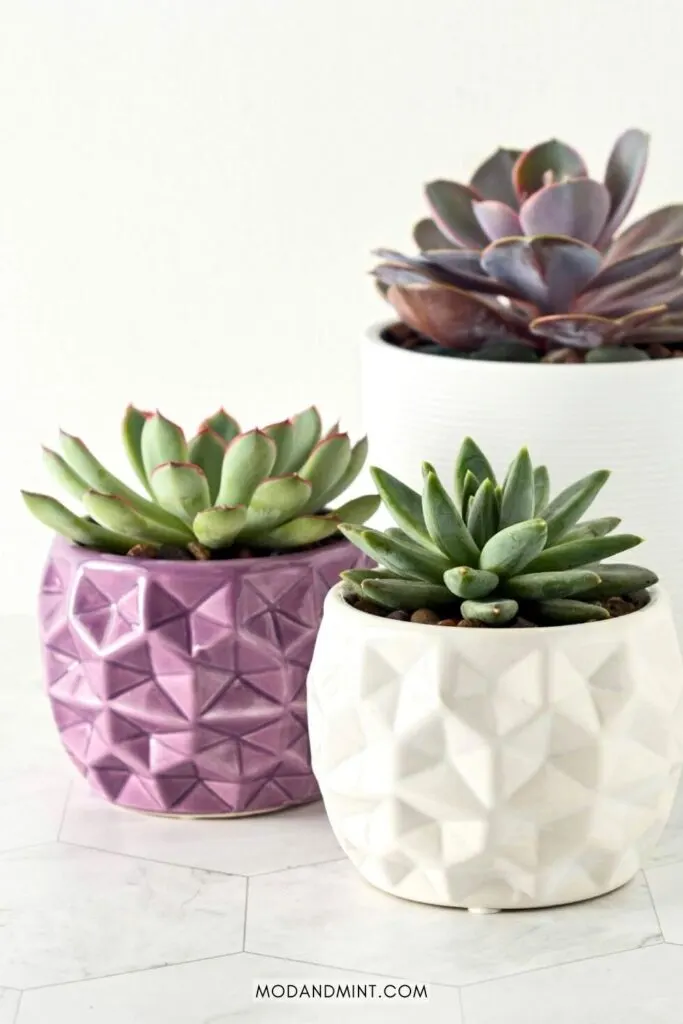
Echeverias like lots of light. Indoors give your plant as much light as possible. The best place for your succulent is in a south-facing window where it gets four to six hours of sun and bright, indirect light the rest of the day.

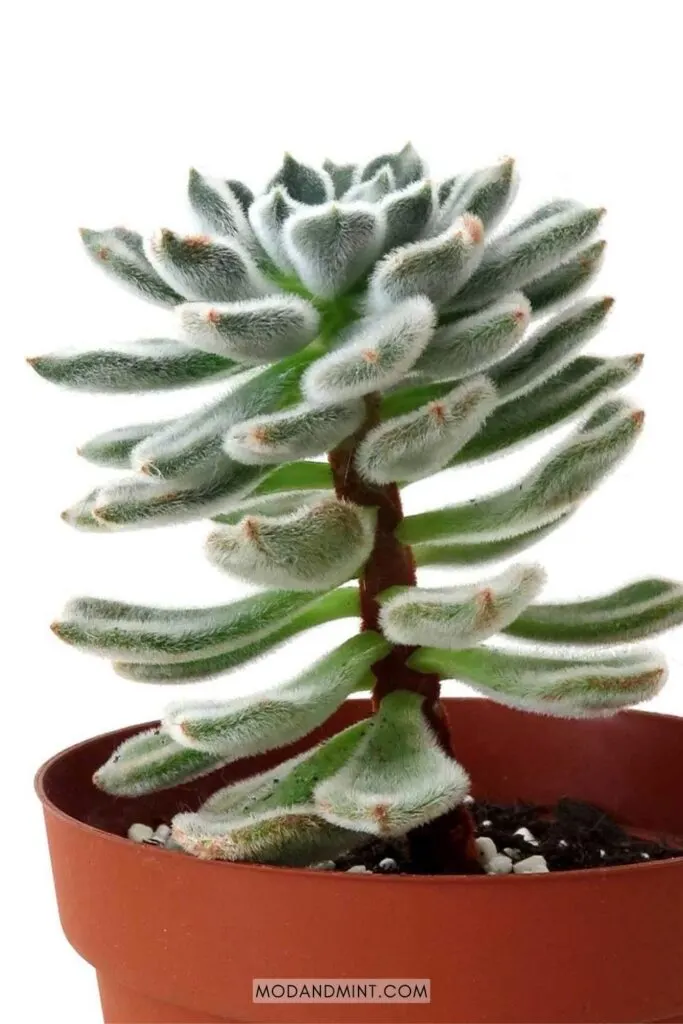
They can grow in less light but the color may fade and growth will get leggy. Leaves can curl downward to maximize leaf surface area to get more light. Eventually, leaves might start falling off.
If it is growing tall and leggy and leaning to one side, it is seeking and stretching for more light. To stop the leggy growth, move the plant closer to a window or use a plant grow lamp.


Watering
Like most succulents, Echeverias store water in their leaves. Don’t water too often, allow the soil to dry out between waterings.
If you water too often, the soil does not dry out and the roots of your plant can start to rot. Signs of overwatering are yellow leaves that feel soft and mushy, and leaves can start to droop, curl and point down.
If you underwater, you don’t water enough and the soil stays dry too long. Leaves dry out and shrivel up before they fall off. Your plant will usually recover once you give it water.
If there are healthy parts left that you can propagate, do so. Adjust your watering routine going forward.
You can buy a moisture meter to help you out with when to water. This is a simple tool that measures the soil moisture levels. And read up on How to water indoor plants for a quick refresher on houseplant watering.
Water very sparingly in winter. Water it just enough to make sure not to let the leaves shrivel up.
Echeverias don’t need much fertilizer. You can use a diluted liquid succulent fertilizer to feed it once a month in spring and summer. Don’t fertilize in winter when the plant goes dormant.

Soil and Repotting
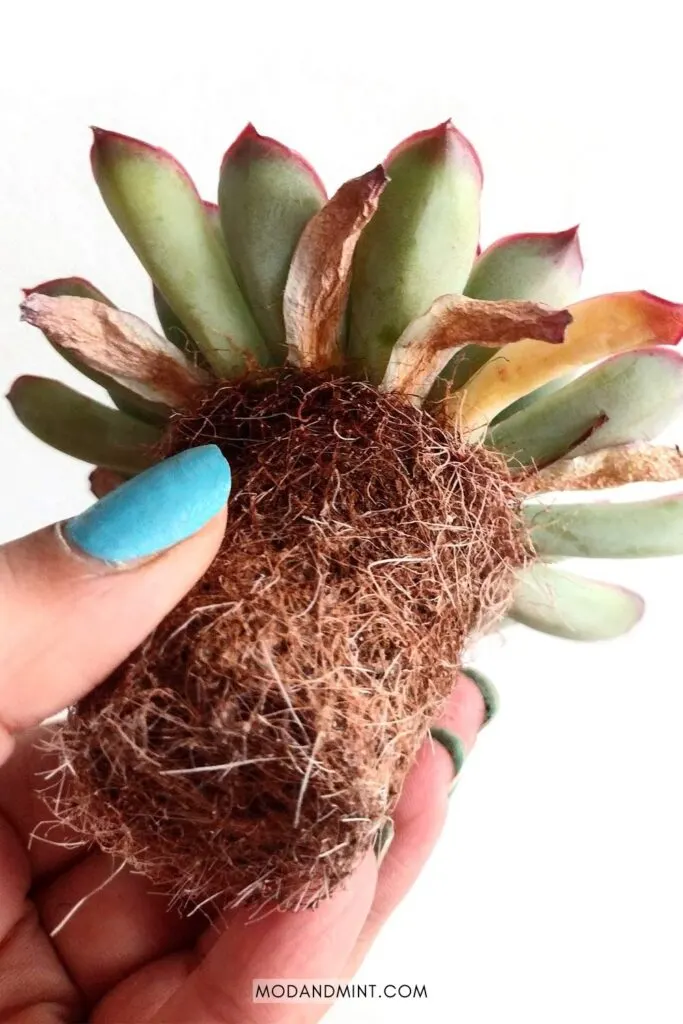
Repot when roots have filled the pot so much that it has become root-bound. Roots may grow from the drainage holes on the bottom.
Every two to three years repot in spring even if your plant still has room to grow. The soil will have lost its nutrients and needs to be replaced with fresh well-draining succulent soil. If your echeveria is blooming wait to repot until after it finished flowering.
Make sure the new pot has drainage holes on the bottom. Excess water needs a way to get out.
After repotting wait at least four to six months before using any fertilizer. The potting mix usually already has slow-release fertilizer in it.
In need of a repot reminder? Read the article with all the tips on how to repot your plants.

Flowers
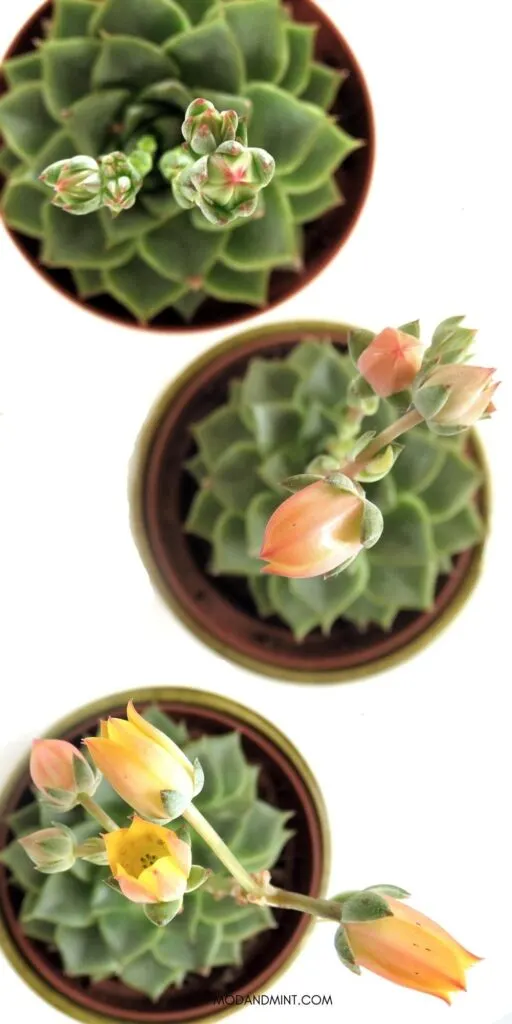
Echeveria succulents can bloom and grow flowers indoors if their conditions are right and they receive plenty of light.
The bell-shaped flowers grow on tall stalks that appear from in between the leaves. Depending on the type of echeveria, the flowers come in white, orange, pink, or red.
When the blooms fade, you can remove the stalks. Your plant might flower again during the same season.
Continue reading about how to get your indoor succulents to flower.


Echeveria Propagation
Echeveria succulents are easy to propagate and have a fairly high success rate. The easiest way is to separate the offsets, or babies, growing around your plant. If there are no offsets, leaf propagation in water or soil is a fun and easy way to grow new succulents.
Want to read more about succulent propagation? Continue on and read How to Propagate Succulents.

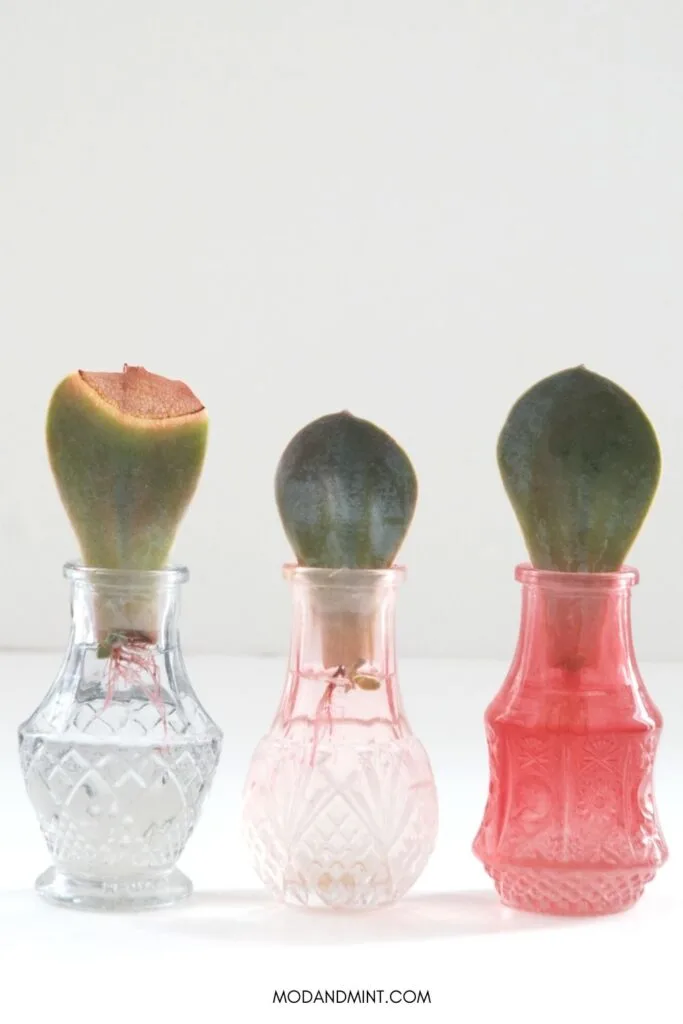
Water Propagation
Propagating Echeveria leaves in water is simple and takes only a few steps.
It is important when you remove the leaves to have a clean break. The leaf won’t grow roots if part of it breaks off and another part stays attached to the main plant.
- Remove a healthy leaf from the plant. Gently wiggle until it comes loose.
- Let the leaf dry and callus over for about 2-3 days.
- Place the leaf in a glass or jar with just enough water to cover the bottom cut part of the leaf.
- Keep it in bright, indirect light.
- Change the water regularly.
- Wait for roots to grow. Pot them up when the roots are at least an inch long. Baby echeverias might already begin to grow.
- Water once. Wait to water again until you see new growth.
Check out my article about water propagation if you want to know even more about growing new plants in water.

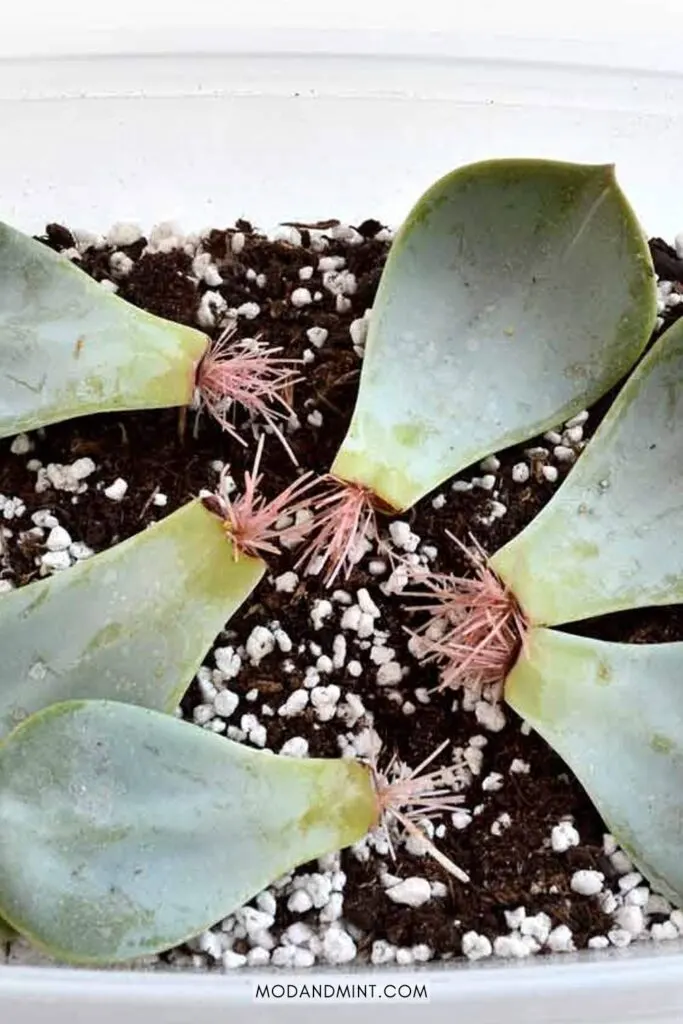
Propagate Leaves in Soil
Another easy way to propagate your echeveria succulent is to plant the leaf cuttings in soil.
- Gently remove a healthy leaf from the plant. Wiggle until it comes loose.
- Let dry and callus over for about 2-3 days.
- Dip the ends in rooting hormone. This powder helps the roots to grow faster and stronger. If you don’t have any, you can skip it. The process just might take a little longer without.
- Fill a shallow tray with succulent soil (I like to mix in some perlite or pumice) and place the callused leaves on top. Or plant the leaves with the calloused end in the dirt.
- Place in indirect light and water once very lightly
- Water very sparingly until roots start to grow. Mist the roots to make sure they don’t dry up.
- Transfer them to a small pot when baby echeverias start to grow. Try to not disturb the roots too much. Cover the roots with soil and keep the baby succulents above the soil.
- Continue with regular care.
Try not to disturb your plant while it is starting to grow roots. Give the plant a very gentle tug if you really must. Just don’t do this too often. If you feel resistance it means roots are growing under the soil. Usually after about 2-3 weeks.
You can also propagate the top rosette of a (leggy) echeveria as a stem cutting in a similar way. Cut the main stem of the rosette. Remove a few leaves on the bottom, freeing up part of the stem. This is where roots will grow. Let it dry and callus over before propagating.
Propagation from Offsets
The simplest way to propagate is by removing the offsets growing at the base of a mature Echeveria. These are also sometimes called pups, offshoots, plantlets, or babies. These offsets can be removed with roots already attached, ready to be potted up.
Multiple Echeveria babies can grow around your plant at the same time. When they start to grow a bit, you can remove them from the parent plant to create new plants.
Don’t remove the offsets right away. Be patient and make sure you wait long enough for them to grow and be able to survive on their own. Wait till they are at least about 2″ tall before removing them from the parent.
How to Separate Echeveria Offsets
- Take your Echeveria out of its pot.
- Gently remove some soil around the offshoot you want to separate.
- Remove the baby with roots attached. Gently wiggle and twist the baby plant away from the parent.
- Let the cutting rest and dry out for a day or two before potting.
- Water lightly once, and wait to water again until you see new growth.

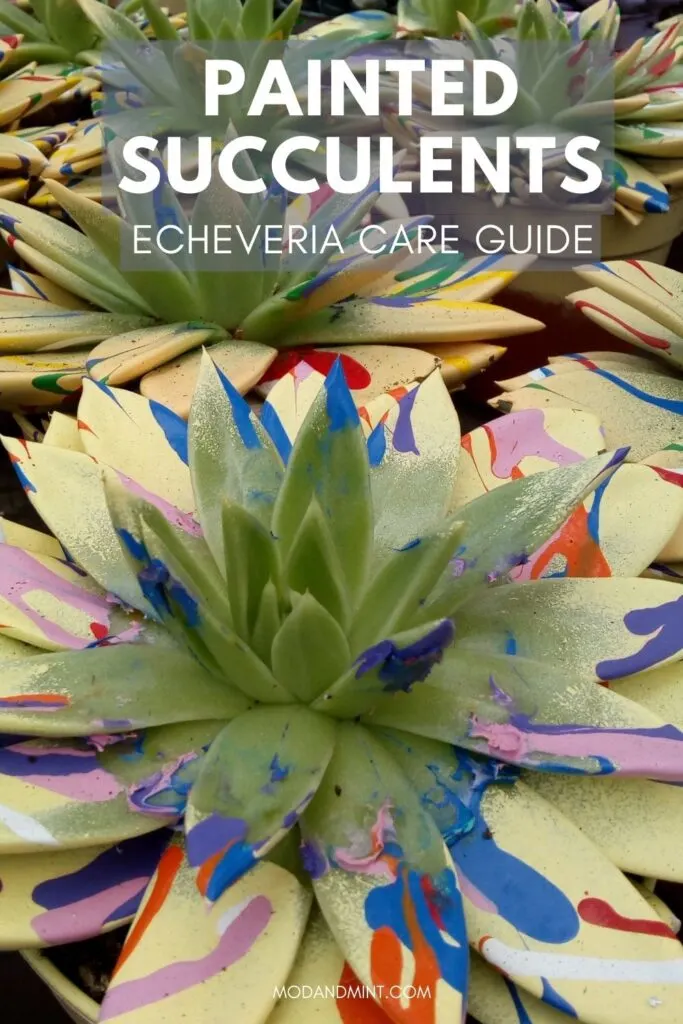
Painted Succulents
There seems to be a trend where grocery stores and big-box stores are selling painted echeveria succulents. Often sold as a novelty under the name kosmik kaktus or succulents.
I’ve seen succulents spray-painted solid colors, splatter painted, dipped into glue, and sprinkled with glitter. Some people at home get crafty and use acrylic paints to paint their succulents.
I am not a fan. Even if plant-safe paint is used, it is not good for the plant to be covered in paint. The layer of paint keeps your succulent from photosynthesizing. It can’t take in any light through its leaves.
Photosynthesis works a little differently in succulents than for other plants, but they still need some light to grow.
If you have a painted echeveria, it will probably not survive. If you are lucky, new natural leaves will grow from the center and start taking in light. But most often painted succulents don’t have enough energy to grow new unpainted leaves. It will stop growing, eventually withering away unless the paint is removed.
Buy unpainted echeverias. They are beautiful the way they are.


Plant Pests
The most common pests on indoor echeverias are mealybugs. Inspect your plant regularly. These small white bugs like to hide in between the leaves. Use a cotton bud and gently reach in between the leaves to soak the mealybugs in alcohol.
Watch out for the other regulars like aphids, spider mites, whiteflies, and fungus gnats. Learn more about common houseplant pests and what you can do to get rid of them.
Are Echeveria Succulents Toxic to Pets?
Echeverias are considered non-toxic and safe to have around cats and dogs.
More Easy to Care for Succulents
Looking for more easy succulents? Check out these other popular plant care articles.