10 Rare and Unusual Indoor Succulents – With Pictures!
Most types of succulents are great to keep as indoor plants. They are low-maintenance and because the majority come from hot and dry climates, they can take some neglect.
Indoor succulent collections often start with an Echeveria or Jade plant. They’re like the gateway to the world of succulents. Once you had those for a while, maybe even propagated a few leaves, you might want to expand your succulent horizon a little.
There are many rare and unusual succulents to choose from. Plenty of unique, eye-catching varieties, and weird and wonderful different leaves to start collecting.
Today I’m sharing a few of my favorite rare succulents from my collection.
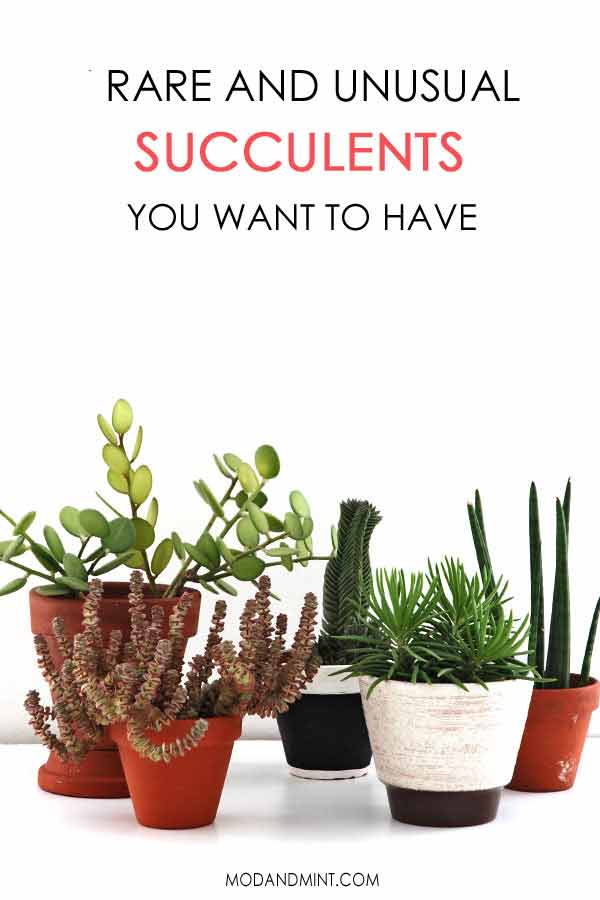
This article starts with the basics of succulent care and then jumps into the 10 rare and unusual indoor succulents!
Succulent Care Basics
Before we dive into the unusual succulents, let’s start out with a few basic succulent care pointers.
These are some general guidelines on how to care for your succulents. Do research specific succulents in case they have any special care needs.
Succulents Need Light
The natural habitat of most succulents is hot, dry, and very sunny.
In your home, place the plant in a spot with ample sunlight. Find the windowsill that provides the most sun.
If you can’t provide your succulents with enough natural light, they might start stretching out, trying to reach the light. If this happens, move your plant closer to the window, or get a special plant
Succulents Don’t Want Too Much Water
Since nearly all succulents come from hot climates, they are not used to a lot of rain. So don’t water your plant too often.
Because succulents are used to grow in dry conditions, you don’t want them to be sitting in wet soil too long. Make sure the soil is completely dried out before you water it.
Occasionally watering from the bottom can be beneficial if the soil is very dry.
In winter water even less. Succulents store water in their leaves so they can handle some drought.
Succulents Need Good Drainage
Help your succulent by providing it with plenty of
Choose a pot with drainage holes on the bottom. This helps to drain any excess after you water your succulent.
Always
Related Reading: How to Grow Succulents Indoors. All the general care information to keep your succulents alive.

Frithia pulchra – Fairy Elephant Feet
The
The way they survive their hot and sunny climates is to go underground. The tubular leaves almost completely disappear into the ground leaving just the top visible. These tops are translucent-like windows, allowing light to penetrate and reach the inside of the leaf.
Give your plant as much sun as possible and be careful not to overwater.
I got my Frithia

Cotyledon Tomentosa – Bear Paw Succulent
Bear paw Cotyledon tomentosa plants are cute, small succulents that are easy to care for and grow well as indoor potted plants.
Bear paws have plump, fuzzy green leaves, often with reddish tips on the ends. Making them look like bear claws or paws. People also call them cat paw succulent, bear paw cactus, or bear claw succulent.
Bear paws like lots of light. Indoors give your bear paw plant as much light as possible. The best spot is a bright south-facing window where it gets about six hours of indirect sunlight every day.

Kalanchoe Thyrsiflora – Flapjack Succulent
The Kalanchoe Thyrsiflora is a striking, low-maintenance succulent houseplant. It is also known as the Kalanchoe flapjack succulent, desert rose, desert cabbage, red pancake, or paddle plant.
The Kalanchoe thyrsiflora is easily recognizable by its characteristic fleshy leaves, shaped like paddles, stacked like a bunch of flapjacks.

Gasteria Little Warty
The Gasteria little warty is a small, uniquely shaped succulent. Also known as Lawyer’s tongue, Cow tongue, or Ox tongue for the thick bumpy tongue-shaped leaves.
The Gasteria is native to the dry lands of South Africa where it grows in lightly shaded areas. The little warty is a hybrid between the Gasteria Batesiania and Gasteria Old Man Silver.
Gasterias are closely related to and similar in care to Aloe and Haworthia plants.

Delosperma Echinatum – Pickle Plant
The Delosperma echinatum is commonly known as a Pickle plant or Pickle cactus. This unusual-looking succulent grows leaves that look like little pickles!
The leaves are covered with small white hairs that make it look like a cactus, but unlike a cactus, these don’t prick but are soft to the touch. Making this plant even cuter!

Senecio Barbertonicus
The Senecio barbertonicus ‘Himalaya’ is such a fun succulent. Sometimes named Lemon Bean Bush or Succulent Bush Senecio.
What’s great is that this succulent can be placed somewhere with bright, indirect light, but also does well in light shade or direct sun.
Easy to care for, just watch out not to overwater. Slow down on watering in winter.

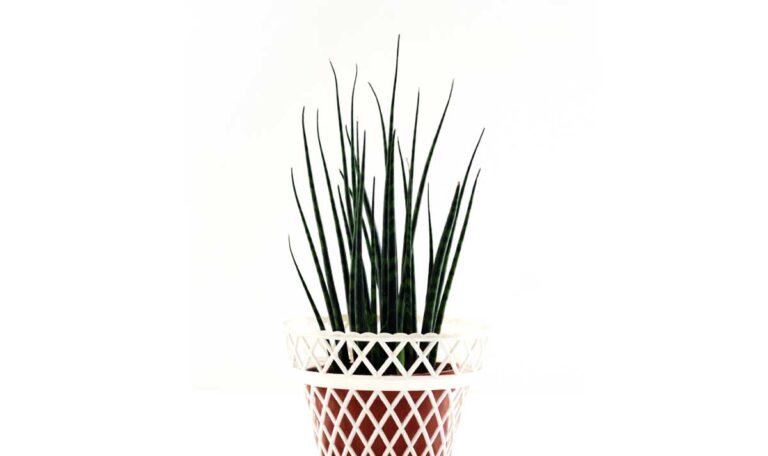
Sansevieria Cylindrica – African Spear Plant
The Sansevieria cylindrica is an unusual-looking succulent plant that grows thick cylindrical leaves. It is very low maintenance and thrives on neglect.
The cylindrical Sansevieria also goes by the common names African Spear Plant, cylindrical snake plant, and bow-string hemp. Some say the leaves look like pencils or fingers and call them pencil Sansevieria or Sansevieria dragon fingers.
Crassula rupestris marnieriana
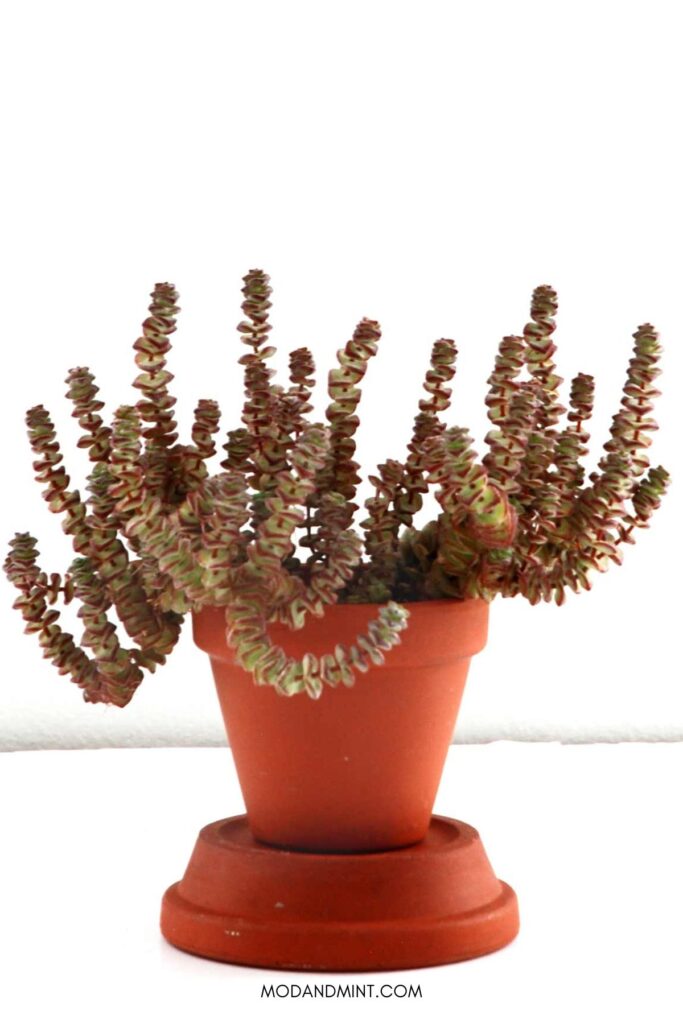
The Crassula marnieriana is also known as the Jade Necklace or Worm Plant. I started mine from a small stem cutting. It’s growing up wild and fast.
It has small round leaves on a woody stem like a beaded necklace. More direct sun will turn this Crassula redder, and less light will keep this plant green.
If your
In the case of this type of succulent, it will grow new stems right from where the open space is. So as long as the
Or you can remove the stretched-out parts of the stems, and water root these stem cuttings. Stacked Crassula are very easy to grow roots in water and regrow from stem cuttings.

Xerosicyos danguyi – Silver Dollar Plant
When the succulent grower had some Xerosicyos danguyi plants for sale, I knew I had to get one. These are hard to come by.
The round matte green leaves give this unusual vine succulent its common name the silver dollar plant.
It likes to climb, or when it grows larger the vines cascade down turning it into a hanging
The Xerosicyos danguyi is very drought tolerant and will show you it needs water when the leaves start to shrivel. Fun tidbit: It’s a relative of the cucumber!

Crassula – Buddha’s Temple
Last but not least, the Crassula Buddhas Temple. Nature at its best. A small symmetrical column of perfectly stacked leaves. This amazing variety is a hybrid of Crassula
The Buddha’s Temple is low-maintenance and very drought-tolerant. Give it plenty of light. Narrower growth will show when it likes more light. Winter growth is often easy to point out.
New growth branches out at varying levels from the sides of the column.