
Sansevierias, commonly known as snake plants, are hardy indoor plants known for their striking upright leaves. Snake plants are a diverse and popular group of houseplants with low-maintenance care requirements. Perfect for beginner plant parents!
There are many types of Snake plants (more than 70, all with numerous varieties). They come in a variety of leaf shapes, sizes, and colors. Whether you prefer the tall, slender Sansevieria trifasciata or the compact, rosette-shaped Birds nest Sansevieria, there’s a snake plant to suit every indoor space.
Beyond their aesthetics, Snake plants are known for their air-purifying qualities, making them an excellent choice for improving indoor air quality.

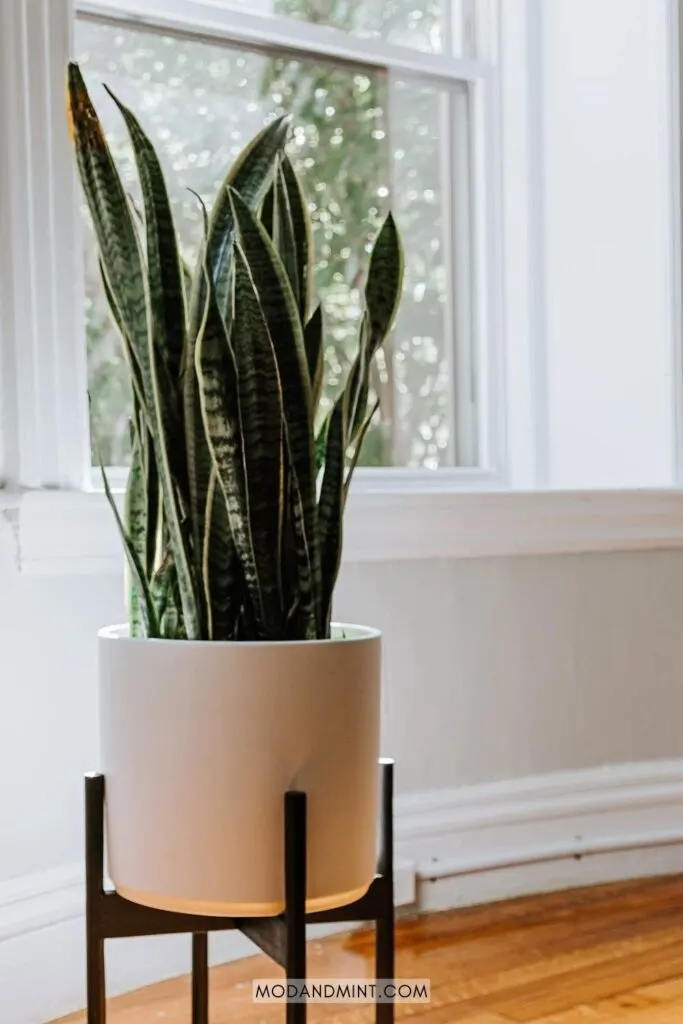
Want to buy a Sansevieria Snake plant? Find it for sale on Amazon!
Why are Sansevierias Called Snake Plants
Sansevierias are commonly called Snake Plants, named after the shape and scale pattern of their leaves. The leaves are long and upright, and have a somewhat sharp tip, resembling the shape of a snake.
Related reading: Fascinating Facts about Snake Plants – Snake Plant Meaning and Symbolism.
7 Types of Snake Plants
Here are seven popular types of Sansevieria Snake plants with pictures and names for easy identification!

Sansevieria Trifasciata
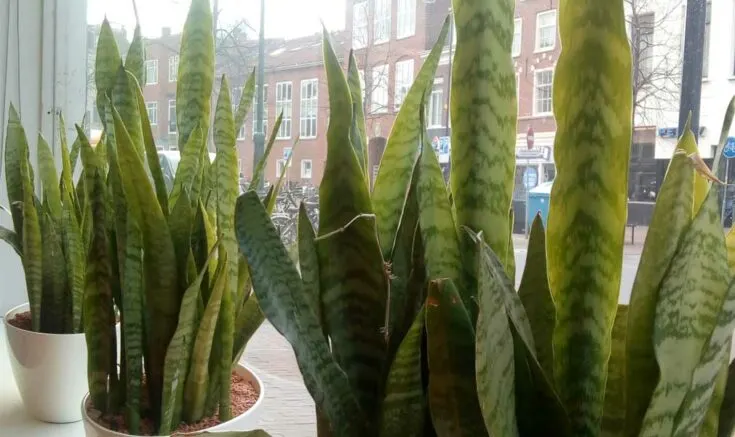
One of the most popular and well-known Snake Plants is the Sansevieria trifasciata. This variety grows clusters of long upright dark green leaves.
Similar in appeal is the variegated Sansevieria trifasciata laurentii, this one has yellow bands along the edges of the leaves.


Sansevieria Cylindrica
Sansevieria cylindrica, often referred to as the cylindrical snake plant or African spear plant, is a unique and striking succulent.
The cylindrica features long, cylindrical leaves that grow upright, resembling slender green pointy spears.
The eye-catching shape and ability to grow various light conditions make it an attractive and low-maintenance addition to any indoor plant collection.

Starfish Sansevieria
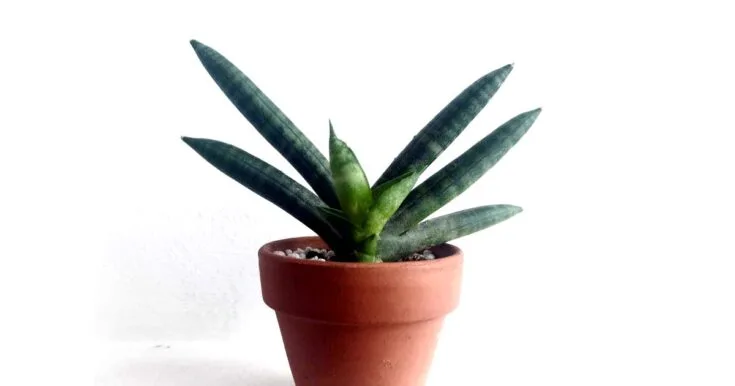
The Starfish Sansevieria is a cultivar of the Sansevieria cylindrica. Growing similar upright pointy leaves, but clustered in a starfish shape.

Sansevieria Masoniana
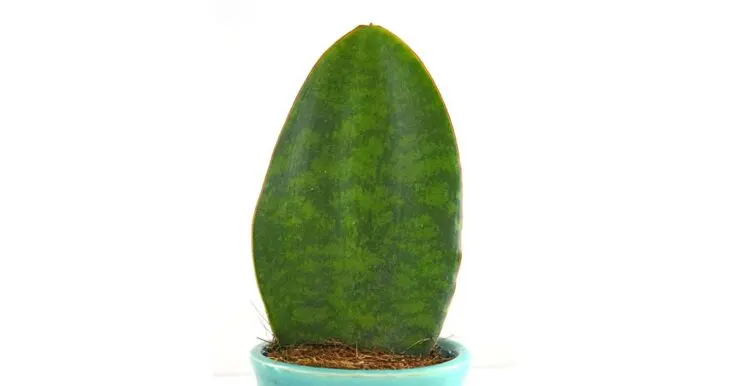
Sansevieria masoniana, also known as the Whale Fin or Shark Fin plant, is a remarkable succulent known for its large, paddle-shaped leaves resembling the fin of a whale or shark.
Sansevieria masoniana's unique appearance adds a bold touch to interior spaces, making it a great choice for plant enthusiasts seeking a statement piece for their home.


Sansevieria Hahnii
Sansevieria hahnii, commonly known as the Bird's Nest Sansevieria, is a compact and charming succulent.
It grows thick, wavy leaves in a rosette shape, giving it the appearance of a bird's nest. Since its shorter growing, it makes an appealing addition to small spaces or as a tabletop decoration.
Sansevieria hahnii is a low-maintenance snake plant, known for its air-purifying qualities, making it an excellent choice for those looking to enhance indoor air quality.
Sansevieria Golden Hahnii is similar, but has variegated yellow borders on its leaves.

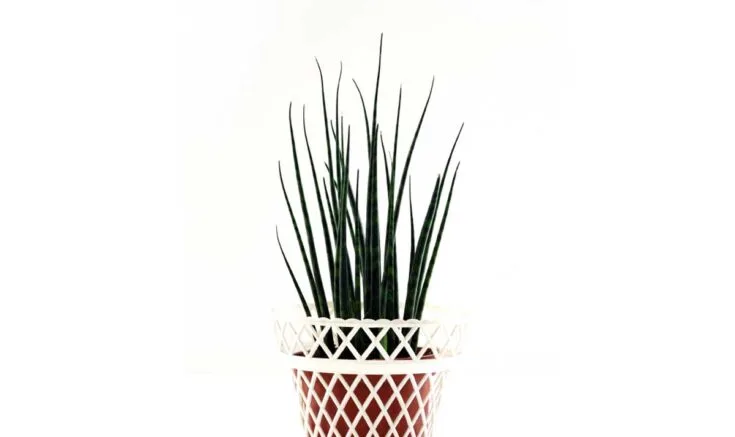
Sansevieria Fernwood
Sansevieria Fernwood is a striking Snake plant characterized by its slender, cylindrical leaves. These leaves feature vertical stripes, lending a contemporary and elegant touch to any indoor setting.
Sansevieria Fernwood is popular choice for those seeking a stylish and low-maintenance houseplant.
I love the patterned, spikey look, but it also happens that my maiden name translates to Fernwood. So no surprise I love this Snake plant.

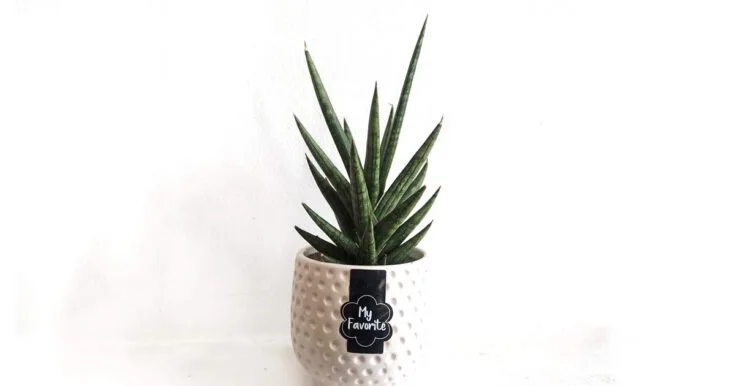
Sansevieria Francisii
The Sansevieria Francisii Spiky is a compact and
eye-catching snake plant variety. The slender, cylindrical leaves are arranged in a fan-like or rosette pattern, where the leaves emerge in a neat and compact stack.
This easy-care succulent plant can grow indoors in low light,
needs very little water, and does not have many care problems.
Read more: Snake plant propagation.
Formerly Sansevieria Now Dracaena
Some Sansevieria plant types have been officially reclassified, and are now being called Dracaena.
Genetic studies revealed that they share a closer relationship with Dracaena plants than with Sansevieria species.
This reclassification doesn’t change the characteristics or care requirements of these plants. And many plant stores and plant owners still use the Sansevieria name when describing these plants.
Read more: Is Sansevieria poisonous to cats and dogs?


Read more: Common snake plant care problems.