
The Gasteria little warty is a small, uniquely shaped succulent. Also known as Lawyer’s tongue, Cow tongue, or Ox tongue for the thick bumpy tongue-shaped leaves.
This plant is an ideal houseplant as it is very easy to care for, tolerates some neglect, and can handle low light conditions indoors.
Gasteria little warty is perfect to put on shelves and in small spaces, like offices, dorm rooms, and window sills.

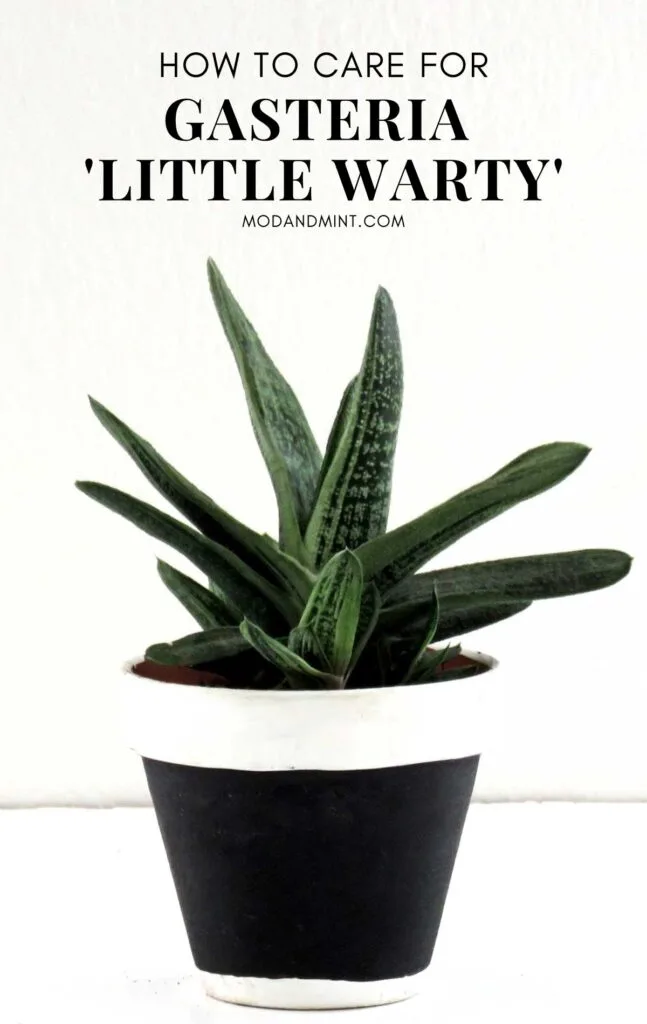
Want to buy a Gasteria Little Warty? Find it for sale on Amazon.
Gasteria Little Warty
The Gasteria is native to the dry lands of South Africa where it grows in lightly shaded areas. The Little Warty is a hybrid between the Gasteria Batesiania and Gasteria Old Man Silver.
Gasterias are closely related to and similar in care to Aloe and Haworthia plants.
Need a succulent plant care refresher? Read my Guide to Succulent Care.
Light Requirements
The Gasteria little warty is used to growing in low light conditions. Indoors you can place it in light shade to shade, but it will thrive and grow faster if it gets bright, indirect light.
Avoid direct sunlight. Dry, brown spots on the leaves can be a sign of sunburn. Move your plant further away from the window, or filter the light with a sheer curtain.

Watering
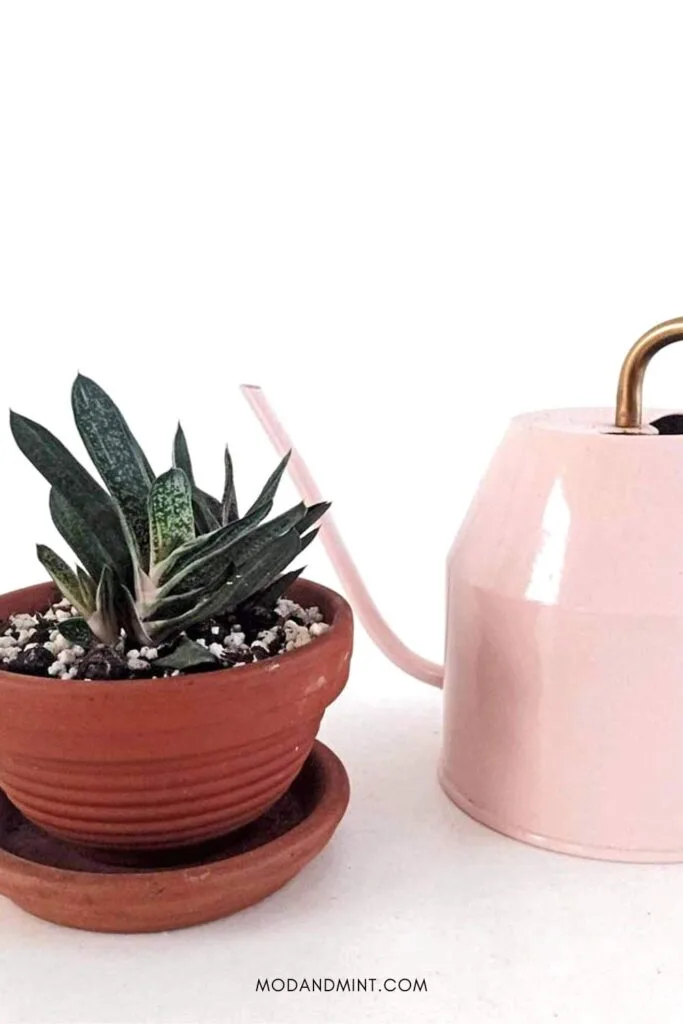
Being a succulent, the Little warty stores water in its leaves. In their native habitat, they go through long dry spells followed by heavy rainfall. At home, let the soil dry out between waterings.
Stick your finger one to two inches below the surface of the soil. If it feels moist, don’t water but wait one or two days and check again. If the soil feels dry, go ahead and give the soil a generous soak. If in doubt, don’t water yet. Overwatering is the most common mistake with these plants.
Use a watering can with a long spout to reach the soil. Don’t let water collect in between the leaves to prevent crown rot.

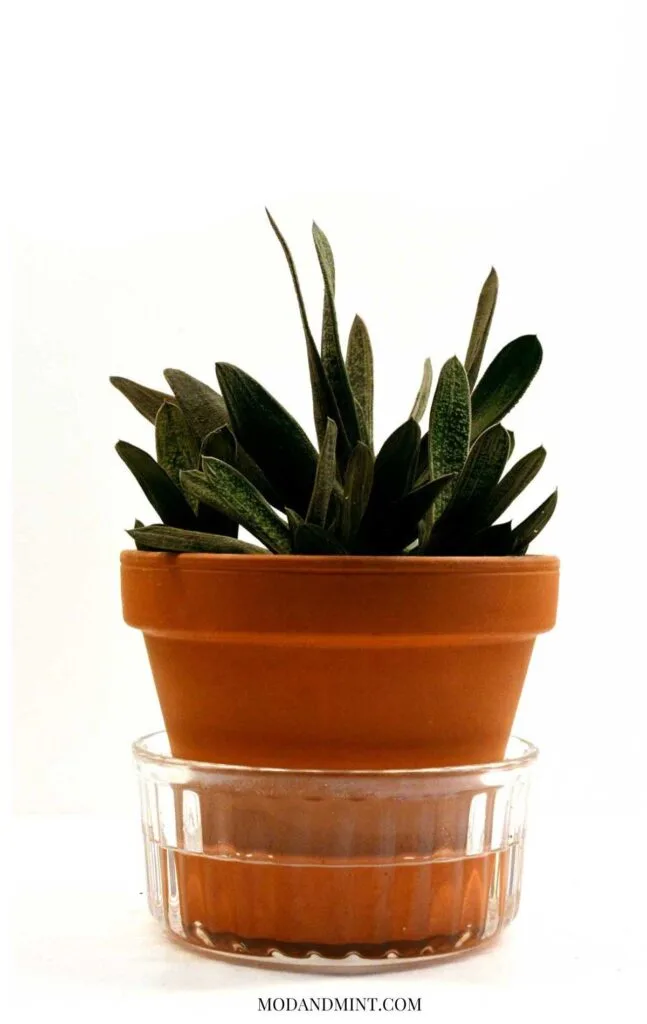
Water from the bottom if the soil is very dry. Bottom watering can lead to stronger roots by making them reach for the water. To do this, fill a bowl or cachepot with water. Place your plant inside so it can soak up the water through the drainage holes on the bottom of the pot. For detailed instructions, read my post on bottom water your plants.
Under-watering symptoms include dry, thin leaves and stunted growth. Your plant will quickly recover once you give it water.
If you overwater (meaning you water too often), the soil does not have a chance to dry out. Frequent overwatering can lead to soft leaves, a softened center crown, and root rot problems. If the roots rot, they lose the ability to absorb water and can’t supply any water to the plant. Unfortunately, root rot is irreversible. But you can save an overwatered Gasteria succulent by propagating the healthy parts. More on this later.
Further reading: When to water indoor succulents.


Fertilizer
Use a diluted liquid succulent fertilizer to feed your Little warty bi-monthly in spring and summer. Don’t fertilize in winter when growth slows down.
Also never fertilize if it is recently repotted or is having issues. Fertilizer is not a plant medicine. It will only stress out an already stressed-out plant. Analyze, adjust, and when your plant recovers, continue your normal care routine.
Soil and Repotting
The Gasteria little warty is slow-growing so no need to repot often. Repot every 2-3 years in spring to refresh the soil using a cactus and succulent potting mix.
Make sure the new pot has drainage holes on the bottom. Without those, excess water has no way to get out and will drown the roots.
If your plant has outgrown its pot, repot it in a pot one size bigger than the original. Too large of a pot keeps the soil wet for too long, making it hard for the roots to absorb. Read my post on how to repot your plants for more potting information.


Gasteria Little Warty Propagation
The little warty is easy to propagate by removing pups or offsets, or by taking leaf cuttings. It can also be propagated by seeds but it will take a lot longer for a new plant to establish.
The best time to propagate plants is in spring at the start of the growing period. Though you can propagate any time of the year.
Separating Baby Pups
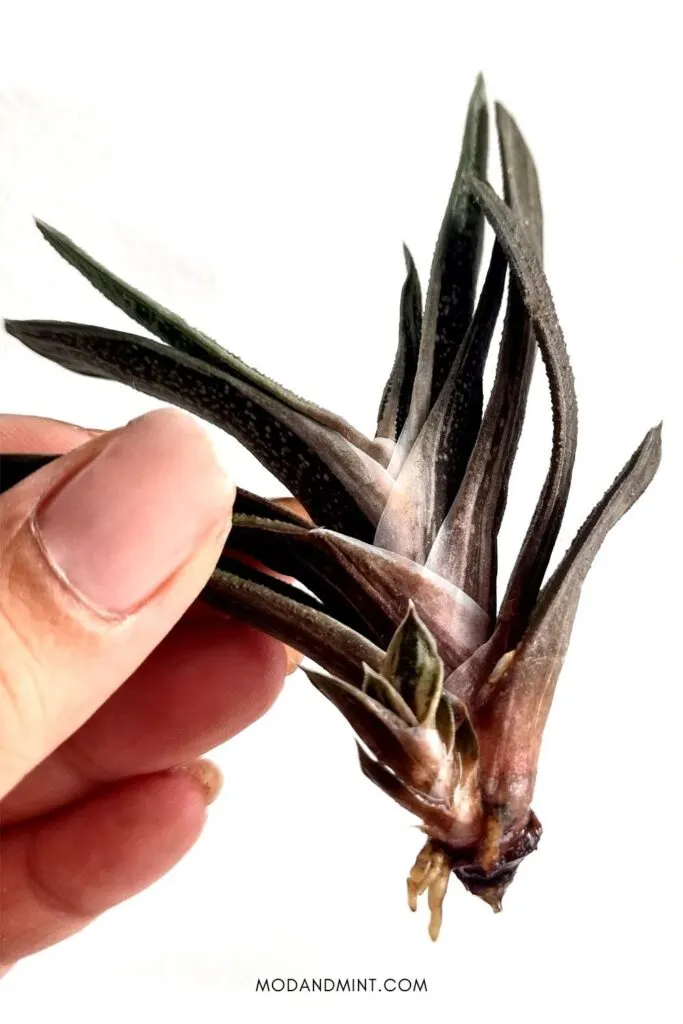
Mature Little warty plants grow baby succulents called pups or offsets, around the base. These can be removed with roots already attached, and ready to be potted up.
Be patient and make sure you wait long enough for them to grow their own root systems and be able to survive on their own.
- Take your plant out of its pot. Remove some soil around the pup you want to separate.
- Remove the offset with roots attached. Gently wiggle and twist it away from the parent plant.
- You can use a rooting hormone powder to speed up the propagation process. Dip the bottom of the offset in water first, then dip in rooting powder before you plant them.
- Pot in a small pot and water lightly once. Wait to water again until you see new growth.

Propagate Leaf Cuttings
You can take a leaf and root it in soil or water. Although these methods work, it takes much longer than just removing pups to grow a full new plant.
Remove a healthy leaf from the parent plant. Gently wiggle it loose at the base to make a clean cut. Let the cutting dry and callus over for about 2-3 days.
Either let it root in soil or place the bottom of the cutting in water and wait for roots to grow. Then plant in soil. Over time baby pups will grow from the base of the leaf.
Want to learn more about plant propagation? Read my complete guide explaining the 6 different ways to propagate your plants.
Plant pests
Gasteria little warty is not prone to pests, but it can happen. The most common pests to watch out for are scale, spider mites, and mealybugs. Regularly check your plant for signs of them to catch a possible infestation before it becomes severe.
Learn more about common houseplant pests and what you can do to get rid of them.