
The Rhipsalis cashero is an easy-to-care-for type of cactus (without any spines!). Rhipsalis plants are more commonly known as mistletoe cactus or spaghetti cactus.
The Rhipsalis cashero is an interesting-looking plant with segmented succulent stems that trail down and can grow quite long. It resembles its relative the Rhipsalis cassutha which has similar-looking petiole stems. Both have generally the same care requirements.
The Rhipsalis cashero can handle a fair degree of shade or sun. Making it a houseplant that can grow in a variety of locations in your home. A lot, or little light. It will do just fine.


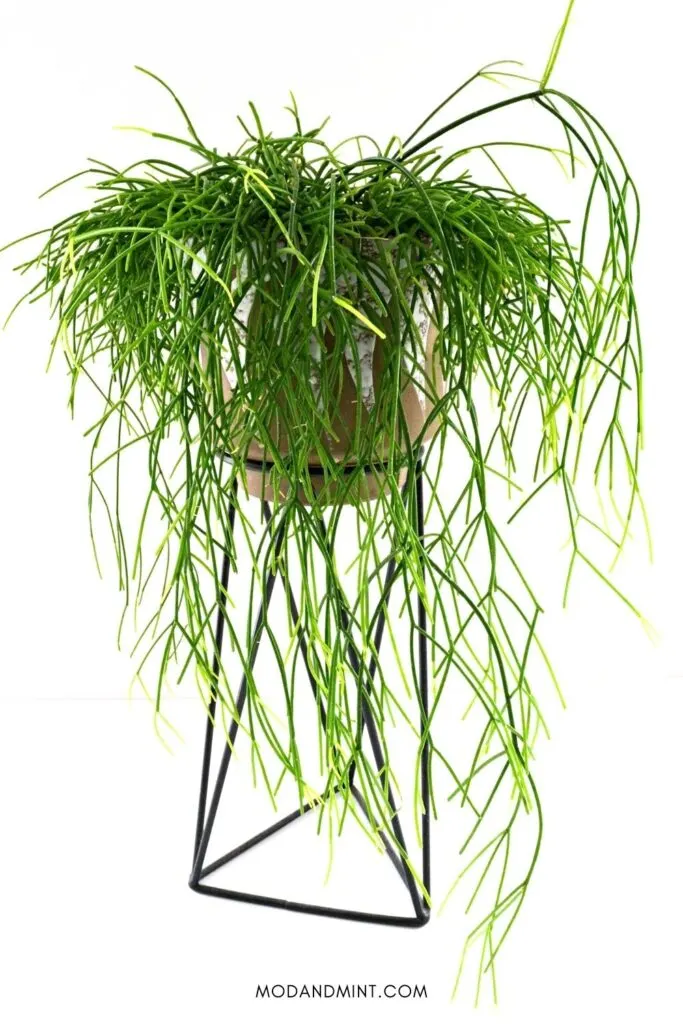
This bushy succulent houseplant is a fast grower that grows slender, cylindrical stems trailing down over the edge of the pot. Perfect to grow as a hanging plant or cascading from a plant shelf.
Rhipsalis Cashero Care
The Rhipsalis cashero is one of the many variants in the Rhipsalis family. The Rhipsalis genus includes about forty different varieties. Unlike most cacti that come from dry deserts, these are epiphytic cacti from shady rainforests. There they grow on the trunks of trees or branches of plants around them.
Similar to holiday cacti, Rhipsalis cacti are leafless and composed of branching stems.
Need a plant care refresher? Check out the Beginners Guide to Houseplant Care.


Light Requirements
The Rhipsalis cashero is native to the rainforests of Brazil. There they grow in filtered or shaded light under the canopies of tall trees. Indoors they can handle some shade but will thrive in bright, indirect light with a few hours of morning sun.
Avoid direct sunlight, especially on hot summer days. Dry, brown spots on the leaves can be a sign of sunburn. Move your plant further away from the window, or filter the light with a sheer curtain.
Rotate your Rhipsalis regularly to make sure it gets adequate light on all sides and grows evenly.
Watering a Rhipsalis

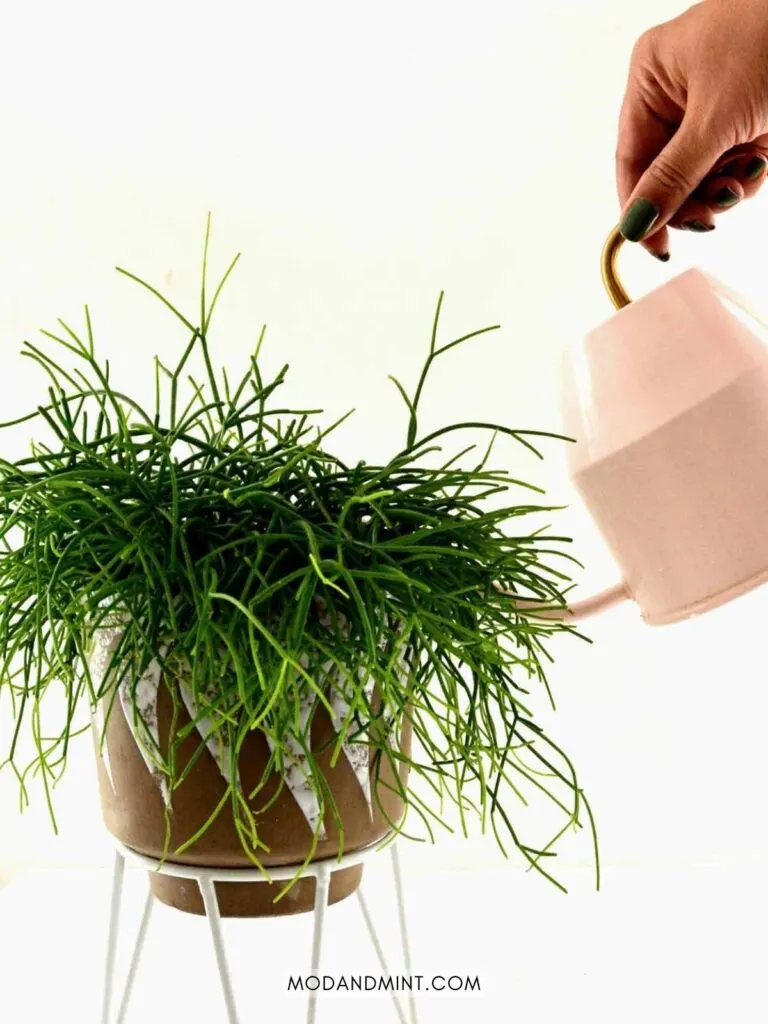
Since the Rhipsalis cashero comes from the humid rainforest, it needs a bit more water than the average cactus or succulent. Indoors, water your Rhipsalis when the top of the soil has dried out.
Underwatered, the leaf stems will start to wilt, feeling limp and drooping down. Showing it is thirsty and needs water.
Overwatered Rhipsalis stems will look yellow and translucent, or turn brown and feel mushy. Eventually, they fall off.
Use a watering can with a long spout to reach the soil. You can also soak the soil by watering from the bottom rather than from the top.
Water very sparingly in winter. Water just enough to make sure the stems don’t shrivel up completely.
You can use a moisture meter to tell if it’s time to water. And read up on the basics of how and when to water your plants.

Fertilizing
Rhipsalis generally don’t need a lot of fertilizer. You can fertilize to supplement poor soil or to give your plant a boost. If you want to, feed once or twice during the growing season (spring/summer) with a diluted liquid plant fertilizer.
Be sure the soil is damp before fertilizing and don’t fertilize in winter when growth slows down.
Newly bought or recently repotted plants don’t need to be fertilized for at least the first 4-6 months. The potting mix usually already has slow-release fertilizer in it. Also never fertilize if your plant is having problems. It is not plant medicine. Analyze, adjust, and when your plant recovers, continue your normal care routine.


Humidity
In their native habitat, Rhipsalis are used to a warm and humid environment. They can grow in average household humidity but will do better when the humidity is higher.
The Rhipsalis can grow small white aerial roots. These above-ground roots absorb moisture from the air. No need to cut the aerial roots off. Just leave them. They are there for a reason.
Occasionally mist your rhipsalis to temporarily up the humidity. You can also group plants, away from radiators, or put your plant on a tray with water and pebbles in such a way that the bottom of the pot doesn’t touch the water. The water will evaporate and raise the humidity around your plant.
Another option is to buy a hygrometer and a small humidifier to help with the humidity.
Repotting


Every two to three years repot your Rhipsalis in spring. The soil will have lost its nutrients and will need to be replaced with fresh well-draining succulent soil. Or mix pumice or perlite in regular potting soil to aerate the soil and improve drainage.
If your Rhipsalis has outgrown its pot, repot it in a pot one size bigger than the original. Too large of a pot keeps the soil wet for too long for the roots to absorb.
Make sure the new pot has drainage holes on the bottom. Without those, excess water has no way to get out and will drown the roots.
In need of a repotting reminder? Follow the steps on how to repot your plants.

Rhipsalis Propagation

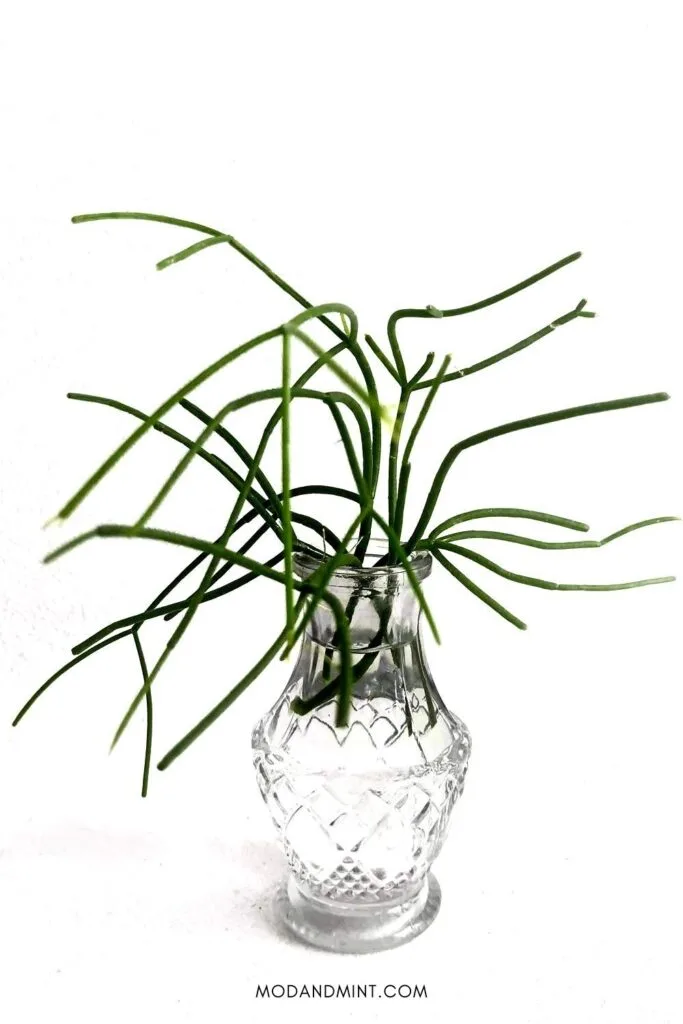

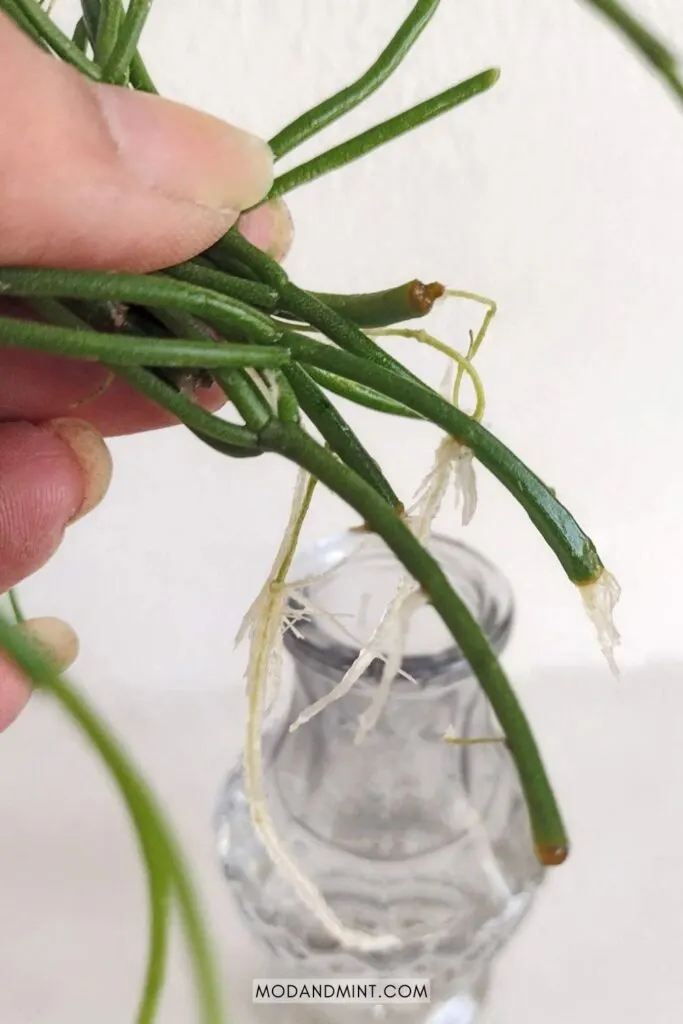
Rhipsalis are very easy to propagate. Large plants can be propagated by division. Or stem cuttings can be rooted in water or soil.
– To water propagate, let the cuttings dry and callous over before placing in water. Keep in bright, indirect light. Change the water regularly and after a week or so roots will start to grow. Transplant to soil when roots are about 2 inches.
– To propagate in soil, plant the calloused cuttings in a small pot with well-draining soil. Keep in bright, indirect light. Mist or water very sparingly until you see new growth.
You can use rooting hormone on your cuttings. This powder helps roots to grow faster and stronger and prevents fungus growth. If you don’t have any, you can skip it. The process just might take a little longer.
– Propagating by division is a much quicker way to propagate than by propagation in water or soil. You basically have a complete plant already, whereas when propagating cuttings it may take much longer to get to a full new plant.
Gently split the rootball and foliage. Repot the parts in separate, smaller containers.
Want to learn more about plant propagation? Read the complete guide to succulent propagation and get all the details on the 6 different ways to propagate your plants.
Is the Rhipsalis Toxic to Cats?

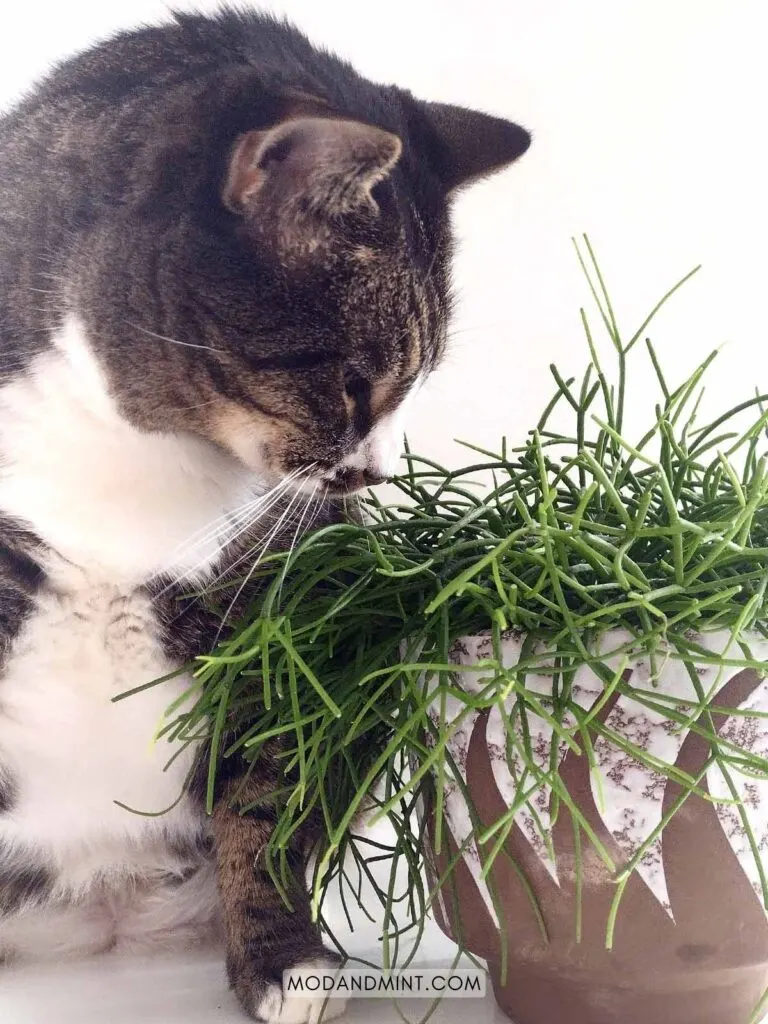
Rhipsalis are considered non-toxic. It is safe to grow this plant at home around your cats or dogs.
Learn more about the risks of toxic houseplants around your pets and if you should be worried or not.
Plant Pests
Rhipsalis are not very prone to pests, but they can be affected just like any other houseplant.
Keep an eye out for mealybugs, spider mites, and scales. Inspect your plant regularly for signs of bugs to catch a possible infestation before it becomes severe.
Learn more about common houseplant pests and what you can do to get rid of them.