
Identify Common Houseplant Pests and How to Get Rid of Them
There is something we need to talk about.
Houseplant pests.
Any indoor plant can become infested with little bugs. And we must take houseplant pest problems seriously.
I clearly remember my first encounter with houseplant pests. It happened to a lovely-smelling Jasmine plant. I was so happy with my new plant. Until I noticed some sort of white fluffy bugs on the underside of the leaves. Oh no. Mealybugs. I should’ve inspected the plant before buying it.

In this article, you will learn all about houseplant pests and what to do to get rid of them.
Using pesticides is not recommended, especially not indoors, because of the close proximity of plants to humans and pets. Fortunately, most houseplant infestations are caused by just a few types of common pests that can be controlled without the use of toxic pesticides.
What Causes Pests on Indoor Plants
Bad news. Indoor plants are very susceptible to pests. Our homes provide near-ideal conditions for plant bugs to quickly grow, reproduce and thrive.
The three most apparent causes of pests on indoor plants are:
- warm temperatures,
- low humidity (dry air),
- and over-fertilizing.
If these conditions exist in combination with your plant being in weak health, like suffering from too little water or light, pests can take hold even more easily.
In winter your houseplants are especially prone to pests. Light levels are low and the heaters go on making it warmer and the air even drier than normal.
How do Pests Get on Indoor Plants?
Often the bugs on your houseplant were already there when you bought the plant. Buying your plants at a reputable nursery or plant shop gives a better chance of pest-free foliage, but there is always a chance of a missed bug.
In summer it can be as simple as the bugs just getting blown in through an open door or window. If they come across one of your plants they will happily settle down.
Pests can also enter your home and get to your plants through contaminated potting soil.
The damage to your plants caused by pests is not reversible. Once you get rid of the pests the plant can grow new leaves that hide the bad parts. But it may take a long time for the plant to look like it did before.
How to Prevent Houseplant Pests
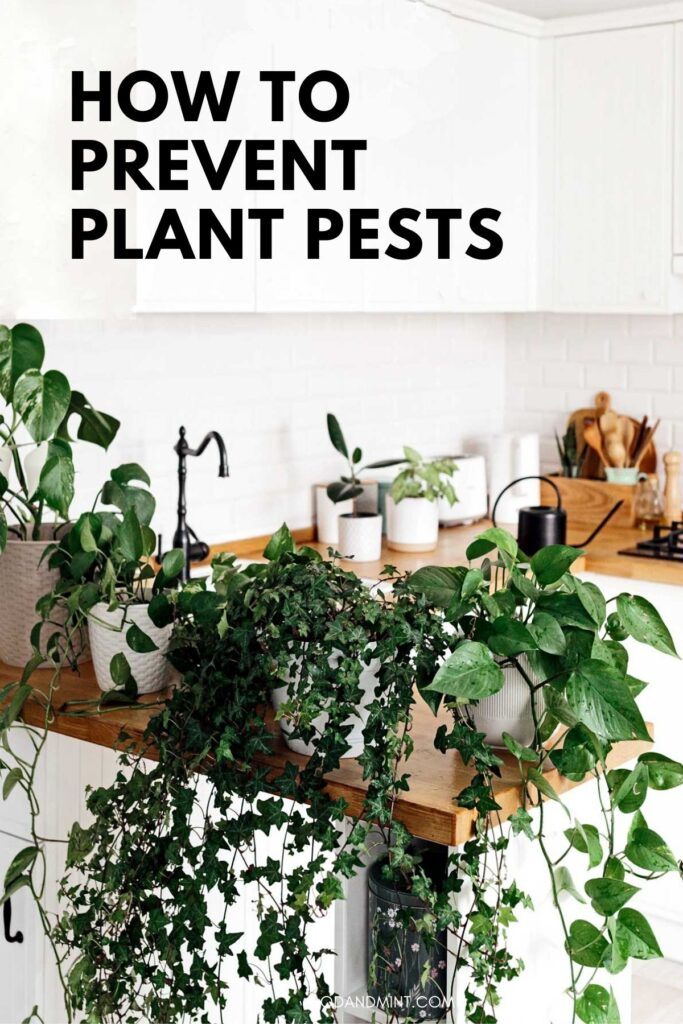
Better safe than sorry and prevention really is the best cure.
Keep your plants pest-free with these 5 simple ways to prevent pest infestations:
- Regularly inspect your plants
- Use clean pots and soil
- Proper plant care
- Raise the humidity
- Wash your plants occasionally
Read on for all the details.
1. Inspect your Plants at Home and Before you Buy
Always inspect houseplants before you buy them, and consider isolating new plants for about a month while you keep an eye out for possible pests.
Periodically check your plants for signs of pests to catch a possible infestation before it becomes severe. Look at the leaves, especially the undersides and stem junctions where pests like to hide. Use a magnifying glass for a better view.
2. Use Clean Pots and Soil
Make sure to thoroughly clean the pot you put your plant in. Use a diluted soap or bleach solution to be sure nothing is growing or crawling around.
Check the soil you are using for signs of bugs. Soil from a bag that has been open for a while could be contaminated.
3. Proper Care
Keep your plants healthy and strong. Improper plant care or less-than-ideal growing conditions can weaken a plant, making it more susceptible to pests.
Read up on the Beginners Guide to Basic Houseplant Care and make sure you got all the basics right.
4. Raise the Humidity
Pests thrive in dry and warm conditions. So it is important to raise the humidity around your plants, especially in winter.
Frequent misting can help. As well as grouping plants together, away from radiators, or put your plant on a tray with water and pebbles in such a way that the bottom of the pot doesn’t touch the water. The water will evaporate and raise the humidity around your plant. Another option is to purchase a small humidifier or hygrometer to help with the humidity.
Read up on how to care of indoor plants in winter for all the cold-day plant care tips.
5. Wash your Plants Occasionally
Indoor bugs are protected from outdoor winds and rains that would loosen and wash them off. Mimic this at home to discourage most pests.
There are 3 ways that a thorough lukewarm watering from your shower or in your sink can help in your fight against plant bugs:
- The water from your shower can wash some pests off before they spread.
- It provides an environment in which other pests don’t thrive.
- And the shower makes plants healthier by removing dust from their leaves.
Large plants can be moved outdoors and a garden hose can be used.
Identify Common Types of Indoor Plant Pest
What’s attacking your houseplant?
It is important to watch for early signs of pest infestations and to quickly identify the type of pest you are dealing with.
A general method of pest diagnosis is to hold a suspect plant over a piece of white paper and tap the leaves to dislodge any bugs, which are then easily recognized, especially if a magnifying glass is used.
Pest identification doesn’t have to be hard if you know what you’re looking for. Keep reading for descriptions of the most common types of indoor plant pests.
Red Spider Mites on Plants

Spider mites are pests that make webs. Not really insects, but instead, arachnids, related to ticks and spiders.
Spider mites are tiny, about the size of a grain of sand, and just barely visible. By the time their cobwebs appear on your plant, your plant is already thoroughly infested.
They are not very picky about which species of plant they eat. Spider mites easily spread from one plant to the next.
Red spider mites generally sit on the underside of leaves and stem junctions where they suck juices from the plant. This will leave pinprick patterns of brown dots and traces of small web nests.
Attacked leaves gradually take on a bleached, dry appearance going from yellow to brown as the mites destroy the chlorophyll in the plant. Eventually, the leaves drop off.
Mealybugs on Indoor Plants

Mealybugs are small, soft-bodied white pests that look as though someone has stuck tiny fuzzy patches of cotton on your plant. If they aren’t dealt with, they can cover entire leaves.
Those little bits of white cotton are the egg clusters of the mealybug. It’s the adult mealybugs that pierce holes in your plant and suck the juices from stems and leaves. Leaves will yellow, wilt, and drop.
You might see sticky, shiny honeydew on the foliage or the surface beneath the plant. Mealybugs excrete this honeydew from the excess sugar they suck from the plants.
Thrips on your Houseplants
Thrips are very small, oval-shaped, slender bugs. In their early stages, thrips are white, yellow, or orange-colored and difficult to see.
Adult thrips are brown or black and easier to spot because they will fly around infected plants when disturbed. Shake the leaves of your plants and watch for the tiny flying bugs to appear.
Thrips feed by scraping the leaves and tender shoots to get to the plant sap. This results in pale yellow to silverish spots on the leaves. At a later stage, the leaves turn brown, curl up and fall off. Flower buds will be misshapen and discolored.
Some types of thrips leave tiny black dots of excrement on the affected parts of the plants.
Scale Insects on Plants Indoors

Scale insects are harder to identify since there are many types of scale insects that vary in color ranging from white to black. Some have soft circular shells, while others have hard shells.
The most common are the brown scale bugs. These scale insects look like small blisters on the undersides of leaves or stems.
Young scale insects crawl on your plant, then settle in to suck stem and leaf juices. Scale infestations cause weak stems, leaf damage, yellow spots, and slow growth. They also secrete honeydew that drips onto leaves below.
Many infestations go unnoticed because the scales don’t move once established.
Mature scales lay eggs beneath their scale and then die. The eggs hatch and the mobile young or nymphs migrate to other parts of the plant.
Once an insect has its scale, it is very difficult to get rid of. The waxy body covering protects them from most treatments, and they do not wash off easily.
Whiteflies on Indoor Plants

Whiteflies are pinhead-sized white bugs resembling tiny white moth butterflies. They live in stem junctions and on the back of leaves with the eggs and immature nymphs.
Eggs hatch in three to seven days. The nymphs feed on the plant and cause the most damage. It will show up as a mottled design of yellow dots on the leaves. Eventually, the leaves turn completely yellow before they drop.
Whiteflies also leave a sticky honeydew behind after they have sucked out all the juice.
Whiteflies, just like thrips, are easier to spot than most other indoor pests because they will fly around when disturbed. You will notice a white mist appearing around your plant.
Aphids on Houseplants

Aphids are tiny, pear-shaped, soft-bodied insects, usually green or yellow.
They cluster on the undersides of leaves or tips of plants. Aphids crawl around sucking the plant juices from new leaves, stems, and flower buds. Causing leaves to yellow, curl and drop.
You might also notice honeydew on the plant.
Aphids come in both winged and wingless forms. They are born without wings, but when the infestation grows, they will grow wings to go out and look for other houseplants to feed on.
Learn more about aphids. How to recognize an infestation, how aphids get on your houseplants, and what to do to get rid of them permanently!
Fungus Gnats on Plants Indoors

Fungus gnats are tiny, dark brown flies about the size of fruit flies. They don’t do a lot of harm to your plant as they don’t feed on your plants.
But they are a major nuisance. Fungus gnats develop in moist potting soil and are not specific to certain plants. They often when the plant has been overwatered (watered too often).
Fungus gnats multiply rapidly with as many as ten generations per season. Quickly turning into an explosive infestation of irritating little flies.
Adult fungus gnats live for only one week. But in that week they mate and females lay eggs on the soil. The larvae burrow into the soil where they feed on decaying plant materials. Upon close inspection, you can see them in the soil near the roots of your plant.
Good watering practices are critical. Allow the soil to dry between waterings and read up on how to water your indoor plants.
How to Get Rid of Pets on Indoor Plants
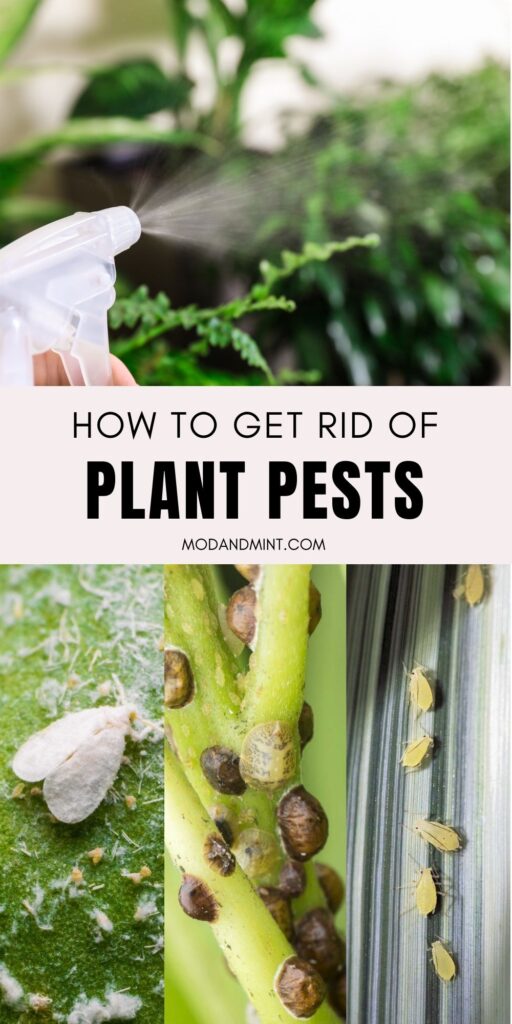

Get Rid of Plant Pests Indoors
With any infestation, it is important to get rid of the pests as early as possible at the first signs of them. Pests won’t go away on their own, so act quickly.
Materials
Tools
- Plastic bag (optional)
Instructions
- The first thing to do is isolate the infested plant immediately. Pests often spread from infected plants to nearby uninfested plants.
Place it in a separate room, away from other plants. - Remove heavily affected leaves from the plant.
- Try to get rid of the pest by washing the plants with water in a sink or under the shower.
Make sure you drench the plant and get the undersides of all the leaves.
To eliminate any newly hatched eggs, Repeat rinsing two or three times, at three-day intervals. Use a plastic bag to cover the soil, so it doesn’t get wet or fall out of the pot.
Washing can be effective against spider mites, thrips, and aphids. - If that doesn’t help, you can wash and treat your plant with an organic insecticidal soap (natural bug control that doesn’t burn foliage).
Again, be sure to get the undersides of the leaves. Repeat the routine three days later and twice after that at weekly intervals.
Continue this process until no bugs are detected for several weeks. - Another popular natural insecticide is neem oil. Neem oil is very effective in eliminating common houseplant pests like whiteflies, thrips, and aphids.
- Scale insects and mealybugs don’t easily wash off. Dislodge them with a toothpick or a soft toothbrush.
They can be killed with a dab of a cotton swab dipped in rubbing alcohol. Be thorough. - Use yellow sticky traps as directed on the packaging to catch flying pests like whiteflies, thrips, or fungus gnats.
Notes
If your plant is severely infested, it might just not be saved. It’s often best to toss it rather than risk your other plants with its presence.
Many regular liquid hand soaps and dishwashing detergents have insecticidal properties but are more likely to burn the plant’s foliage, causing the leaves to brown and curl.
More Plant Care Posts
Looking for more houseplant care information? Check out these other popular plant articles.


I’ve overwatered my turtle vine. The plant is entirely brown at the base, but the ends of the many vines are fine. It’s quite large. Will it come back? Or do I just need to propagate and start over? Email me and I’ll send a photo.
HELP!!!
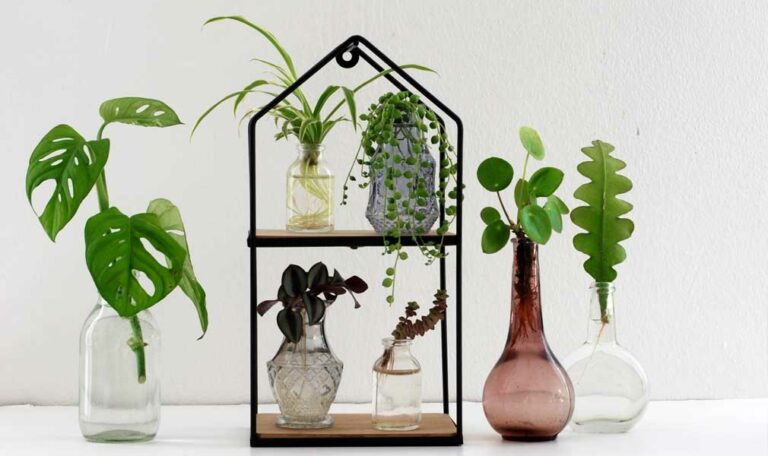
Hi Laurah, It sounds like the overwatering caused root rot with the stems starting to rot as well. Unfortunately, that will not not better, only worse if you don’t do anything. Are all the vines rotting at the base or just a few? If it is all of them, I would cut the healthy parts before the rot spreads even more, and propagate all of them in water. Keeping my fingers crossed you get to rescue your plant!