

Indoor Caladium Bicolor Plant Care
The Caladium bicolor (Caladium x hortulanum) is a vibrant and eye-catching houseplant known for its stunning foliage.
They thrive in bright, indirect light and well-draining soil. Keep the humidity up and the soil consistently moist, but avoid waterlogged conditions.
The large, heart-shaped leaves come in an array of spectacular colors and patterns, making it an instant focal point.

Want to grow a Caladium bicolor? Get a bulb mix on Amazon!
Caladium Plants
Scientific name: Caladium bicolor Common names: Elephant ears, Angel wings, Heart of Jesus plant.
Caladium plants belong to the Araceae plant family and are native to the tropical regions of South America, particularly in areas of Brazil.
Often grown outdoors, but with the right care, Caladium plants grow well as indoor plants in pots.
These plants grow their beautiful red, pink, green, and white variegated leaves from underground tubers often referred to as bulbs. In winter, the Caladium drops all its leaves and goes into dormancy. But it comes back every year in spring.

Basic Plant Care Refresher: House Plant Care for Beginners.
Varieties
Cultivation started back in the 1700s, and in the early 1900s, there were more than 1,000 hybrids developed (not all cultivars are sold commercially).
Broadly speaking, caladiums come in two types: the fancy leaf caladiums and the lance or strap leaf caladiums.
Fancy Leaf Caladium
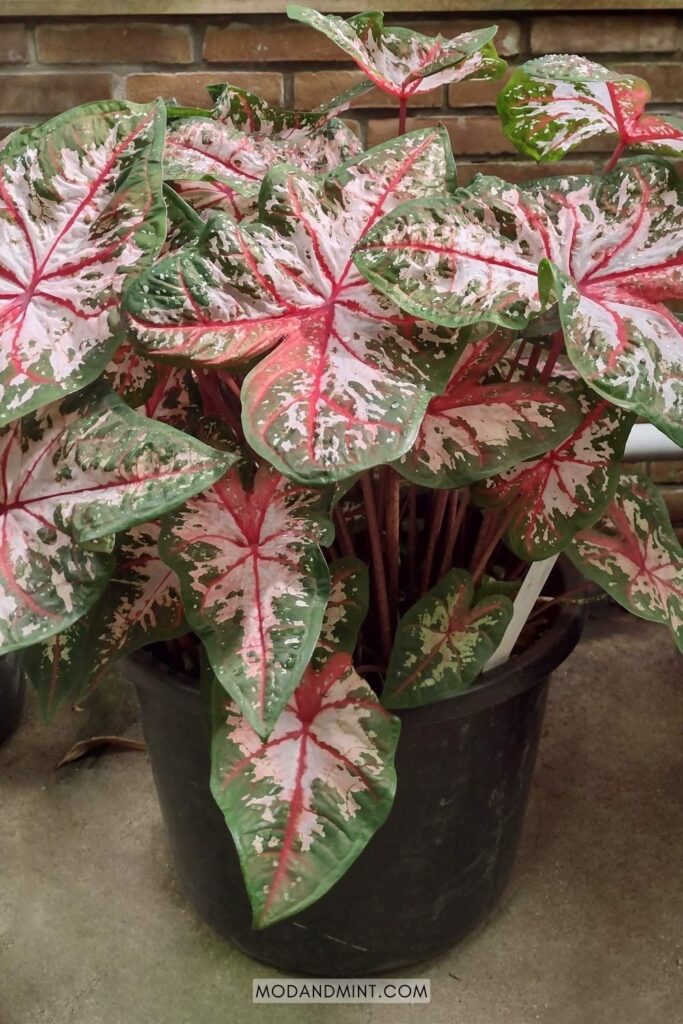
Most fancy-leaved varieties are cultivated from the Caladium bicolor. Plants are often just named Caladium x hortulanum. Where x hortulanum means the plant is a cultivated horticultural hybrid.
These cultivars grow heart-shaped leaves on long petioles (stalks). The leaf shape gives these plants the common name Heart of Jesus.
Strap Leaf Caladium
A smaller group of Caladium hybrids are the lance or strap leaf varieties. These plants are also known as the Elephant Ears.
The strap leaf Caladiums grow more leaves per tuber and shorter petioles than the C. bicolor varieties. Making these plants look fuller and more compact.
Light Requirements
In their natural environment, Caladiums grow in the understory of tropical forests, where they receive filtered, dappled sunlight.
Indoors they do best on a bright windowsill with a few hours of gentle morning sun and bright indirect light the rest of the day.
Avoid too much direct sunlight. This can scorch the delicate leaves, leaving dry brown spots that won’t heal. Move your plant away from the window, or filter the light with a sheer curtain.
If the light is too dim, growth will slow down, leaves stay smaller, and the colors may fade. Consider getting a LED grow light if your home doesn’t receive enough natural light.

Watering
Water your indoor Caladium bicolor regularly to keep the soil slightly moist. The soil should feel like a wrung-out sponge.
If the soil feels moist, wait for one to two days and check again. If the soil is dry, go ahead and water generously, saturating the soil. Allow excess water to drain out of the bottom of the pot. Then let the top layer of soil dry out before watering again.
Overwatering can lead to yellow leaves and root rot, while underwatering can cause the leaves to droop, wilt, and dry out. Leaves should feel firm, not limp.
When in doubt, hold off on watering. It’s easier to fix underwatering than overwatering. If you are uncertain, you can use a moisture meter to help you with when to water.
Don’t water throughout fall and winter to let it go dormant. Water again in spring when there is new growth.
Read more: How to water indoor plants.

Humidity
Caladiums like warm temperatures and moderate to high humidity. It is crucial to raise the humidity around your plant for it to grow well indoors. Brown, crispy leaf tips are often a sign that your plant needs more humidity.
A good place for a Caladium bicolor is in a bathroom or kitchen with a bright window. The steam from the shower or cooking will provide your plant with the humidity it loves.
If this is not possiblhe best way to raise the humidity is to place a small humidifier near your plant.
How to Get a Caladium through Dormancy
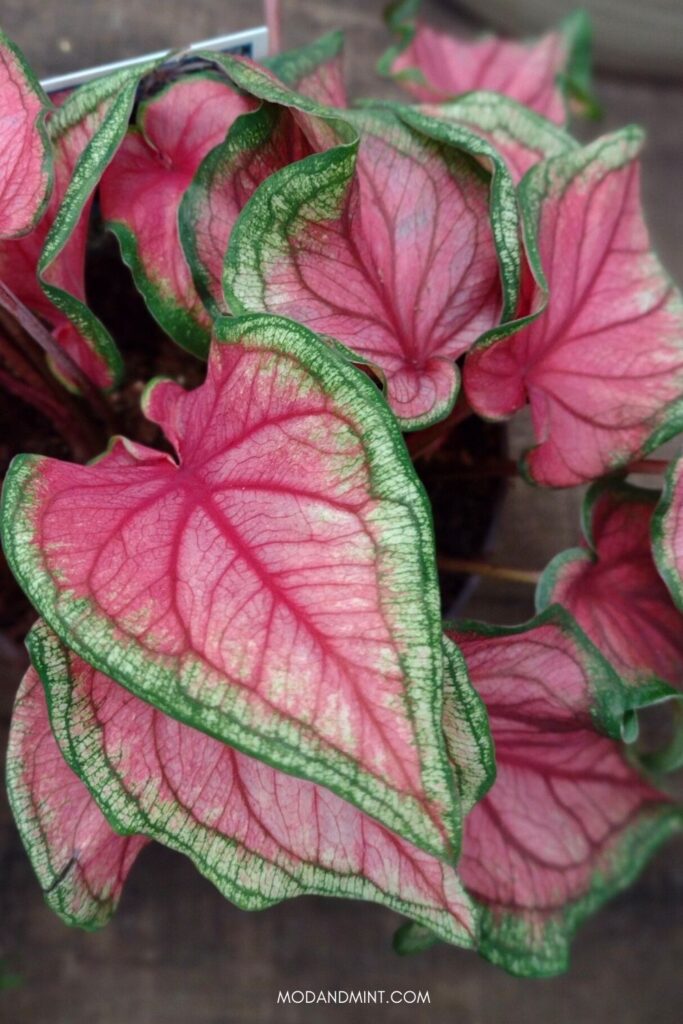
The Caladium goes through a lifecycle of active growth in spring and summer and dormancy in winter.
When the growing season ends, all the beautiful variegated leaves will start to droop, turn yellow, and wither and wilt.
With the right care, indoor Caladium plants can grow back year after year:
- When dormancy sets in, stop watering. The soil needs to be completely dry because moisture can cause mildew and rot.
- You can remove the withered leaves.
- Outdoor caladiums need their bulbs dug up and stored, if you keep your Caladium as an indoor houseplant, there is no need to dig up the tuber. It will only disturb the roots.
- In spring, move the pot to a bright windowsill and slowly increase watering. Resume regular care when leaves appear.
How to Plant Caladium Bulbs
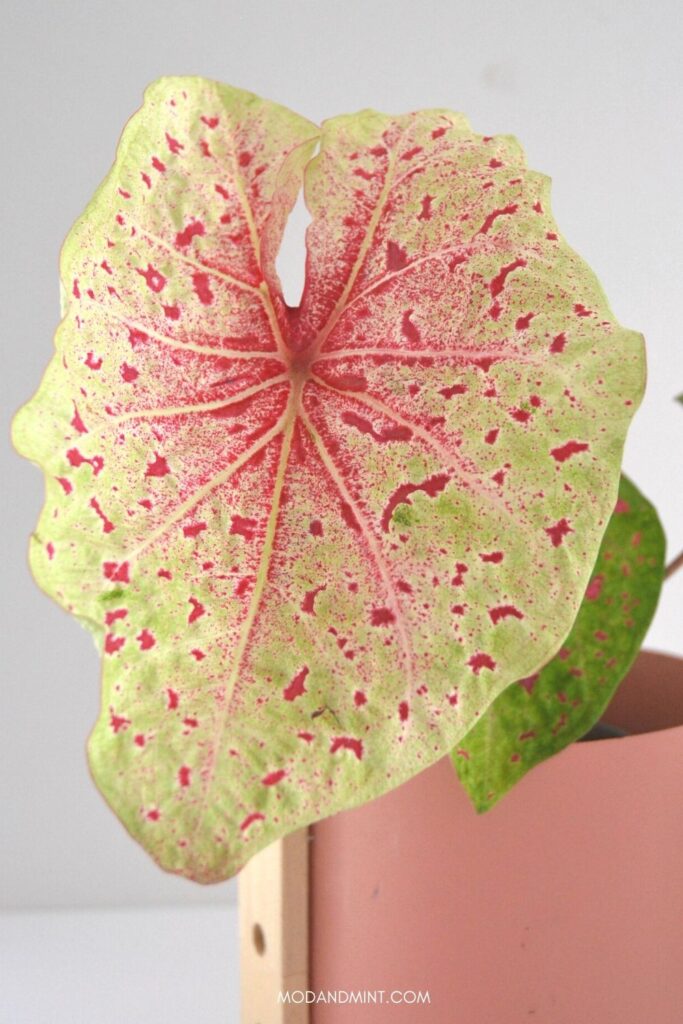
If you have purchased a bulb and waiting to plant it, store it without water in a dry place. Make sure the tubers are not too cold. Keep them where the temperature remains above 55 degrees.
Plant caladium bulbs at the end of winter to have a sizable plant at the end of spring.
- Fill pots with well-draining organic-rich potting soil.
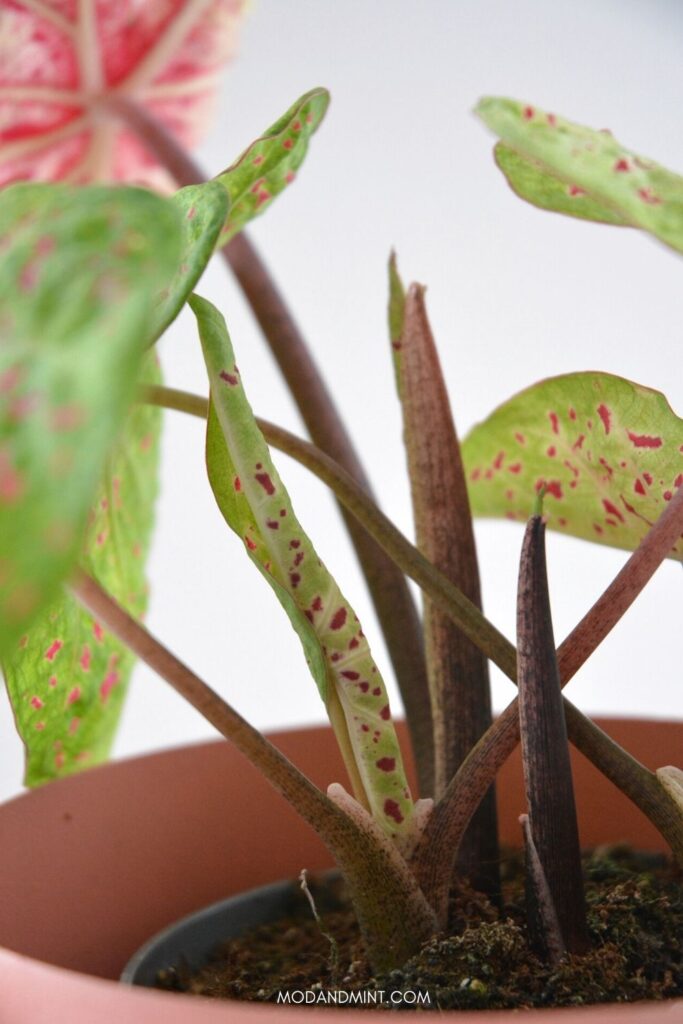
- Plant the tubers with the leaf nodes or “eyes” facing up. Cover with a few inches of soil. The eyes are the bumps from where the roots and leaves will grow.
- You can divide large tubers.
- Water generously once and keep the soil slightly moist until leaves start to sprout.
- Move them to a bright windowsill and increase watering.
Caladium Bicolor Propagation
The easiest method of propagation is by division of the tubers. The best time to do so is during the plant’s dormancy, late fall or early winter.
- Dig the bulbs up and gently remove the old soil.
- Separate the small tubers from the larger main ones.
- Divide large bulbs into smaller sections, each with at least one or two eyes.
- Let them heal and rest for a few days. This helps prevent rot when you replant them.
- Plant the sections individually in damp well-draining potting soil as described above in how to plant caladium bulbs.
Read more: 6 different ways to propagate your plants.
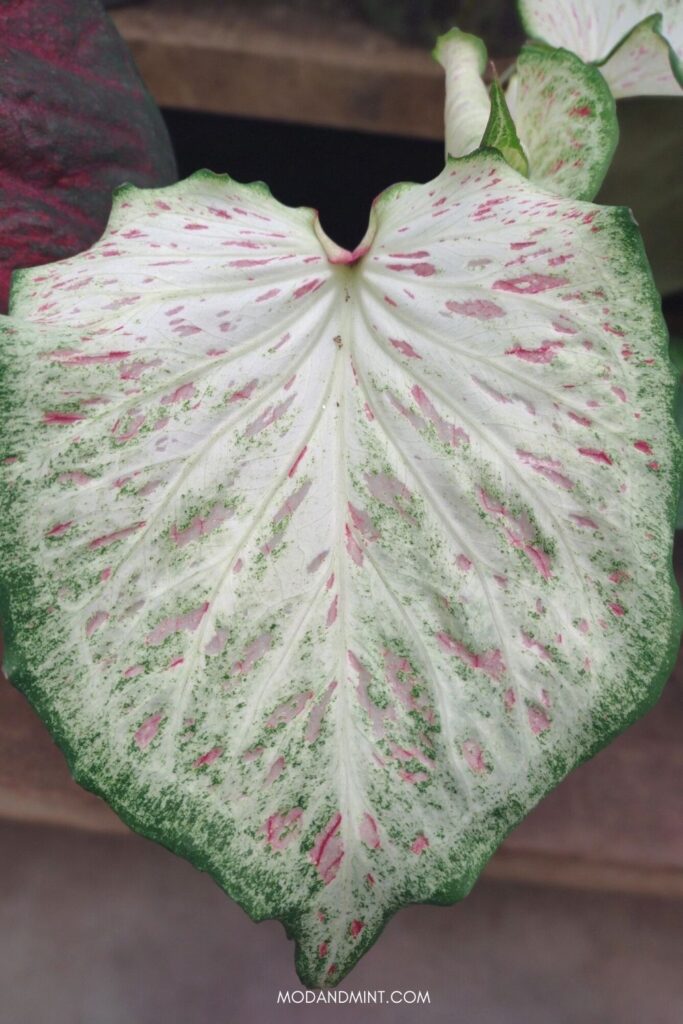
Caladiums are cultivated mainly for the florist trade. If you have a large, full plant, you can take one or two long-stemmed leaves and use them in a flower bouquet. They will keep for at least two weeks. Periodically change the water to keep it clean.
Is the Caladium Toxic to Cats?
Caladiums are considered mildly poisonous when ingested. They can irritate the mouth, vomiting, and difficulty swallowing.
Although it is uncommon for pets to get seriously hurt from eating plants, keep this one out of reach of children and pets.
Read more: Keep Your Pets Safe: Identify Toxic Plants in Your Home.
Want more big leaf plants? Check out this list of stunning big leaf houseplants!



When my caladium leave die off, I get these stalks that have small berry like growth on the ends. What is this? Do I cut it off?