
Whether your flowers come from your garden or a florist, you can make them last longer if you treat them right from the moment you get them.
I share all my tips in this complete guide on how to care for cut flowers, so you can keep flowers fresh in a vase for more than just a few days.


Make Flowers Last Longer
In short, the way to keep your flowers last longer is as follows:
Cut flowers at the right time, do not let the stem wither after cutting, use warm water immediately, and condition flowers overnight.
Always use fresh water and a clean vase. Keep your bouquet out of drafts, avoid direct sunlight, and maintain a cool temperature at night.


How Long Do Fresh Flowers Last
Depending on the particular flowers, an average bouquet of cut flowers in a vase lasts about four to ten days.
Chrysanthemums, carnations, and daisies usually live the longest, from ten to fourteen days. While more delicate flowers like daffodils, violets, and lilies of the valley last only three days. Cut roses vary by type, but can stay fresh for as long as six days. Fresh tulips may last up to a week.
Handle with Care
Be gentle handling your flowers. One petal pulled from a chrysanthemum bloom can act as a zipper and the entire flower may fall apart.
Always hold your flowers by the stems, not by the flower heads. Carry cut flowers in a heads-down position to prevent any heavy blooms from snapping off.


When and How to Cut Flowers
I am fortunate that I live in the Netherlands in an area near a lot of those famous Dutch flower nurseries. So picking flowers directly at the grower is just a bike (or bus) ride away.
I try to go in the cool of the morning or after a rain shower. This is the best time to pick flowers. The stems will be filled with water and less stressed from daytime heat and humidity.
At least ninety percent of the moisture taken up by a flower is absorbed through the end of the stem. Cut each stem on the slant, as this exposes more stem surface to the water. It also prevents the stem from resting squarely on the bottom of the vase, unable to take up any moisture.
Give store-bought flowers from the florist the same treatment. Recut the stems on the slant, an inch from the end.
Where to Cut
Look at where the nodes on the stem are. These are the points on the main stem where the leaf stem grows from.
If you cut the flower stems just above a node (bud, or eye) it helps the plant. It will grow back right from that point. Cutting the stem just below the node keeps more vigor in the flower you just cut.
So where should you cut your flowers? You should cut twice: First, cut above a node for the plant’s sake, and then recut just below a node for the flower.
Cutting at a midpoint between the nodes doesn’t help the flower or the plant.
Florist tip:
Select the freshest flowers available. Look for tight centers, deep color, firm heads, and no brown or wilting leaves. If the bud is too tight, it may never open in a vase. If the flower is fully open, it will start dropping petals soon.


What to do After Cutting
Get flowers into lukewarm water immediately after cutting. Even a few minutes without water cuts the blooms life expectancy.
If you can’t get them in water right away, wrap the stems in a damp newspaper or paper towels. Keep them in a shady spot.
If the flowers have woody stems (lilacs, chrysanthemums, peony, hydrangea), gently mash the bottom two inches of the stems with a hammer before putting them in water. This helps them absorb water better. You want it bruised, not pulverized.
Flowers with stems that ooze a sticky or milky sap (poppies, poinsettias, daffodils, dahlias) need their stems to be sealed. To do this, dip the ends in boiling water for 30-60 seconds, covering flower heads and foliage in newspaper to protect them from the steam. Then place in lukewarm water.
Conditioning
Conditioning the flowers will result in a healthier, longer-lasting bouquet.
Before arranging the flowers in their vase, leave them in lukewarm water in a cool room for at least two to three hours, until the blooms feel firm.
Remove any leaves and thorns that might decay below water level. These can cause an unpleasant smell and pollute the water. Leaves inside the vase above the waterline will divert water away from the flower.

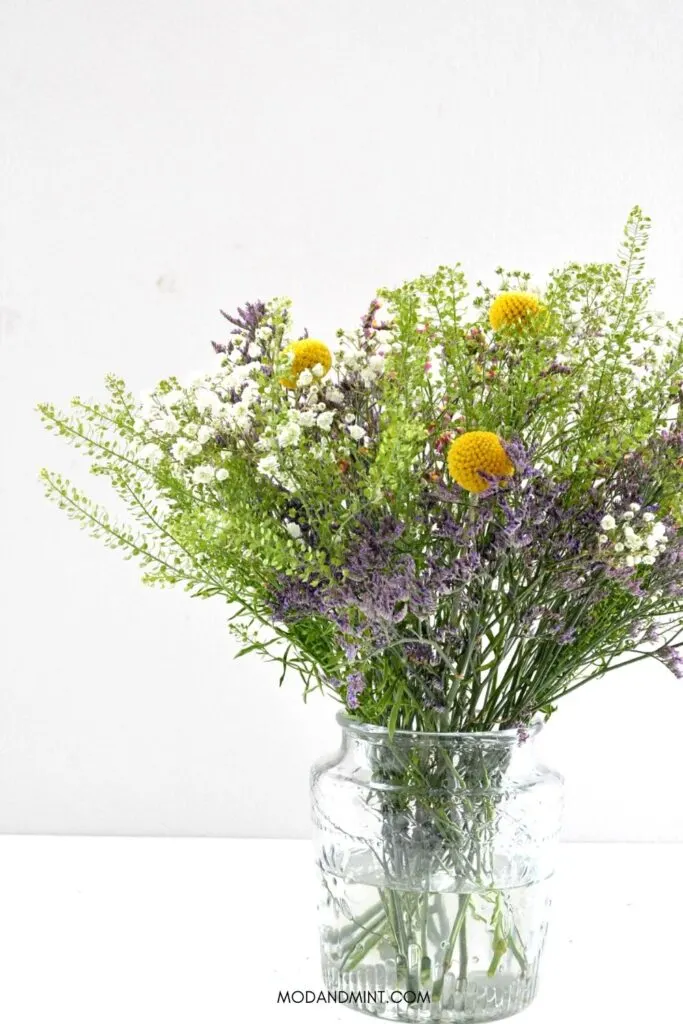
Arrange Flowers in Vase
Use a clean vase that has no bacteria from a previous bouquet. Wash the vase with warm, soapy water and a little ammonia before use.
Make sure the vase is roomy enough for your flowers. They do not survive well squeezed together tight.
No need for direct sunlight. Too much sun will make the flowers wilt. So keep your vase out of hot sun. Place it away from drafts, radiators, other high temperatures, or dry locations. A well-ventilated area is best.
How Much Water
The water level in a vase is not too important. Flowers are only able to absorb water near the base of their stems, so no need to fill the vase to the brim with water.
Most flowers last as long in water an inch deep, as they will in water four or five inches deep. A note if you have fresh carnations. They resent shallow water.
How to Keep Flower Bouquet Fresh Overnight as a Gift
If you have a fabulous bouquet of cut flowers but need to keep them fresh overnight before a special event, the most important thing is to keep them cool.
If possible, put the flowers in a cold spot, like the garage, or fridge. Keeping them in your refrigerator overnight will make them less susceptible to wilting.
Florist tip:
Prevent a mess by carefully removing all pollen-bearing stamens on flowers such as lilies so the pollen won’t fall off.

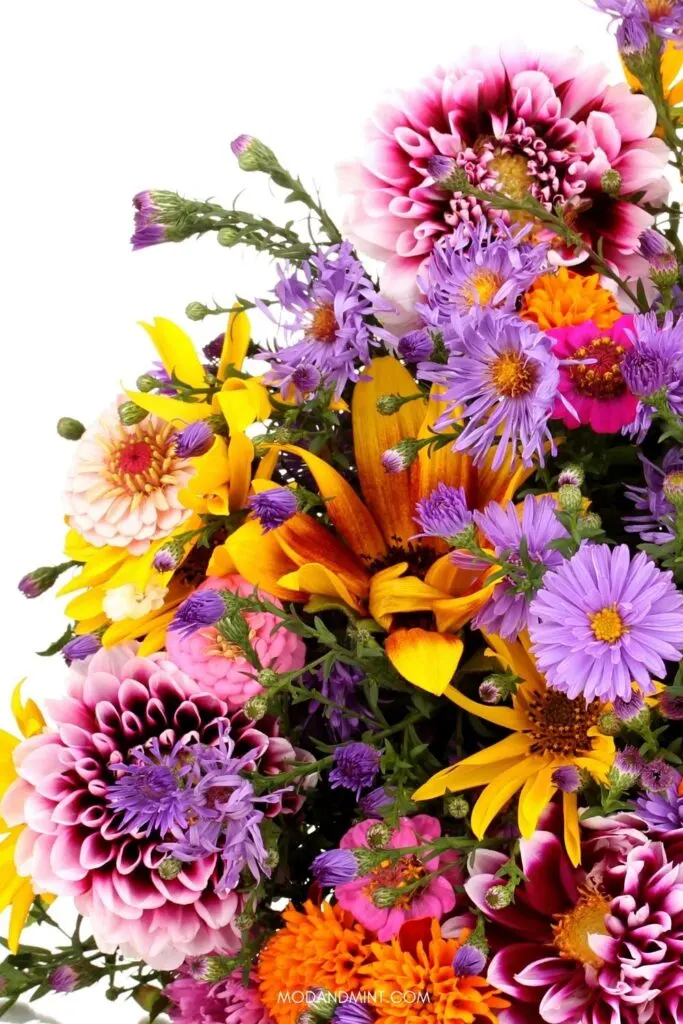
You can revive wilting blooms by checking the cut ends frequently. If they seem clogged, re-cut so the flower can take in water more easily again.
Delicate flowers, such as violets, gardenias, and orchids, will stay fresh longer if they are misted daily with tepid water.
Remove and replace faded flowers and leaves to keep your bouquet fresh.
Homemade Flower Food
Many people try to make homemade flower food by adding things like copper pennies, sprite, salt, vinegar, bleach and sugar, or aspirin to the water.
These are popular methods to keep flowers fresh, unfortunately, these DIY flower food methods simply do not work as well as real plant food.
Instead of homemade flower food, you can keep your flowers alive longer by using a commercial flower fertilizer. This has real flower food, and ingredients that slow down fungus and bacterial growth.
A packet of flower preservatives is often included with store-bought flowers, or you can get flower food in a bottle or packets.
If a preservative is used, the water does not have to be changed as often, but fresh water can be added to the vase when necessary.


Flowering Houseplants
Do you like flowering houseplants as well as fresh flowers? Check out these other popular plant articles.
- How to Care for your Poinsettia Plant
- How to Get your Indoor Succulents to Flower
- Indoor Orchid Care For Beginners
- How to Care for your Holiday Cactus (Christmas, Thanksgiving, or Easter)
Check out this Apartment Guide article I was featured in:
Flower Power: 10 Expert Flower Care Tips To Try This Summer
There’s just something so magical about having flowers in your home. Whether you have a fresh-cut bouquet on your nightstand or a balcony filled with colorful, flower-filled containers — flowers help make a space a home. To get the most out of your flowers — homegrown or store-bought — follow these creative and helpful flower care tips.
Janae
Tuesday 23rd of April 2024
I made the mistake of using too much water last month. Spilled over and needed to get a carpet cleaning. Wish I would've found this sooner. Thanks for the tips! <3