
Poinsettia Care – How to Grow The Red Christmas Plant
The most famous Christmas plant is by far the red Poinsettia (Euphorbia pulcherrima). With its iconic bright red flower leaves, it is the perfect houseplant to bring the Christmas charm to your home.
While most people get rid of their Poinsettia plants once the holiday season ends, similar to a Christmas tree, you can keep them year-round. With the right care, you can grow the Poinsettia throughout the year, and even make it bloom again!
This plant guide has all the care tips on watering, light, humidity, and more, so you can successfully grow the red Poinsettia Christmas plant!

Poinsettia Care Tips
Poinsettias are easy to grow, but they are sensitive plants. They don’t like cold water, drafts, or big changes in temperature.
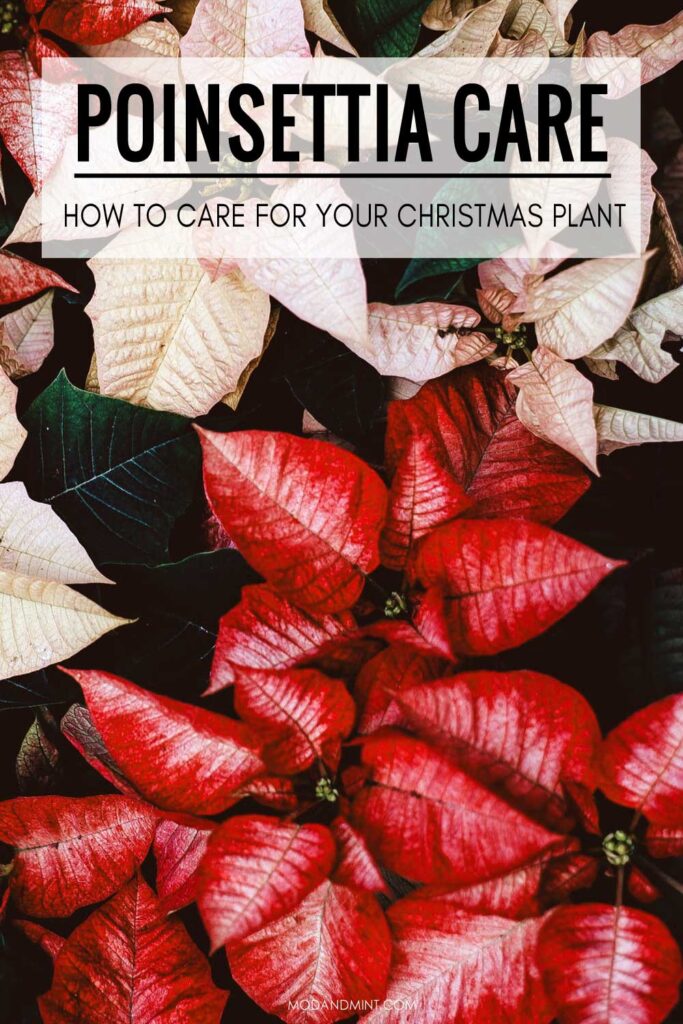
Poinsettias are available in various colors beyond the classic red associated with Christmas. You can find pink, white, yellow, and purple Poinsettias. You can even find marbled and speckled variegated variations.
Need a plant care refresher? Check out the Beginners Guide to Houseplant Care. It will teach you all the basics about indoor plant care.
Light
Indoors the poinsettia likes bright, indirect sunlight. A good spot is near an east-facing or north-facing window.
Avoid too much direct sunlight. Dry, brown spots on the leaves can be a sign of sunburn. Move your plant further away from the window, or filter the light with a sheer curtain.
On the other hand, when grown in lower light, colors may fade, leaves stay smaller and overall growth will slow down and get leggy.
Occasionally wipe the leaves with a damp cloth to keep the dust off. This will help your plant to breathe and soak up as much light as possible.
Watering
Water your Poinsettia regularly to keep the soil slightly damp. The soil should feel like a wrung-out sponge.
If the soil feels moist, don’t water but wait one or two days and check again. If the soil is dry, go ahead and water thoroughly to saturate all of the soil. Allow all excess water to drain out of the bottom of the pot. Then allow the top layer of soil to dry out before watering again.
Overwatering can lead to yellow leaves and root rot, while underwatering can cause the leaves to curl, droop, wilt, and dry out. Leaves should feel firm.
If in doubt, don’t water yet. An underwatered plant is easier to revive than an overwatered plant.
If you are uncertain, you can use a moisture meter to help you out with when to water. And read up on the basics of watering your indoor plants.
Remove the decorative foil Christmas wrapper they often are sold in. Or punch a few holes in the bottom for drainage. You don’t want the plant to sit in water.

Humidity
In their natural habitat, Poinsettia plants are used to a warm and humid environment. To grow well indoors, you will need to increase the humidity around your plant.
Brown, crispy leaf tips are often a sign that your plant needs more humidity.
The best way to raise the humidity is to place a small humidifier near your plant.
Keeping the humidity high is especially important in winter when the heaters go on and the air indoors is usually drier.

Year-Round Poinsettia Care: A Month-by-Month Guide
Many people enjoy their poinsettias only during the holiday season, often discarding them after Christmas when the leaves begin to fall.
But why not keep and grow your plant throughout the year? Follow this month-to-month care schedule to ensure your Poinsettia thrives and flowers again next holiday season!
November – December: Enjoy the Festivities
- Likely the time when you get your blooming Poinsettia. Revel in its beauty during the holiday season!
- While it’s growing flowers, place your poinsettia in a sunny window and keep the soil slightly moist.
January – February – March: Dormancy Begins
- After flowering, the red leaves will drop, followed by the green leaves turning yellow and falling off. This marks the start of your Poinsettia’s dormancy until spring.
- Reduce watering and allow the plant to rest.
April – May: Spring Awakening
- With the arrival of spring, the Poinsettia will come out of dormancy. Start with light watering and gradually increase frequency as you observe new growth. This is also a good time to prune any leggy stems.
- Fertilize every two to three weeks and consider repotting if needed.
June – July – August: Summer Vigor
- Maintain consistent watering and fertilization during the summer months.
- Provide ample bright light to encourage new shoots and leaves. Pruning and pinching back your Poinsettia can promote branching.
September – October: Prepare for Flowers
- As fall approaches, reduce watering frequency and limit fertilizer to once a month.
- To enhance the chances of holiday-season blooms, start a dark treatment on your plant (explained below).
- When the leaves change color, stop the dark treatment, increase light exposure, and return to regular watering.
Understanding Poinsettia Blooms: Bracts vs. Flowers

The vivid red leaves adorning a Poinsettia are not its actual flowers; they are known as bracts. Within these bracts lie the true flowers, minuscule and yellow in appearance. The leaves undergo a remarkable transformation from green to red before the flowers make their appearance, continuing to grace the plant for an extended period.
How to Make Poinsettia Bloom Again
By nurturing your Poinsettia year-round, you can encourage it to bloom anew for the next Christmas season through a ‘dark treatment.’ This technique replicates the Poinsettia’s native habitat, characterized by lower temperatures and shorter daylight hours.
Implementing the Dark Treatment:
To initiate this process, typically around late September or early October, ensuring your Poinsettia blooms and produces fresh red leaves in time for Christmas, follow these steps:
- Daytime Sunlight: Place your plant in the sunniest location in your home during the day to ensure it receives ample light.
- Nighttime Darkness: During the night, place your plant in complete darkness for 12 to 14 hours.
- Use a Cardboard Box: To achieve the necessary darkness, a practical method is to use a large cardboard box. Cover your plant with the box in the early evening and remove it in the morning.
- Timing Matters: Cease the dark treatment when the leaves begin to change color.”
Poinsettia Dropping Leaves
Poinsettia plants will drop leaves naturally after flowering, but leaf drop can also occur if they are not happy with their overall conditions.
To maintain a healthy Poinsettia, place it in a bright, draft-free location away from direct sunlight. Make sure the soil stays slightly moist without becoming waterlogged during the flowering season.
If the lower leaves of your Poinsettia turn yellow before they drop off, overwatering is most likely the reason. On the other hand, underwatering can lead to the leaves wilting, drying out, and eventually falling.
Additionally, low humidity levels can also contribute to leaves dropping.
Plant Pests
The most common pests to watch out for are whiteflies, fungus gnats, thrips, and spider mites.
Inspect your plant regularly for signs of bugs to catch a possible infestation before it becomes severe. Check under leaves and in axils where insects like to hide.
Learn more about common houseplant pests and what you can do to get rid of them.
Is the Poinsettia Poisonous to Cats and Dogs?
Unfortunately, yes. The Poinsettia is considered toxic but not as bad as some think. The Poinsettia has a bad rap as being super dangerous to your pets.
Your pet can get an irritated mouth or stomach problems, and maybe vomit, but not much more than that. The ASPCA even mentions that the Poinsettia is generally over-rated in toxicity.
Although it is very rare for pets to get seriously hurt from eating plants, to be super safe, keep this one out of reach of children and pets.
Read more: Keep Your Pets Safe: Identify Toxic Plants in Your Home.
Where to Buy Poinsettia Plants
Poinsettias are most often available for purchase during the holiday season, making a sudden appearance at garden centers, plant nurseries, and even in grocery stores and gas stations.
For the best chance of acquiring a healthy Poinsettia, consider buying from your local plant nursery or garden center. These establishments typically provide well-cared-for plants.
If you’re in a rush and need a quick Christmas gift, grocery stores or gas stations may be where you buy your plant. However, make sure to choose a healthy-looking plant. Avoid crowded displays as Poinsettias like to have their space.
Also, avoid plants displayed near the front of the store. Those plants are exposed to cold drafts coming in from the automatic doors.
TIP: If you purchase a Poinsettia on a cold day, make sure to wrap it during transport so the plant won’t get too much cold shock.
If you don’t live near a nursery that carries Poinsettias, you can buy poinsettias online on Amazon, especially around the holidays. Just beware of any listings that say “nearly natural” or “artificial” since that just means fake. Look for “Live” plants and carefully read the listing and reviews before you buy.




Can i leave my poinsettia Christmas plant outside?
@Ruby, It depends on the weather in your area. if the temperature is going to drop anywhere bellow 60 F or if your plant is going to be somewhere where it can get rained on then no its not safe outside.