
Kids can learn about plant care from a young age.
My four-year-old knows how to check the soil to see if a plant needs watering. He knows how to prune a Jade plant and how to re-pot a Sansevieria. He knows the name of plants like he knows the names of his favorite cartoon characters.
My son was born into a home filled with plants and went on many trips to the plant shops when he was still in his stroller.
So it is no surprise to me that he knows how to care for indoor plants at four years old.
But what do you do if plant care is not part of your regular schedule in a way like it is for me?
How do you sow the seeds of plant care in your kids’ daily activities?

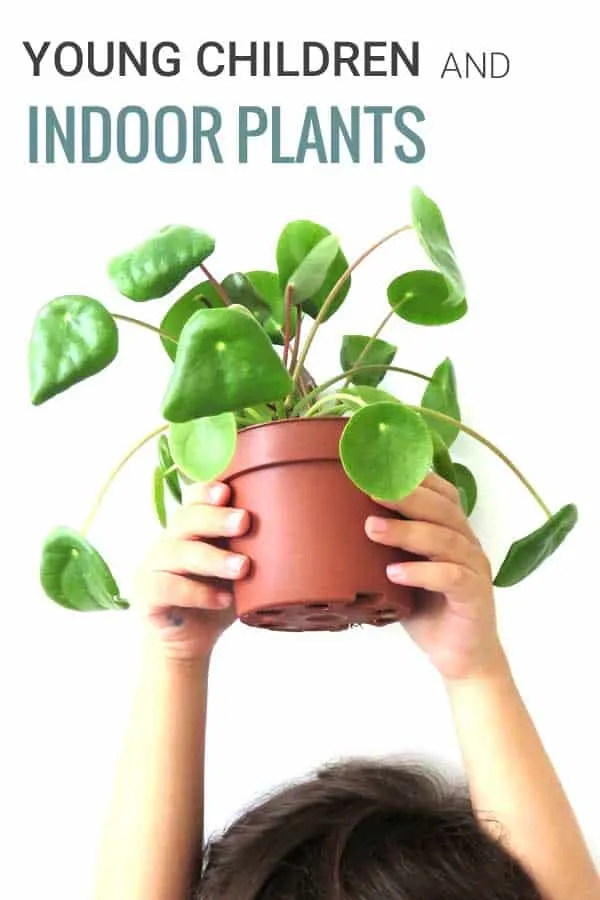
How to Take Care of Plants for Kids
There are no plant superheroes or princesses on tv to show young kids how cool plants are.
If you want your child to grow an interest in plants at an early age, there are a few things you can do.
So continue for all the tips, or skip ahead to:
Need a plant care refresher? Check out the Beginners Guide to Basic Houseplant Care. It has all you need to know to take care of your indoor plants.
1. Start Plant Care in Spring
Spring is a great time of year to start getting young children interested in plants. This is the time when most houseplant action happens.
Introduce kids to plants when there is a lot to do and to see is more fun than showing plants that are in their winter dormancy.
2. Let the Kids Help
Children like to learn by doing, so have your child help as much as possible.
Watering is obviously something kids can do. But they can also check if it’s time to water.
Let your child stick a finger in the soil. Ask how it feels. Does it feel dry or is it moist?
Talk about how plants drink from their roots, and when the soil is still wet there still is enough water for the plant to drink. Point out things like how the leaves look different when they are thirsty or when they have just been watered.
Let your child help when you need to re-pot your plants. Or make some eggshell water together to feed the plants.
And involve your child in the growth process of the plant. Point out when flowers start to appear. Be excited. Check back and show when the flowers open.
Some plants grow pups or offsets from the main plant, talk to your kids about how the mother plant is having babies. Choose plants like spider plants, the pilea peperomioides, or succulents that grow pups like the Gasteria little warty.

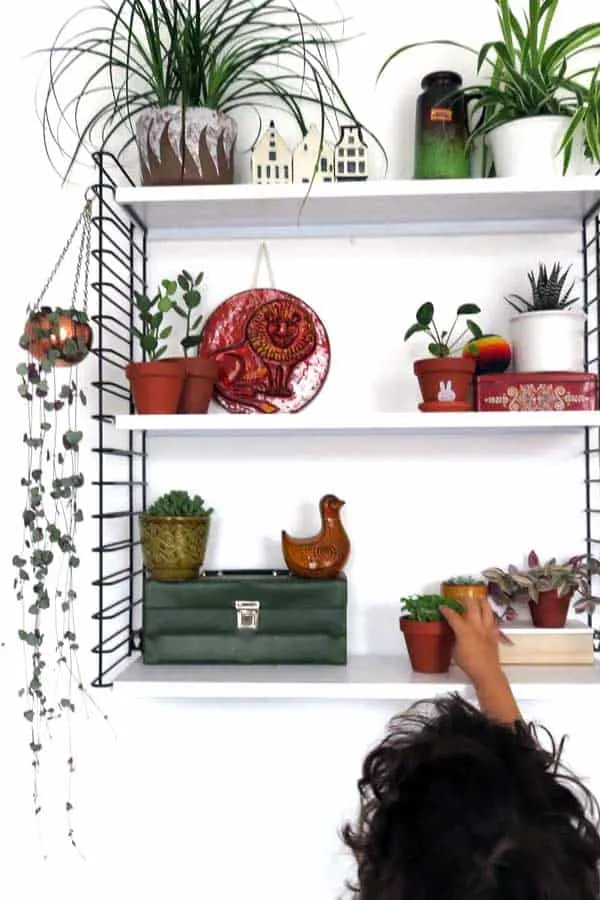
3. Let The Kids Have a Plant of Their Own
The best way to get your kid to appreciate plants is to give them a plant of their own.
By caring for the plant, children learn about responsibility in a playful way.
Young children love active plants that they can see grow. Their plant should be one that is easy to take care of and generous with leaves and flowers to keep the child’s attention over a longer period of time.
Children and plants: The first plant at a young age can be the start of a life filled with plants.
4. Do Water Propagation Experiments
Get young kids excited about plant care by doing water propagation experiments. Seeing roots grow in water is a sure thing to get a child’s attention. It’s easy to do, and fun to watch.
Set up a little rooting station where the root growing process can be followed.
All you need is a plant cutting to propagate. Insert the cutting into a clear glass jar or small vase filled with water. Make sure to trim off the bottom leaves so they don’t sit in the water.
Check back regularly to see if the roots appear. Make photos to keep a record of how fast the roots are growing. One plant might grow roots quicker than another plant, or grow bigger roots.
For best results, change the water every couple of days, and place your cuttings in bright, but indirect, light.
Read the complete guide on how to Water Propagate Plants if you want to learn even more about growing plant cuttings in water.


5. Choose Interesting Plants for Kids
Make sure to pique their interest by introducing interesting and unusual plants for kids.
There are many succulents in funny shapes. Like the fishbone zig zag cactus, the Burro’s tail or Donkey tail, Buddha’s temple, and the Bear paw succulent. Added bonus that succulents store water in their leaves and don’t need frequent waterings.
Air plants are different in the way that they don’t need any soil to grow.
Use your windowsill to grow an indoor herb garden. Plants you can eat!
Carnivorous plants like a Venus flytrap, or the Sarracenia pitcher plant are always a hit with kids. Their sweet nectar lures flies and other small insects, then it traps them in its leaves.
Albeit fun to see, flytraps can only trap insects a limited amount of times. Explain that it may be fun to see the trap leaves close, but doing so too often drains the plant’s energy. The leaves will turn black and fall off.
6. If it Doesn’t Work
While my little boy loves plants, I must admit there are some times when I try to show him something that is happening to one of the plants, and he just looks at me like he’s a bored teenager.
If this happens, just shrug it off. Care for your plants. Take some time.
When there is something new to show, just let your kid know. Most likely they want to see it. There’s always next time.
Houseplants can teach an appreciation for nature to our kids. And at the same time, the plants can purify the air and provide oxygen. Having plants around is a score no matter what.
7. A Few Safety Tips
Regularly prune your plants and clean up loose leaves to prevent a choking risk. Also, be aware that some plants might be toxic.
If you’re worried about your child perhaps putting leaves in their mouth, and or having allergic reactions, keep potentially toxic plants out of reach. Or avoid them completely.
If you have any cacti in your home, teach your child that cacti are look-but-don’t-touch plants. Keep them on a high shelf, so your child can’t get to them.
Plants as inspiration: 20+ Funny and inspirational plant quotes!

Melinda
Friday 5th of October 2018
Good post. My son got interested in plants when he found a 3D printed Charmander at a plant sale.
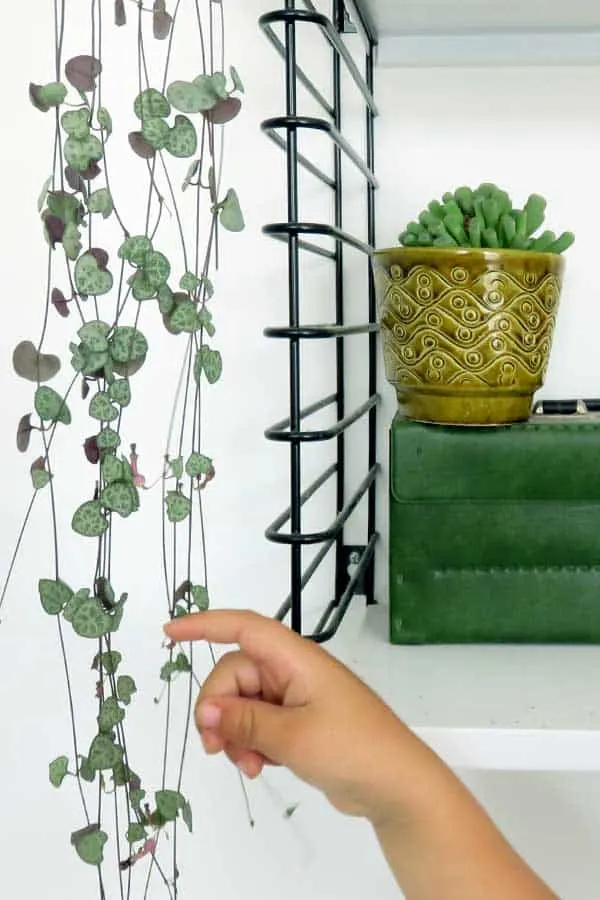
What plants are pictured? I see one is a frithia, but what about the other one?
Mod and Mint
Sunday 7th of October 2018
Love a cute Charmander as a little plant friend! Yes, one is a Frithia pulchra, aka Baby toes succulent. The other is a Xerosicyos danguyi, or Silver Dollar Plant. I'm planning on doing a post on this rare but wonderful plant soon.