
You can grow these herbs on your kitchen windowsill and have a year-round supply of fresh herbs and delicious smelling foliage! Starting an indoor herb garden is both inexpensive and easy.
With the right care and conditions, you can grow herbs at any time of year, right inside your kitchen.


Growing an Indoor Herb Garden
Growing herbs indoors doesn’t need to take up much space. A sunny kitchen window is a perfect setting for growing fresh herbs in pots. Once you’ve tasted homegrown herbs, you won’t want the be without them again.
This guide will teach how to grow fresh herbs indoors, what the best herbs are to grow indoors, and how to harvest and store them for later use.
Herbs require good air circulation, so open a window nearby daily. If it is cold outside, open a window in an adjacent room. They don’t like drafts.
The Best Herbs to Grow Indoors
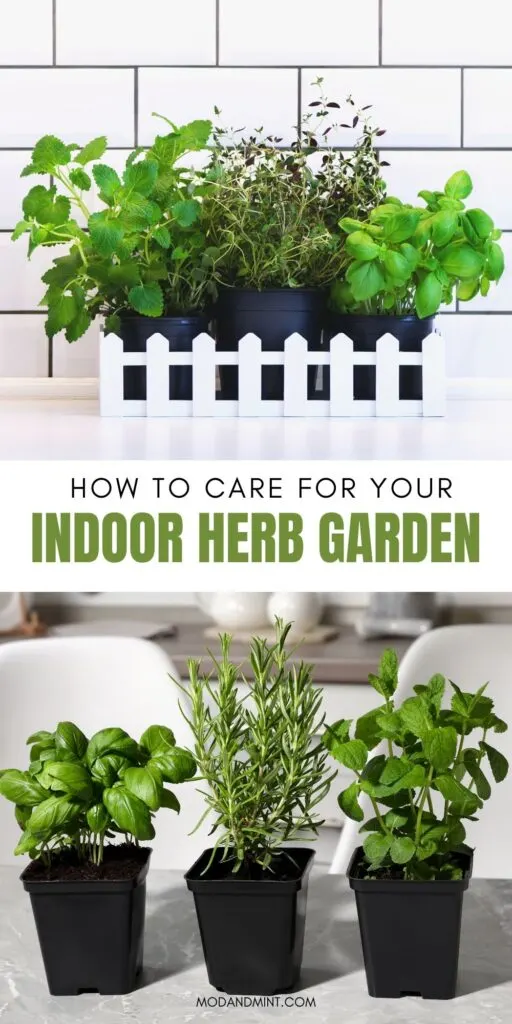
Many herbs can grow indoors in a windowsill herb garden. These are my five favorite herbs to grow at home.
Start these easy herbs from seed or rooted cuttings, or purchase small plants that give you a supply of fresh herbs faster.

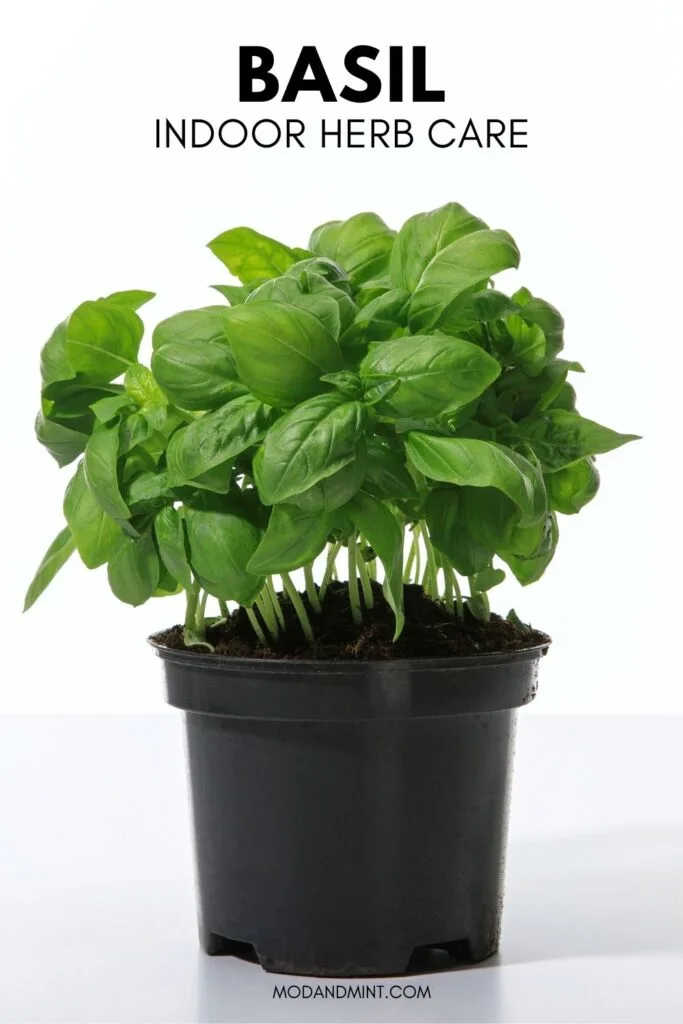
Basil
Basil is ideal to grow in the kitchen and tastes great in tomato sauce and Italian and Asian dishes.
Likes lots of sun and frequent watering. Buy small plants or grow from seed. Pinch off flowers as they appear for better leaf production.

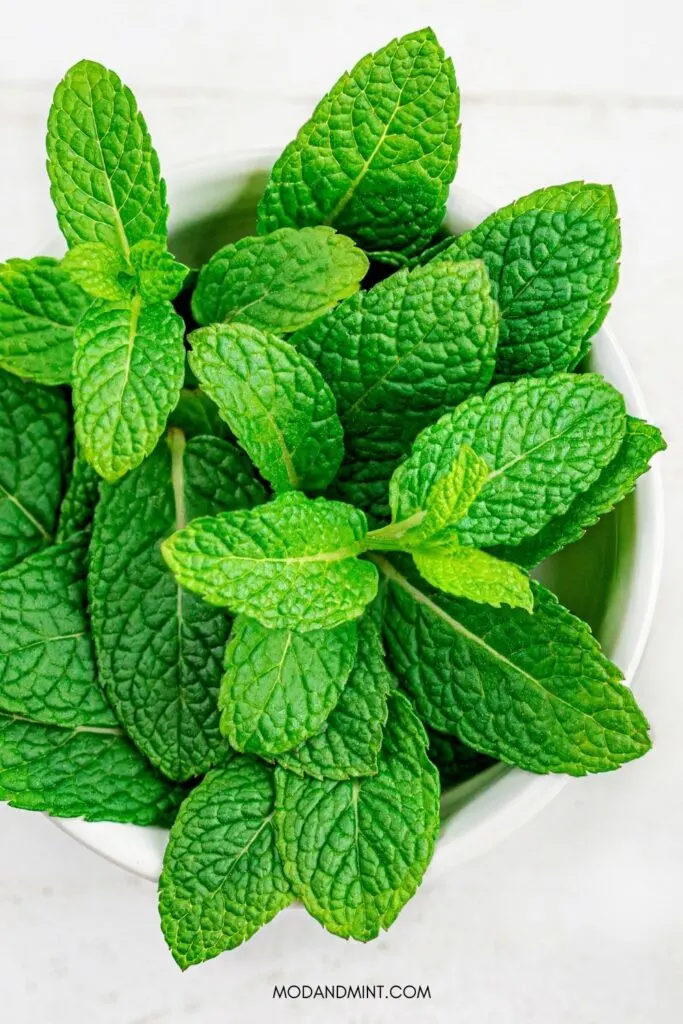
Mint
Use in iced tea and salads or as an all-natural breath freshener.
There are many varieties of mint. Peppermint and spearmint are the two most common. Low maintenance, and can be grown year-round. Prune frequently to encourage fresh growth.
Further reading: Complete mint care guide.


Rosemary
Adds flavor to potatoes, bread, and roasted vegetables.
Rosemary thrives indoors if misted daily. Otherwise, the tops tend to quickly become dry indoors. Give rosemary as much sunlight as possible indoors. Snip off tender stem tips. New growth will branch out from the cut.

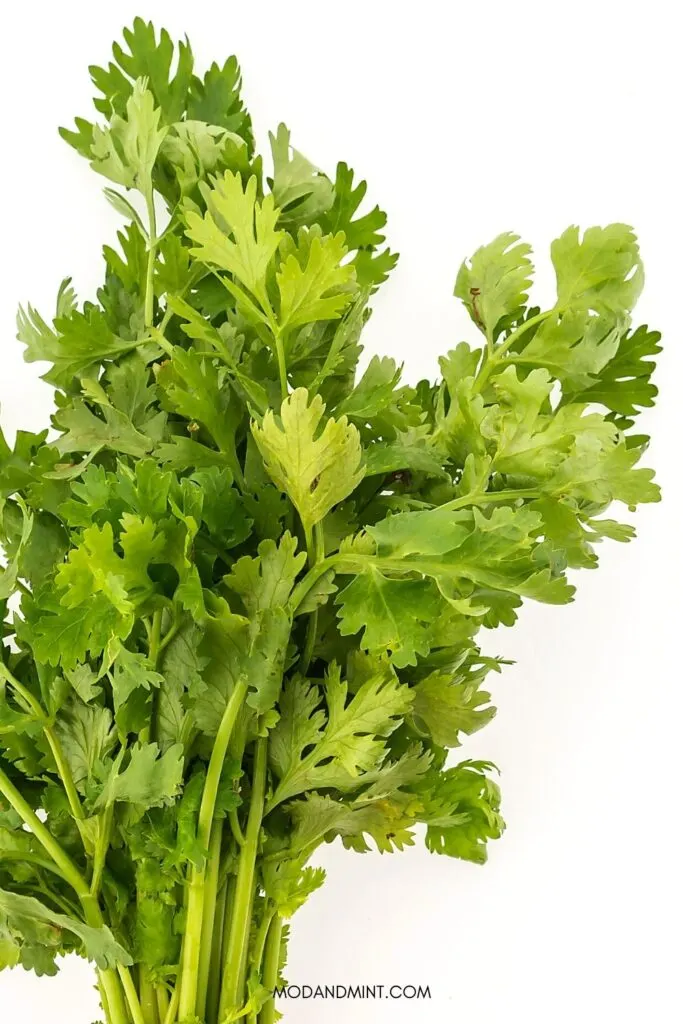
Cilantro (coriander)
Cilantro pairs wonderful with salsa, corn salad, and chili. Cut off what you need.
Once cilantro is done flowering it produces seed. Removing the flowers won’t stop the cilantro from going to seed. Plant a few seeds every three weeks for a continuous supply of fresh cilantro.

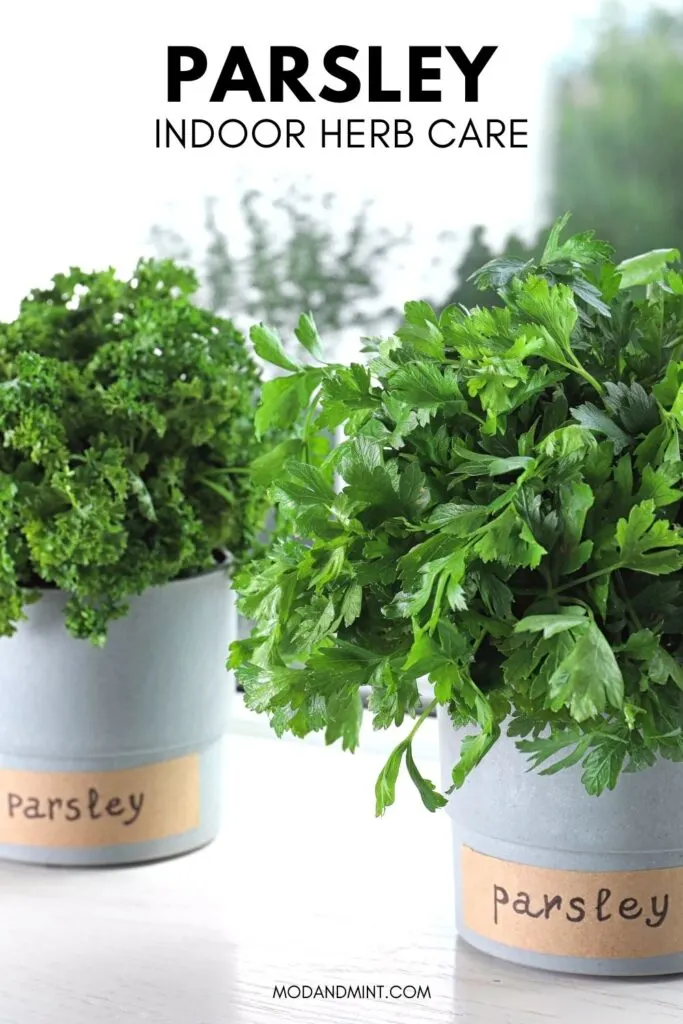
Parsley
Use parsley as a garnish, in salads, or as a breath freshener.
Plant seedlings in containers. Harvest larger outer leaves first, leaving inner shoots to grow.
How Much Light do Indoor Herbs Need?
The ideal spot for most herbs is near a sunny window. Rotate the pots frequently for even sun exposure.
Watch out for herbs such as basil, which do better in bright but indirect light. You may need a shade or curtain to protect the plants during the hottest part of the day.
If you don’t have a sunny window, you can still grow herbs indoors without sunlight. Herbs flourish equally well under artificial grow lights as in sunlight. Keep your herbs happy with twelve to fourteen hours of artificial light.


How Much Water do Indoor Herbs Need?
Most herbs like moist soil. This means keeping the soil damp but not soggy. Stick your finger into the top inch of the soil to find out if it is time to water.
If it feels moist, don’t water but wait a day or two and check again. If the soil feels dry to the touch, go ahead and water thoroughly using room temperature water. Never let the soil completely dry out.
To make sure your plant is getting a good soak, you can water from the bottom.
If the tips of the leaves start to darken, you’re not watering enough. Yellow leaves are usually a sign of overwatering.
A little bit of fertilizer can make the difference between a straggly herb plant and a lovely, lush plant. Give herbs a monthly treat of organic herb fertilizer.
Humidity
Herbs like a humid environment. At home, raise the humidity around your herb plants for them to grow well. The best way to do this is to use a small humidifier.
Keeping the humidity high around your windowsill herb garden is especially important in winter when the heaters go on and the air indoors is usually drier. Keep your herbs away from radiators when they are turned on!
Watch out for indoor pests like spider mites, whiteflies, and aphids. They thrive when humidity levels are low.

Potting Herbs
Herbs can be planted in almost any type of container, as long as there are drainage holes on the bottom. So you shouldn’t plant your herbs in those pretty mason jars. Without drainage holes, excess water has no way to get out and this will drown the roots.
Use well-draining potting soil, ot opt for a specially formulated potting mix for herbs.
Herbs need ample space for root growth. Provide pots larger than seem necessary, larger than you would the average houseplant. Clay terra cotta pots are porous. Making the soil dry out quicker. Whereas plastic pots hold moisture inside longer, which your herb plants will like.
Grow Herbs in Water
Many herbs like mint, basil, and cilantro, can grow from clippings in just water. They will stay fresh for a few days at room temperature. In the refrigerator, they can keep for up to two weeks.
Growing herb cuttings in water permanently is called hydroponic gardening. To grow herbs in water for a longer time, you will need to fertilize frequently with a special liquid fertilizer for vegetables and herbs. Water alone won’t supply the plants with the nutrients they need to grow.
Other than that you should watch out for algae growth. Change the water regularly to prevent this.
Harvesting Fresh Herbs
Once your windowsill herbs have grown nicely, prune them regularly to promote lush new growth.
When it’s time to harvest, snip off a small portion with sharp scissors, or pruning shears. Don’t tear stems off, this can injure the plant or dislodge the roots.
Avoid removing too much at once. Do not remove more than one-third of your plant’s growth. Plants need their leaves to grow and thrive. Regular harvesting is usually enough.

Storing Fresh Herbs
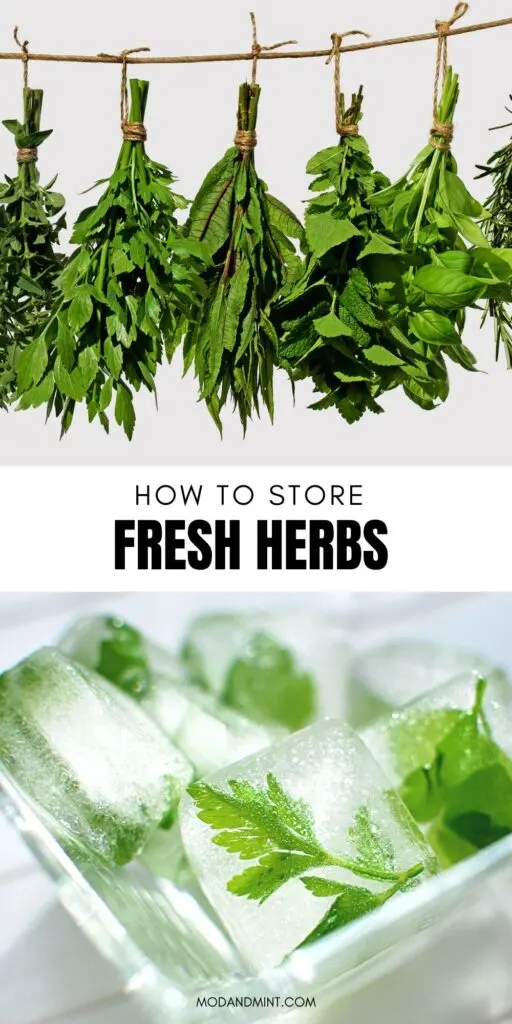
You can keep your herbs in the refrigerator, or save herbs for later by freezing or drying them. This way you can preserve your fresh herbs and have them readily available year-round, even in winter!
Refrigerating Herbs
The refrigerator is a great place to keep fresh herbs.
Strip a few leaves off the bottom of the stems, then place the cuttings upright in a glass with enough water to cover the bottom of the stems. Change the water regularly and the herbs can stay fresh for as long as two weeks.
You can also wrap herbs loosely in damp paper towels and refrigerate them in a perforated plastic bag.
Drying Herbs
Capture the flavor of homegrown herbs by dehydrating them as quickly as possible. You can use your oven or microwave to speed up the drying process.
- Oven: Place a layer of herbs on a baking sheet, and bake at 100 F degrees till they’re brittle. Leave the oven door slightly ajar.
- Microwave: put four or five bunches of herbs between paper towels and set the timer for 2-3 minutes. If the herbs are not dry yet, reset the timer for 30 seconds more or until the herbs are crumbly.
Or dry your herbs the classic way by tying bunches of herbs together with string or butcher’s twine. Hang them upside down in a dry, airy room, away from direct sunlight. After about two weeks the leaves will be dry. Crush them with your fingers or a rolling pin.
Store the dried herbs in airtight containers in a cool place away from sunlight for up to four months.
Freezing Herbs
The easiest way to preserve fresh herbs from your indoor herb garden is to freeze them.
Herbs can be frozen in ice cubes to add flavor to cold tea or other drinks. To make herb ice cubes to put in your drinks, freeze a layer of water in the cube tray, place the herb in the middle, add more water, and refreeze.
To freeze herbs to flavor your favorite dishes, combine one cup of herb leaves (whole or chopped) with two cups of water. Pour into ice cube trays to freeze. Label and store the cubes in plastic bags for up to three months.
Herb leaves do tend to turn limp and darken soon after they are thawed. To use at cooking time, let the ice cubes melt, and near the end of cooking, add just the herbs to the dish.