
The Chlorophytum comosum Bonnie is a cultivar of the classic Spider plant house plant. It is similar in ease of care but grows more compact with fun, curly leaves.
Provide your Spider plant Bonnie with bright indirect sunlight and well-draining soil. Regular pruning and occasional repotting ensure optimal growth and lush foliage, while avoiding overwatering is crucial to prevent root rot.


Want to buy a Chlorophytum comosum Bonnie? Find it for sale on Amazon!
Spider Plant Bonnie
The Chlorophytum comosum Bonnie spider plant originates from tropical and subtropical regions in South Africa, where they grow nestled beneath the canopy of forests. With its cascading foliage and arching stems, it gracefully adapts to its surroundings, exhibiting a moderate growth rate.
Further reading: Regular Spider Plant Care.


Light
Spider plants are often listed as low-light plants. While they could survive in a low light situation for a while, they can not grow without any light at all.
Indoor Bonnie plants thrive in bright, indirect light, making them perfect for spaces with filtered sunlight. Avoid exposing them to direct sunlight, which can scorch their leaves, leading to sunburn and discoloration.
Watering
Maintaining moderate soil moisture is key to Spider plant Bonnie care. Water thoroughly when the top inch of soil feels dry to the touch, ensuring proper drainage to prevent waterlogged roots. During winter months, reduce watering frequency to prevent water stagnation.
When the soil dries out completely or stays too soggy, it can lead to yellow leaves.
Further reading: When to water indoor plants.
Fertilizing
Feed your Spider plant Bonnie with a diluted liquid fertilizer every two to four weeks during the growing season (spring and summer). Avoid over-fertilizing, as it can lead to fertilizer burn and damage the plant’s roots.
Humidity
While Spider plants can tolerate a wide range of humidity levels, they appreciate slightly higher humidity, especially in drier indoor environments.
If the air in your home is very dry, you can mist the leaves of your plant, to temporarily up the humidity. But the best way to raise the humidity is by placing a small humidifier near your plant.
Why Does a Curly Spider Plant Lose the Curl?
A curly spider plant losing the curl in its leaves can indicate various issues:
- Overwatering: Excess moisture can lead to root rot, causing the leaves to lose their curl.
- Insufficient Light: Spider plants prefer bright, indirect light. Inadequate light can cause the leaves to lose their characteristic curl.
- Low Humidity: Spider plants thrive in moderate to high humidity. Dry air can cause the leaves to straighten out.
- Nutrient Deficiency: Lack of essential nutrients, particularly nitrogen, can affect leaf health and curliness.
Flowers

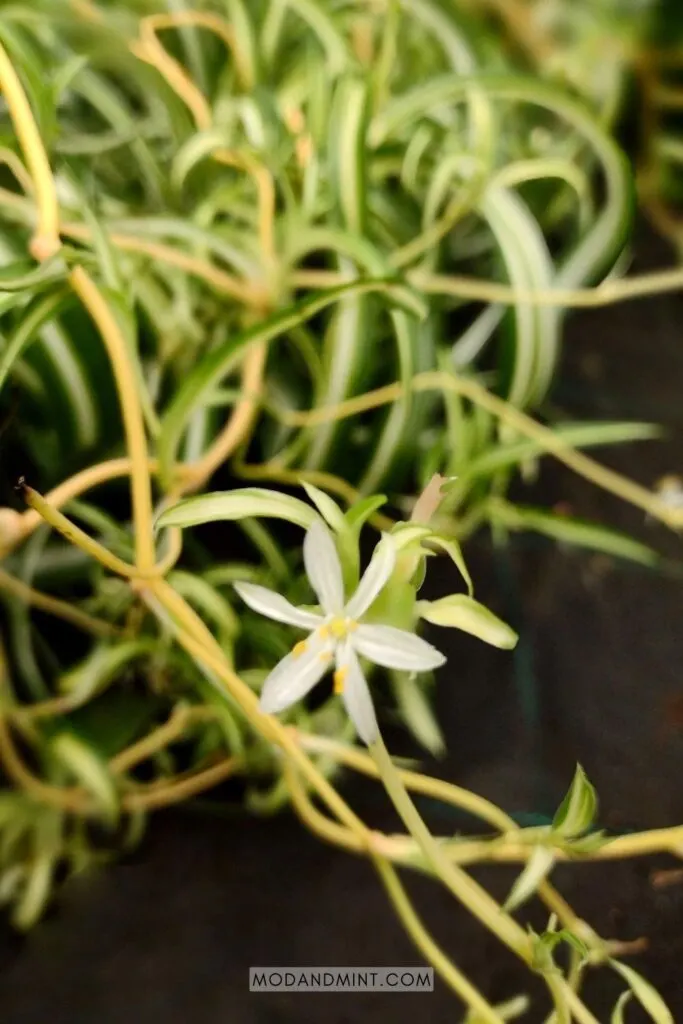
When your plant matures and grows in plenty of bright light, it will grow long runner stems from the plant’s center. Small, white star-shaped flowers will grow on the end of these stems.
These delicate blooms add a charming touch and typically appear during the plant’s growing season.
Spider Plant Bonnie Propagation


Spider plants can be easily propagated through division or by harvesting the baby plants, or offsets, also known as “spiderettes.” These offsets grow from the runner stems after the flowers have wilted.
Simply separate the babies from the parent plant and plant them in a pot filled with well-draining soil. Within a few weeks, they’ll develop roots and begin to thrive independently.
Further reading: 4 ways to propagate your spider plant.
Toxicity to Cats
Chlorophytum comosum Bonnie Spider plants are non-toxic to cats, making them a safe and pet-friendly addition to your home. But the green grass-like leaves do attract almost every cat. So you might want to keep this plant out of reach nonetheless.
Further reading: More easy care plants, perfect for beginners!