
Crassula Marnieriana Care – Grow an indoor Worm Plant Succulent
The Crassula rupestris ssp. Marnieriana is an interesting-looking succulent and is more commonly known as a Worm plant, Jade necklace, or baby necklace.
These fun names refer to the way this succulent grows strings of flattened stacked leaves. The stems push right through the middle of the leaves making them look like needle-strung necklaces. Or funny crawling worms. Whatever you prefer. 🙂

Want to buy a Crassula marnieriana? Find them for sale on Amazon!
Crassula Marnieriana Care
Native to South Africa, the jade necklace crassula or worm plant likes full sun, warm temperatures, and low humidity.
Need a succulent plant care refresher? Check out my Guide to Succulent Care.
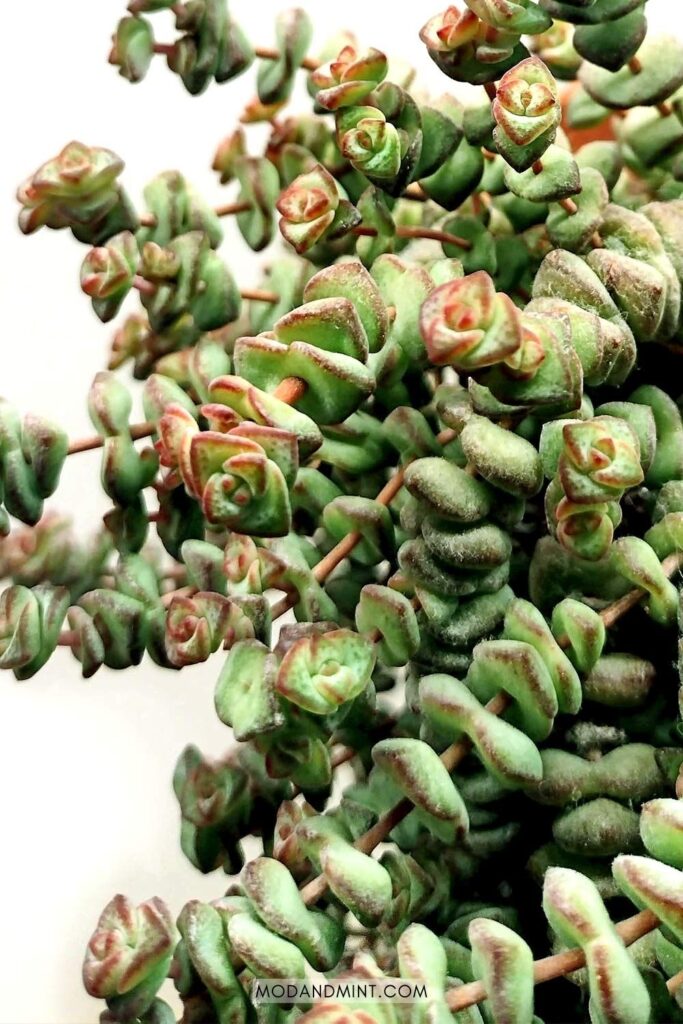
What’s in a Name? Crassula rupestris ssp. Marnieriana ‘Hottentot’
The genus Crassula is a plant family of hundreds of different plant species. Some varieties like the Buddha’s temple (Crassula pyramidalis), and the Jade plant (Crassula ovata) are easy to recognize and identify. Others look very much alike and it can be hard to tell apart.
The Crassula marnieriana is a hybrid of the Crassula rupestris and the Crassula perforata, officially regarded as a subspecies of the Crassula rupestris. All these plants, the rupestris, perforata, and marnieriana, are similar in looks and care requirements. They are often and easily mistaken for one or the other.
Crassula comes from the Latin Crassus, meaning “thick”, referring to the thick, succulent leaves.
Sometimes you will see the marnieriana labeled as Crassula marnieriana ‘Hottentot’. The name ‘Hottentot’ is an antiquated term that was added by people saying the plant looked like the hair of the Khoikhoi people of Southern Africa who before were referred to as Hottentots.
This is obviously offensive. More and more botanists, horticulturists, and regular plant people agree that this is a derogatory term and stopped using it. Now simply calling the plant Crassula Marnieriana or by using the common names worm plant or jade necklace.
Light Requirements
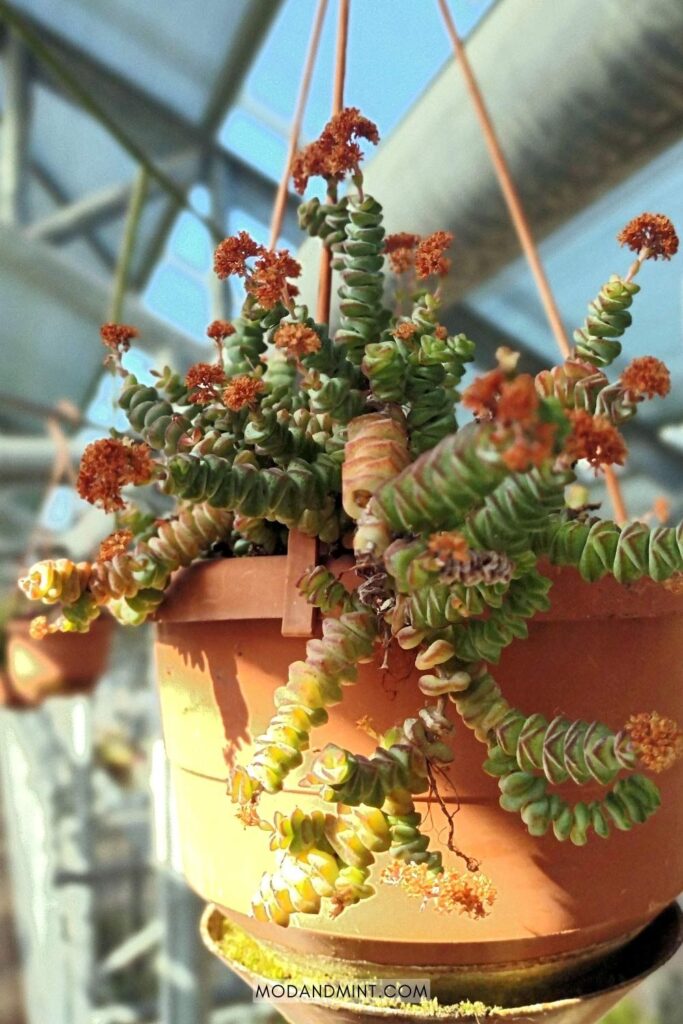
Crassula marnieriana succulents like lots of light. They do best in a bright, sunny window with a few hours of morning sun and bright indirect light the rest of the day.
Lots of full sun exposure turns the leaves a red-brown color. Move your plant away from the window a bit if you prefer the leaves to stay greener.
When grown in low light, growth will slow down and can get leggy, stretching out for more light.
When given enough light, your marnieriana is relatively fast-growing and will grow compact stacked leaves as the plant matures.
Watering
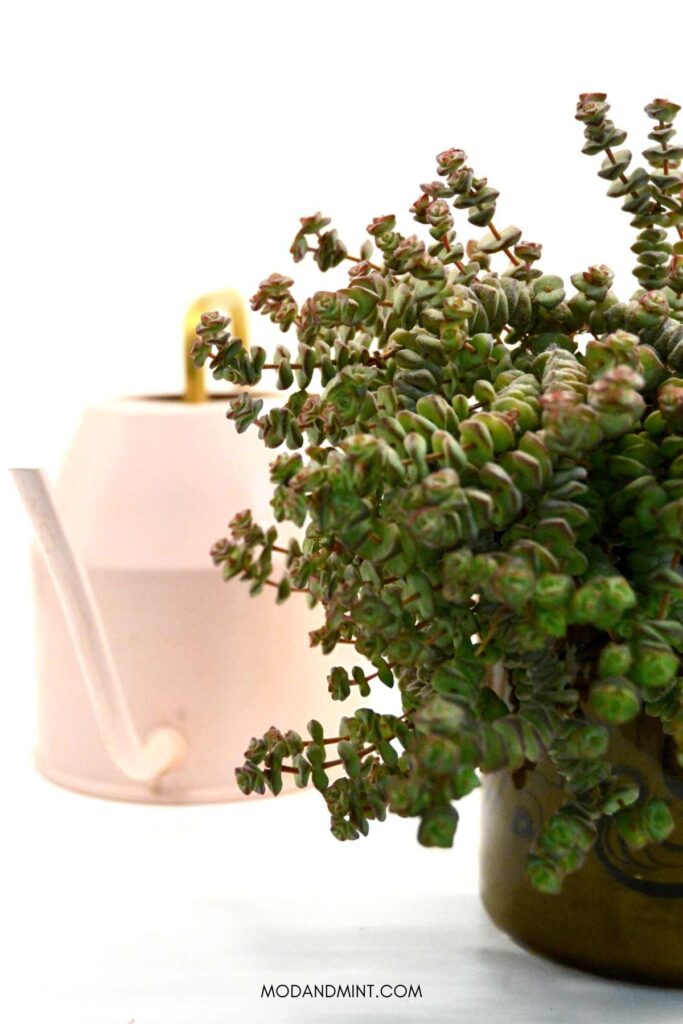
The Crassula marnieriana stores water in its leaves. There is no need for frequent watering.
Overwatering is the most common problem in crassula plant care. To prevent overwatering, let the soil dry out between waterings.
To make sure your plant is getting a good soak, you can choose to water from the bottom.
If in doubt, don’t water yet. Underwatering is better than overwatering. Watering too often can lead to root rot. Too little water could lead to some leaf shriveling but that is easily fixed with a thorough watering.
Unfortunately, root rot is irreversible. But you can save an overwatered worm plant by cutting the healthy parts off and propagating them. Going forward let the soil dry out before watering again. And it might be a good idea to read up on how and when to water your succulents.
Humidity
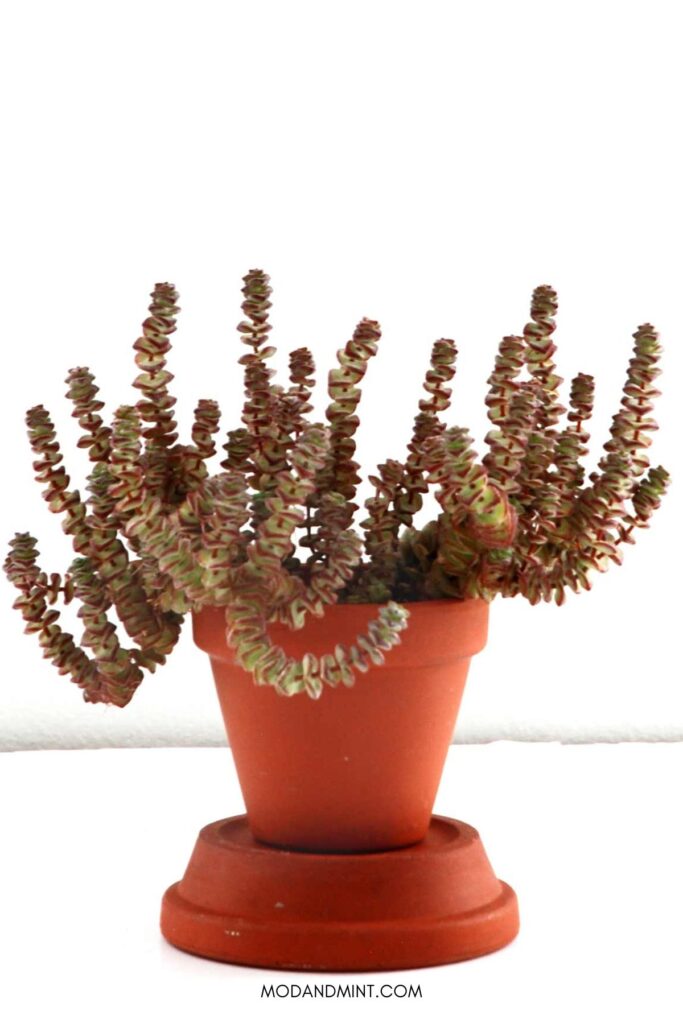
The Crassula marnieriana is not very needy when it comes to humidity levels. It can grow in average household humidity. No need for misting either.
Soil and Repotting
Every two to three years repot in spring. The soil will have lost its nutrients and will need to be replaced with fresh well-draining succulent soil.
If your Crassula marnieriana has outgrown its pot, repot it in a pot one size bigger than the original. Too large of a pot keeps the soil wet for too long for the roots to absorb.
Make sure the new pot has drainage holes on the bottom. Without those, excess water has no way to get out and will drown the roots.
For a step-by-step guide, ready my post about how to repot your plants.
Crassula Marnieriana Propagation
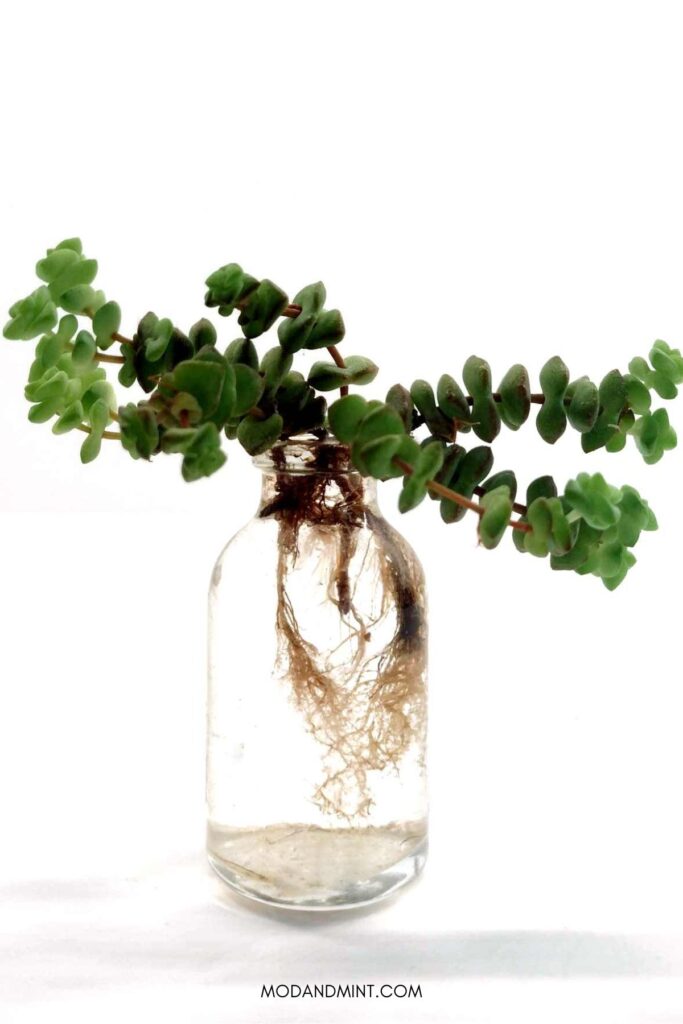
The Crassula marnieriana is easy to propagate from stem cuttings in water or soil, or by division of larger plants.
Cut a stem of at least a couple of inches, remove the bottom few leaves, and let it dry out for a day or two. Then place in water or directly in soil to grow roots.
A large plant can be propagated by division. Split the rootball and repot the parts in separate, smaller containers.
Want to learn more about plant propagation? Read my post about the 6 different ways to propagate your plants.
Flowers
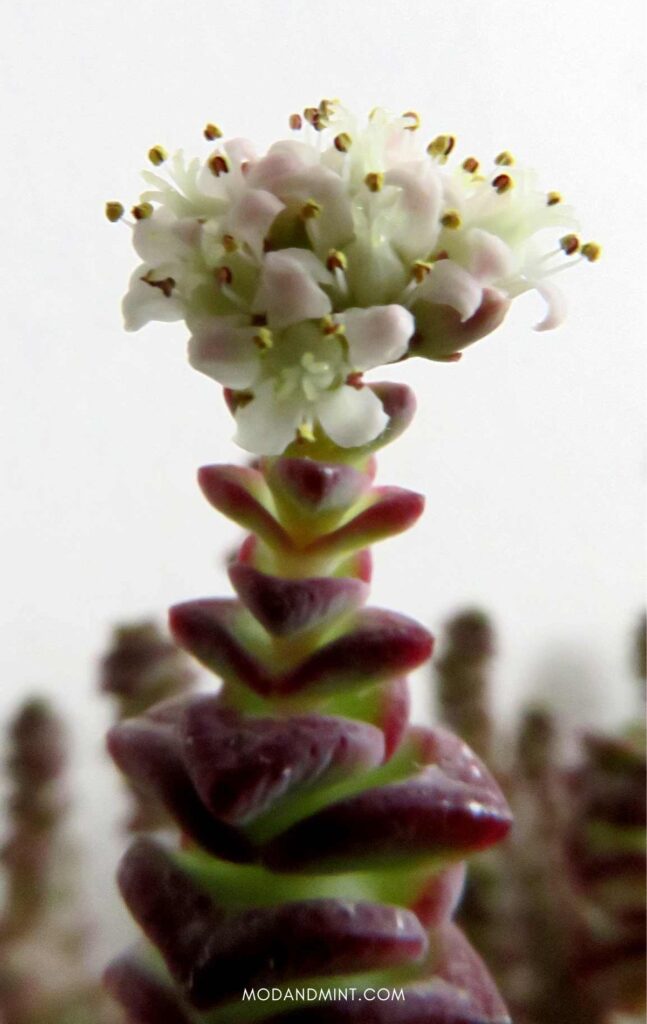
Mature indoor Crassula marnieriana plants can flower when they get enough light and are overall happy with their growing conditions. Don’t worry if your plant doesn’t bloom. Many indoor worm plants don’t flower at all.
If they do, it is usually in spring or early summer. The small, star-shaped flowers grow on the tip of the stems.
Plant Pests
The Crassula marnieriana succulent is pretty much pest-free. Nevertheless, watch out for mealybugs. These small white bugs like to hide in between the stacked leaves, making them hard to spot. Use a cotton bud and gently reach in between the leaves to soak the mealybugs in alcohol.
For more information ready my post about common houseplant pests and how to get rid of them.
Crassula Marnieriana Toxic to Cats?
Crassulas are generally considered mildly toxic when ingested. Although it is very rare for pets to get seriously hurt from eating plants, keep this one out of reach of children and pets.
Read my post about the risks of toxic houseplants around your pets (and find out which plants are non-toxic and safe!).




I LOVE this site!! So informative!!
Thank you! So nice to hear! 🙂