
Sansevieria Fernwood Care – How to Grow this Snake Plant Indoors
The Sansevieria Fernwood is one of the easiest and most low-maintenance houseplants there is. This plant is truly almost indestructible.
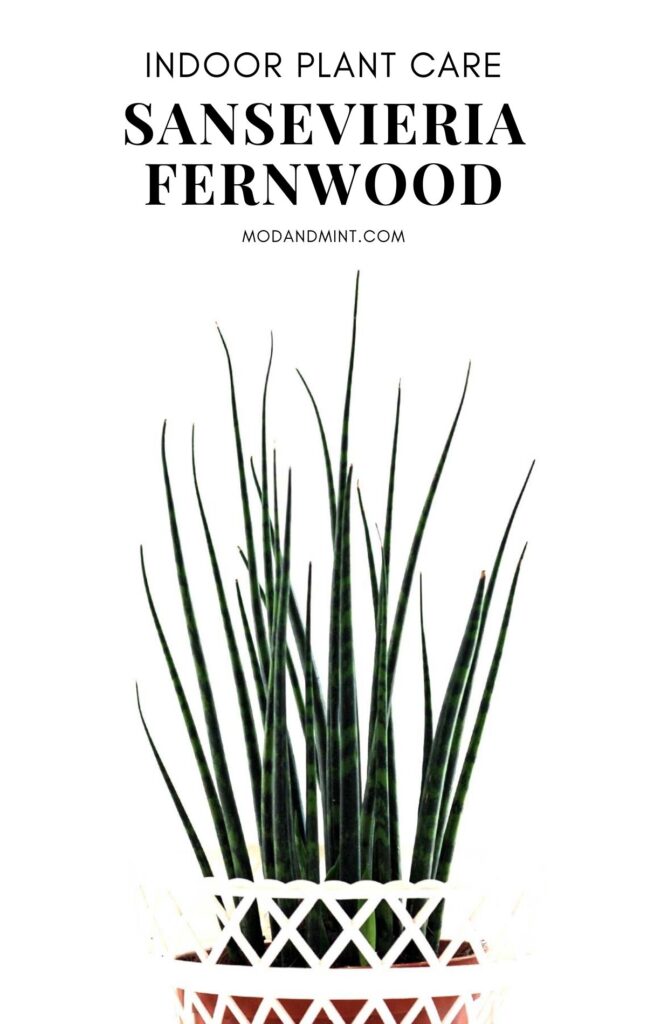
Sansevieria Fernwood grows long leaves with pointy ends that slightly arch out. The slim leaves have a subtle snakeskin pattern.
The Fernwood is a popular choice for those seeking a stylish and low-maintenance plant.

Sansevieria Fernwood Plant
Scientific name: Sansevieria trifasciata ‘Fernwood Mikado’. Common names: Fernwood Snake plant, Sansevieria Fernwood Mikado, Fernwood Punk, or Dracaena Fernwood.
The Fernwood is a is a cultivar of the Sansevieria trifasciata snake plant. It is named “fernwood” after the long, slender leaves reminiscent of fern fronds, especially when they mature and start to arch out.
Each plant or offset grows several leaves growing out from a center rosette, instead of growing single leaves like a Sansevieria cylindrica does.
At first sight, the leaves look cylindrical, and young shoots may start out that way, but mature Sansevieria Fernwood leaves often have a vertical groove going from the base to the top.
Read more: Beginners Guide to Succulent Care.
Want to grow a Sansevieria Fernwood? Find it for sale on Amazon!
Light Requirements
The Sansevieria Fernwood will survive in low light but does better when it gets plenty of bright indirect light.
Sansevierias can handle low light but do best at home on a sunny windowsill in bright, indirect light. It’s a slow-growing plant but more light will help make it grow faster.
Watch out for too much full sun. Dry leaf tips or brown spots on the leaves can be a sign of sunburn. Move your plant further away from the window, or filter the light with a sheer curtain.
Want more Snake plants? Check out this list full of Sansevieria houseplants!
Sansevieria Fernwood Watering
Like most succulents, the Fernwood snake plant stores water in its leaves. To prevent overwatering, let the soil dry out between waterings. Water thoroughly and let the excess water drain out of the bottom of the pot.
If in doubt, don’t water yet. Underwatering is better than overwatering. Too little water could lead to dry, shriveled leaves but is easily fixed with a thorough watering.
Signs of overwatering are leaves turning yellow, and soft and mushy. Frequent overwatering can lead to root rot problems.
Unfortunately, root rot is irreversible. But you can save any remaining healthy parts by propagating them. Continue reading to find out how.
Water very sparingly in winter. Water it just enough to make sure not to let the leaves shrivel up completely.
Use a watering can with a long spout to reach the soil and not get any water in the crowns of the leaf clusters.
Want more? Get all the details on how and when to water succulents.
Fertilizer
The Sansevieria Fernwood is not very needy when it comes to fertilizer. You can feed it once a month in spring and summer with a diluted liquid succulent fertilizer. You can also treat your plant to a specially formulated fertilizer for snake plants.
Don’t fertilize in winter when the plant goes dormant and growth slows down. Also never fertilize your sansevieria if it is recently repotted or is having issues.
Fertilizer is not a plant medicine. It will only stress out an already stressed-out plant. Analyze, adjust, and when your plant recovers, continue your normal care routine.
Humidity
Sansevieria plants don’t need high humidity levels. The Sansevieria Fernwood grows well in average household humidity.

Soil and Repotting
Since the Sansevieria Fernwood is a slow-growing plant, it doesn’t need to be repotted very often.
Repot in spring, when roots have filled the pot so much that it has become root-bound, you usually see roots growing from the drainage holes on the bottom.
If the pot is completely filled with leaves the plant has outgrown its pot. Repot it in a pot one size bigger than the original. Too large of a pot keeps the soil wet for too long for the roots to absorb.
Every two to three years repot even if your plant still has room to grow. The soil will have lost its nutrients and will need to be replaced with fresh well-draining succulent soil.
It is also time for a bigger pot when you see the underground rhizomes pushing up against the inside of the container. Just like it happens when Sansevieria trifasciata or ZZ plants get too big for their pots.
Make sure the new pot has drainage holes on the bottom. Without those, excess water has no way to get out and will drown the roots.
In need of a repot reminder? Click here for all the tips on how to repot your plants.
Sansevieria Fernwood Propagation
There are a few ways to propagate the Fernwood snake plant, the easiest being through dividing the underground rhizomes or removing and repotting baby pups.
You can also propagate leaf cuttings in water but it will take a long time to grow roots. You might have to wait weeks for roots and new leaves to grow.
But if you have the patience this is a very easy, low-effort way to make more plants.
Want to know more about how to propagate by division, removing pups or water propagation? Read the complete guide with all the details on how to propagate your plants.

Sansevieria Fernwood Leaves Curling
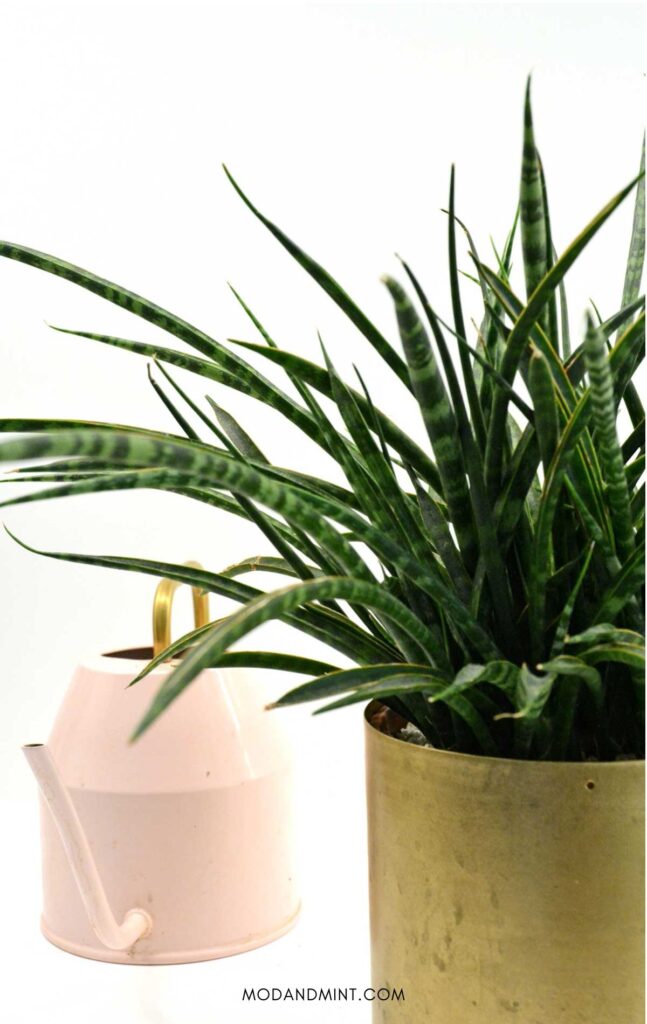
If the leaves on a Sansevieria Fernwood are not growing straight, but are curling and arching out like a fountain, there is most likely nothing to worry about.
As long as the leaves still feel firm, the curling is perfectly normal (if the leaves are soft and drooping it is most likely due to overwatering and that is a problem).
These Fernwood Mikado snake plants are often sold with leaves perfectly straight in the pot. Plant growers that supply the stores take leaf cuttings and plant them upright in the pots.
This might look pretty, but eventually, the leaves will curl outwards as this is their natural growth habit.
Related reading: Interesting Facts about Snake Plants.
Plant Pests
The Sansevieria Fernwood is not prone to many pests, but it can happen. The most common pests to watch out for are mealybugs and spider mites.
Inspect your plant regularly for signs of pests to catch a possible infestation before it becomes severe.
Learn more about common houseplant pests and what you can do to get rid of them.
Sansevieria Fernwood Toxic to Cats and Dogs?
Just like its larger family member, Sansevieria trifasciata, the Fernwood is considered mildly toxic when ingested. It can cause nausea, vomiting, and diarrhea.
Further information on the question – Are Sansevieria Plants Toxic?
It is very rare for pets to get seriously hurt from eating plants. But some plants can make your pet sick. Better safe than sorry, keep this plant out of reach of your pets if they like to munch on your plants.


When I transplanted my sansevieria mikado there was strips of foam going around the branches. Is it a normal procedure?
Sansevieria Fernwood are so beautiful. Be patient let the soil dry completely then give a nice watering but dont overwater