
Tillandsia, commonly known as air plants, are unique and easy to care for. Because of their common name, many people believe they don’t need anything else than air. But they do need water, just not in the same way most house plants are watered.
In their native habitat, air plants get moisture from heavy rainfalls and high humidity. They don’t use roots to absorb moisture but leaves covered with trichomes (tiny plant hairs) that trap moisture and airborne nutrients.
Indoors they need some help by regular misting and soaking to stay healthy. In this guide, I will explain how you can water air plants effectively.
Further reading: Air Plant Display Ideas – Tillandsia Ionantha Sky Plants – Tillandsia Xerographica XL


Want your own air plants? Find them for sale on Amazon.
When to Water Your Air Plants
Look at your plant to determine if it’s time to water. Does it look dull? Are the leaves curling in and does it feel dry? These are all signs your air plant is dehydrated and needs more water. Firm, vibrant leaves indicate proper hydration.
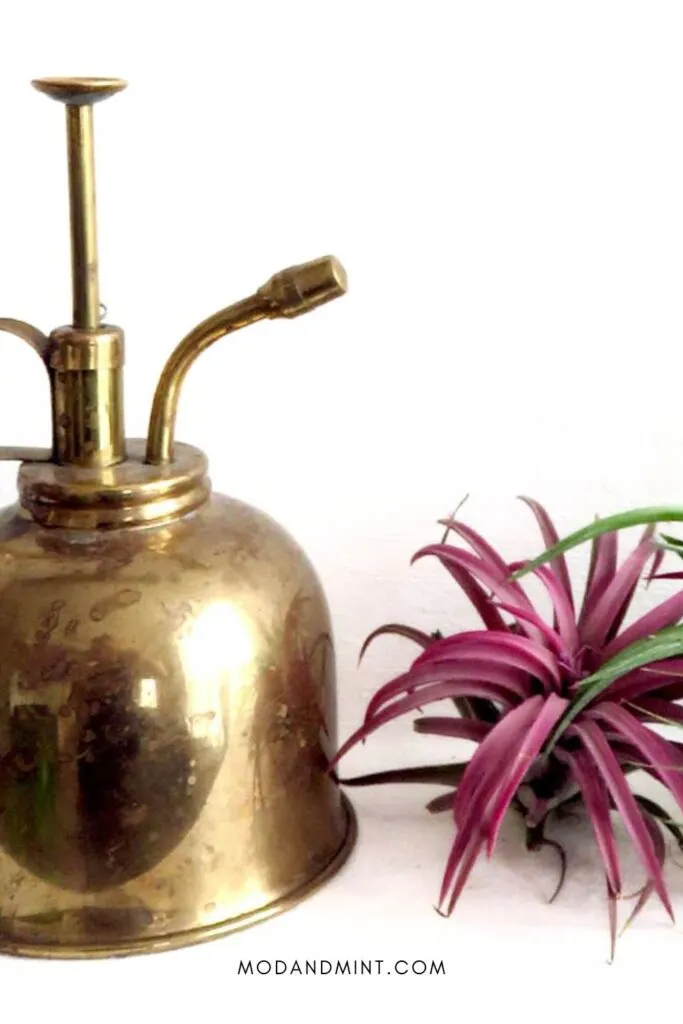
Misting Air Plants
- Frequency: Mist your air plants 2-3 times a week.
- How to Mist: Use a spray bottle to lightly mist the leaves until they are thoroughly wet.
- Timing: Mist in the morning to allow the plants to dry out during the day, preventing rot.
Misting frequently helps, but misting alone will not provide enough moisture to replace a (sub)tropical rain.

Soaking Air Plants
In addition to misting, water with a good soak at least once a week in summer, and once every two weeks in winter, depending on the temperature and humidity.
- Frequency: Soak your air plants once a week for a more thorough watering.
- How to Soak: Submerge them in a bowl of water (preferably rainwater). Soak for about 15- 30 minutes.
- Drying: Remove and shake off excess water. Place the plants upside down on a towel in a well-ventilated area until they are dry.


It is crucial to let your Tillandsia completely dry out after watering to avoid it rotting and turning black from the center of the leaves. A well-lit area with good air circulation helps it to properly dry out.


Fertilizing
Since air plants don’t get nutrients from soil, it is recommended to fertilize your plants about once a month in spring and summer.
There are fertilizer sprays for air plants to mist your plant with, or you can add some liquid Bromeliad fertilizer to the water that you soak the plant in.