
Winter Houseplant Care – Get your Plants through the Cold Months
Winter is the hardest time of year to keep your houseplants alive.
The days are cold and gray, the heaters get turned on, and the house is dry. Your plants can have trouble surviving in those types of growing conditions.
Continue reading and find out what the four biggest challenges are in winter houseplant care, and what to do to keep your indoor plants alive during the winter.

Wrong season? Hop over to the summer plant care tips instead.
This article covers the specifics of winter houseplant care.
The Biggest Challenges in Winter Houseplant Care
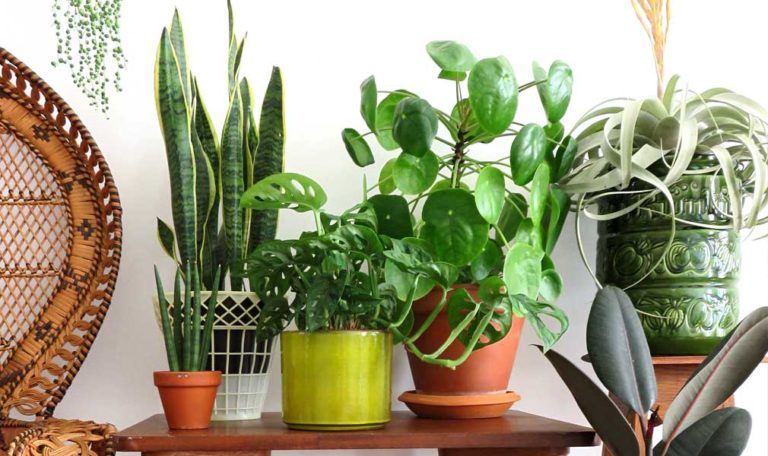
You might be in luck if you have a plant in your home that tolerates low light like a Sanseveria, Monstera Deliciosa, or a Pothos.
But most of the plants in our homes originate from warm, humid places with more light than our winter days supply.
During winter your plants are faced with dry air caused by central heating, short days with not enough light, and cold nights. These are not ideal growing conditions for your houseplants.
The four biggest problems in houseplant winter care are:
- Central heating and dry air
- Lack of daylight and cold nights
- Overwatering
- Pests
Read more: Beginners Guide to Houseplant Care.
1. Central Heating and Dry Air
As soon as you turn the heating on in your home, the humidity drops drastically. Your plants will react to that. Leaves can go limp, or dry out.
If your plants are right above a radiator, make sure the shelf or window sill is at least as wide as the plant’s leaves. You don’t want the hot air to hit them and scorch the leaves.
2. Lack of Daylight and Cold Nights
Winter days are shorter and the light levels drop considerably. Depending on what way your windows are facing, your plants might not like this new low-light situation.
It’s time to move your plant somewhere with more light.
Not only the lack of light but also the drop in temperature can make life hard for your indoor plants. Watch out for your windowsill plants when they are very close to single-glazed windows or cold drafts, which cause leaves to wither and drop.
Plants have a natural survival mode and many houseplants go dormant in winter, which makes them grow slower and able to tolerate lower light levels. Then again, there are houseplants like succulents which will grow leggy if they don’t get enough light.
3. Overwatering
Overwatering does not mean that you are giving your plant too much water. You can definitely give your plant a good soak when you water it. It means you are watering too often.
You’re overwatering if the top layer of soil does not get enough time to dry out. The roots of your plant will start to rot if they are in wet soil for too long.
Overwatering is even more likely to happen in winter when the dark and cold days cause the water to evaporate even slower. In winter wait a little longer between watering.
Read more: When to water your indoor plants.
4. Plant Pests
I don’t like to talk about bugs and pests because they creep me out, but it is important to keep an eye out for them. Especially in winter.
Plant pests love wintertime to sneak up on your plants. Spider mites and mealybugs thrive in dry air and will reproduce even more rapidly.
Little fungus gnat flies like to be warm and in damp soil. Think radiators in combination with overwatering. Look for them in the top inch of the soil.
Check for insects on the undersides of leaves and on stems where they like to hide. Take immediate steps to eliminate them as soon as they appear.
Read more: Identify plant pests and get rid of them!

How to Keep Plants Alive in Winter
So with all those challenges, how do you keep houseplants alive during the winter? Start by adjusting a couple of things in your plant care routine.
Things you can do to get your plants through winter happy and healthy:
- Move your plans to more light
- Water less often
- Increase humidity
- Get cleaning

Move your Plant to More Light
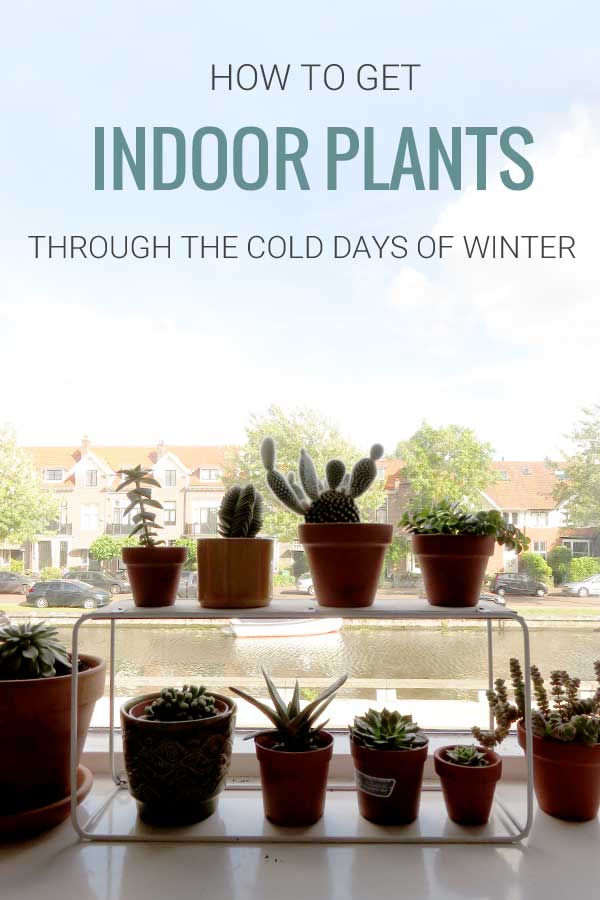
Plants on a south-facing windowsill are in the ideal position to get the most light possible. Look around and see if you can move some plants to another window where they get more light.
Don’t move them so close to a window that they are touching it. Keep them at least a few inches away. That window gets cold at night! And if the temperatures drop below freezing, move them away completely.
Look for places with the most light, but watch out for cold drafts and hot, dry air from radiators being turned on.
If you notice your plant struggling and you can’t give it more natural light, you can purchase an LED grow light. It can really help.
Water Less Often
In winter you want to wait a little longer in between waterings and give the soil a chance to dry out.
Another thing you need to know is that fertilizer is not a cure. Fertilizer is for healthy plants during the growing season. Don’t fertilize during the cold winter months.
Repotting will not help your plant. Especially not in winter. If it is in dormancy it is like moving a bear when it’s hibernating in winter. It might not have a happy ending.
The only time when I say repot in winter is if there is a severe case of overwatering and your plant needs to be removed from soggy soil.
Read more: Watering house plants 101.

Increase humidity
Brown leaf tips or edges are possible signs that your houseplant isn’t getting enough humidity. If your plant is near a radiator, move it away.
If you have a bathroom or kitchen with a sunny window, you are in luck. Humidity and light! Put your plants right there. (not your succulents. They don’t like it there.)
If you’re not that lucky, Try to group plants. Grouping plants will help to raise the humidity level around them. And mist your plants frequently with room-temperature water. Be aware that this only ups the humidity around your plant for a very short time. The most effective way to increase humidity is to use a humidifier for your plants.
Get cleaning
Everyone is familiar with spring cleaning, but your plant needs a good winter cleaning.
With windows often closed in winter, more dust settles on the leaves. This prevents the plant from absorbing as much light as possible.
What you should do is clean the leaves occasionally by wiping them down with a soft damp cloth. And wash the windows. Inside and out. Washing the windows will make a world of difference in how much light comes through to reach your plants.

Thanks for sharing these awesome ideas and tips. I never thought about indoor plant pests but I think they are certainly contributing to my problems. I really struggle with seasonal depression and I’ve been trying to brighten up my home this year to stay a little stronger mentally. I resurfaced my hardwood floor and painted some walls a brighter color, but I knew I needed some life in my home. So I bought some plants and they died within a week…go figure. But now that I have your info, I’m going to try again and hope for a better outcome 🙂
I leave in California, I have a big garden with a variety of plants succulents, all my plants are suffering from a virus that I see in every single plant, a white web very sticky with tiny spires after a few days the plants start to die, I have tried everything and it doesn’t work. Maybe you can recommend something.
Thank you.