
Do you have a prayer plant that is having some issues? Don’t worry, you’re not alone. These stunning plants, known for their beautiful foliage and unique habit of folding their leaves at night, can sometimes throw a curveball at even the most diligent plant parents.
But fear not! In this guide, you’ll read about the most common indoor prayer plant care problems and how to fix them!

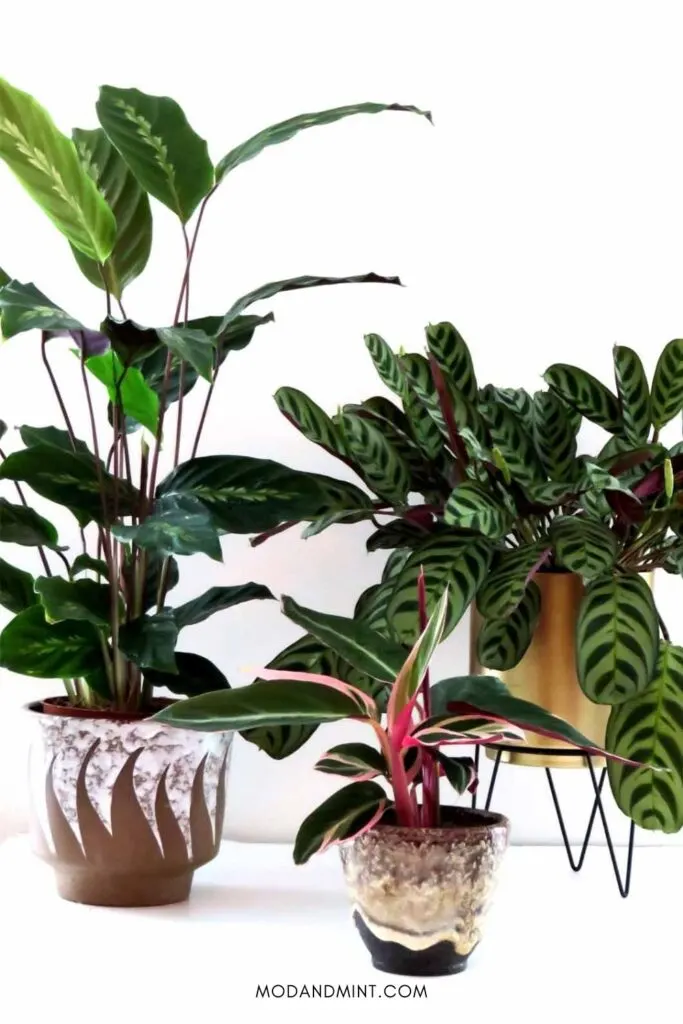
What’s wrong with your Prayer Plant?
- Brown or Crispy Leaf Edges
- Yellowing Leaves
- Drooping Leaves
- Lack of Leaf Movement
- Rolled up Leaves
- Fungal Issues
- Plant Pests
By addressing these problems promptly and implementing the suggested solutions, you can keep your prayer lant vibrant and healthy for years.
Further Reading: Prayer Plant Care Made Easy.
Brown or Crispy Leaf Edges
One of the most common problems with prayer plants is brown or crispy leaf edges. This can be caused by several factors, including dry air, underwatering, or excessive sunlight.
To remedy this, try increasing humidity around your plant by misting its leaves regularly or placing a small humidifier near your plant. Water your plant consistently, keeping the soil evenly moist but not waterlogged. Additionally, consider moving your plant to a spot with indirect sunlight to prevent leaf scorching.


Yellowing Leaves
If you notice your prayer plant’s leaves turning yellow, it could be a sign of overwatering or inadequate drainage.
Check the soil moisture and adjust your watering frequency. Ensure your plant’s pot has drainage holes to prevent waterlogging, which can lead to root rot and yellowing leaves. Trim off any yellowed or dying foliage to encourage new growth.
Further Reading: When to Water House Plants.
Drooping Leaves
Drooping leaves are often a sign of underwatering or low humidity.
Make sure you’re watering your plant regularly, especially during the growing season, and adjust your watering schedule as needed. Increasing humidity can help revive drooping leaves and promote healthier growth.
Lack of Leaf Movement
The unique characteristic of prayer plants is their ability to fold their leaves upwards at night, resembling hands clasped in prayer. If your plant’s leaves aren’t displaying this distinctive movement, it may be due to insufficient light or too much fertilization.
Move your plant to a brighter location with indirect sunlight to stimulate leaf movement, and avoid overfeeding to prevent excessive growth that can inhibit this natural behavior.
Leaves Curling
New leaves start out rolled up and, as they mature, they slowly uncurl, revealing the beautiful patterns and colors. This is perfectly normal, and nothing to worry about.
The curling of older leaves on a prayer plant can indicate stress due to underwatering, overfertilization, low humidity, or exposure to cold drafts.
Provide adequate water and nutrients to your plant, and avoid placing it near drafty windows or doors. If curling persists, consider repotting your plant in fresh, well-draining soil and adjusting its conditions to promote recovery.
Further reading: How to Repot Indoor Plants.


Want to buy a Prayer plant? Find them for sale on Amazon.
Fungal Issues
Prayer plants are susceptible to fungal diseases such as root rot and leaf spot, especially in overly damp conditions.
To prevent these problems, avoid overwatering and ensure proper air circulation around your plant. If you notice signs of fungal infection, such as black spots on leaves or mushy roots, trim away affected areas and adjust your watering practices to prevent further spread.
Plant Pests
Like many indoor plants, prayer plants can attract pests such as spider mites, aphids, and mealybugs.
Regularly inspect your plant for signs of infestation, such as webbing, sticky residue, or tiny insects on leaves. If you detect pests, read up on common houseplant pests and find out what you can do to get rid of them.
Joe
Friday 5th of April 2024
A lot of good information thank you