
Overwatering can be a common care issue for cactus plants, but it doesn’t have to be the end of the road. If you act quickly, you can still save your cactus.
Cacti store water in their fleshy stems. Overwatered cactus plants will start rotting at the roots and eventually, the rot will move up the cactus from the inside. Once rot sets in, it can spread throughout the plant in just a few days, depending on the size of the plant.
To prevent overwatering, don’t water too often, and allow the soil to dry out completely between waterings. Ensure that the pot has proper drainage. Be mindful of signs of overwatering, and adjust your watering routine to keep your cacti healthy and thriving.
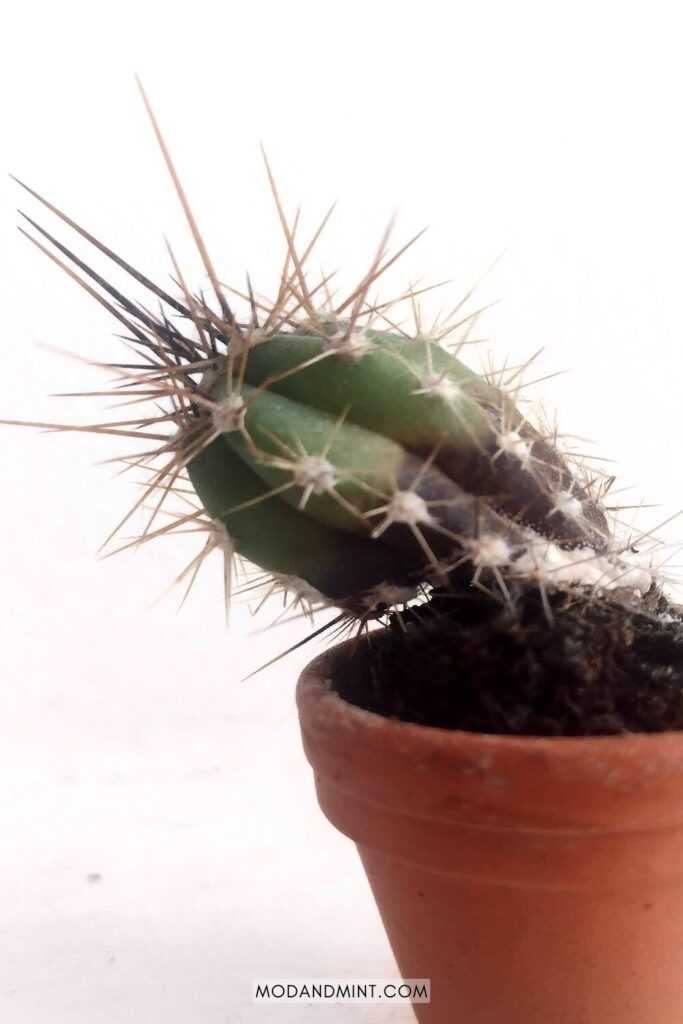

7 Signs of Overwatered Cactus
When cacti mature, the bottom can become dry and brown. This is normal for some aging cactus plants. As long as the base feels firm it’s not because of root rot.
Watering too often can harm cacti, as they are adapted to thrive in arid conditions and do not tolerate excessive moisture. Here are some common symptoms of an overwatered cactus:
- Yellowing or browning of the cactus stems or pads.
- Soft or mushy appearance of the cactus, especially near the base.
- Wilting or shriveling, which might seem counterintuitive but can occur as the roots rot and can no longer take up water.
- Black or brown spots on the cactus.
- The cactus leans or tilts in its pot due to weakened and rotting roots.
- Foul or musty-smelling soil.
- The presence of mold on the soil surface.


How to Save an Overwatered Cactus
If your cactus is overwatered and rotting, it’s essential to address the issue asap. As long as the cactus still has some healthy and green parts left, you can save your plant.
It might feel extreme, but the only thing to do for an overwatered cactus is to cut off any remaining healthy pieces and propagate the cuttings to start over without rot.
To do this, remove the cactus from its pot to inspect the roots. Trim away any rotted, black, and stinky portions.
Next, use a sharp and clean knife to cut the healthy part of the cactus, separating it from the rotted base. Check the inside. If there is any brown color, remove a larger part. You want the cutting to be completely free of rot.
Allow the cutting to dry for several days until the cut end is completely callused over. Then dip the stem in rooting hormone and repot it in well-draining cactus soil.
Don’t water the soil until roots form and you see new growth on the cutting. This can take a few weeks. At that time you can resume regular care and watering.
Going forward, adjust your watering schedule to ensure the soil dries out between waterings. If you’re If you are uncertain how often to water your cactus, you can use a moisture meter to help you.