
The Ficus Elastica Ruby, also known as the Ruby Rubber Plant, is a popular houseplant. It grows stunning variegated pink, cream, and green leaves and is easy to care for.
Ficus Ruby is a strong, resilient plant that can grow in a range of indoor conditions.
In this complete plant care guide, I’ll share my Ficus Elastica Ruby tips on watering, light, humidity, propagation, and more. Continue reading toward a thriving pink rubber plant!

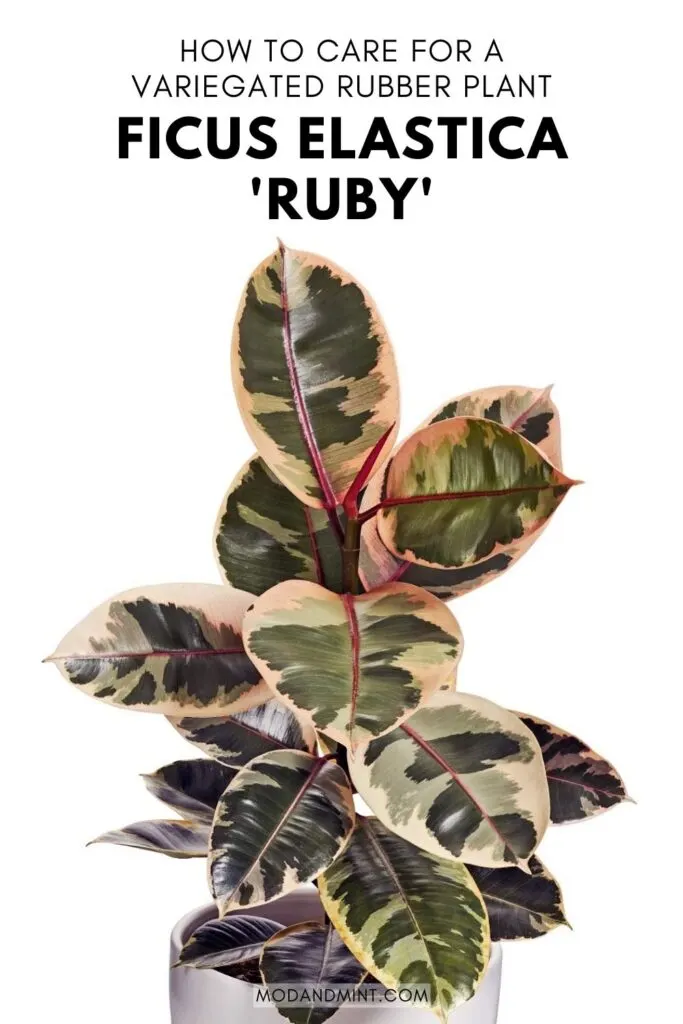
Ficus Ruby
The Ficus Elastica Ruby is very similar to, and often mistaken for its relative the Ficus Elastica Tineke. The Tineke is another variegated rubber plant with less pink and more creamy white in its leaf colors.
The easiest way to recognize the difference between a Ruby rubber plant and a rubber plant Tineke is the color of the leaf sheath. Ficus Elastica Ruby will have a deep red or pink sheath around the new leaves before they uncurl. The Ficus Elastica Tineke grows paler, greenish sheaths.
Read more about the differences and similarities between the Ficus elastica Ruby and the Tineke.


Want to buy a Pink Variegated Ruby Rubber Plant? Discover the plant growers that sell them on Amazon!


Need a plant care refresher? Check out the Beginners Guide to Houseplant Care. It will teach you all the basics about indoor plant care.
Light Requirements
Give your indoor Ruby rubber tree plant a few hours of morning sun and bright, indirect light the rest of the day.
Variegated pink rubber plants require more and brighter light than regular rubber plants. When variegated rubber plants are grown in too little light, colors and variegation may fade, growth will slow down, leaves will stay smaller and the plant can get leggy reaching toward the light.
Consider getting a LED grow light if you can not give your plant enough natural light.
Avoid too much direct sunlight. Dry, brown spots on the leaves can be a sign of sunburn. Move your plant further away from the window, or filter the light with a sheer curtain or a DIY sun diffuser.
Dust can collect on the leaves of your ficus ruby plant. The leaf pores get clogged making it harder to take in light. Occasionally wipe down the leaves with a soft cloth, or bring your plant to the bathroom and treat it to a room-temperature shower.


Watering
Water your Ficus elastica Ruby regularly to keep the soil evenly moist, but not soggy. You want the soil to feel like a well-wrung-out sponge.
Don’t let the soil dry out completely. Too little water will cause the leaves to droop and eventually fall off, leaving the plant with bare stems.
If you water too often the leaves will yellow and the roots might rot.
To check when to water, stick your finger in the soil. If the top is dry, but the deeper layer is still moist, hold off and wait one or two days to check again. Give your rubber plant a good soak when the top of the soil has dried out. Water thoroughly and allow excess water to drain out of the bottom of the pot.
In fall and winter, when growth slows down, your plant needs less water.
Use a diluted liquid plant fertilizer to feed your rubber plant about once a month in spring and summer. Don’t fertilize in winter.
You can use a moisture meter to tell if it’s time to water. And read up on the basics of how and when to water your indoor plants.
When to Repot a Ruby Rubber Plant
Every two to three years repot in spring when the plant is actively growing. The soil will have lost its nutrients and will need to be replaced with fresh well-draining potting soil. Pumice or perlite can be added to help aerate the soil and improve drainage.
If your Ruby rubber plant has outgrown its pot, repot it in a pot one size bigger. Too large of a pot keeps the soil wet longer, increasing the chance of root rot.
Make sure the new pot has drainage holes on the bottom. Without those, excess water has no way to get out and will drown the roots.
In need of a repotting reminder? Follow the easy steps on how to repot your plants.


Ficus Elastica Ruby Propagation
Rubber plants are not the easiest houseplants to propagate, nor the quickest, but it can be done.
Note: If the stem of a rubber plant is scratched or cut, a sticky, milky liquid will come out. The sap can trigger allergic skin reactions, so be careful. Continue reading, more on this rubber plant sap later.
Propagation from Stem Cuttings
The easiest way to propagate a rubber plant is to take a stem cutting from a healthy, young branch and root it in water or directly in soil.
Prune off the stem with at least three or four leaves still attached. Cut the branch off just above a leaf node.
Remove all leaves other than the top two. This way the cutting can direct all its energy into making new roots instead of growing its leaves.
Put the cutting into water and wait for roots to grow. Change the water frequently. Once roots have appeared, you can transfer the cutting to the soil.
If you skip the water rooting, you can place the cutting directly into your soil mix. Keep the soil lightly moist while the cutting grows roots in about six to eight weeks.
You can use a rooting hormone powder on your cuttings to speed up the propagation process. Dip the bottom of the cuttings in water first, then dip them in rooting powder before you plant them.
Propagation by Air Layering
Air layering is another way to propagate your rubber plant. Especially if you are dealing with older woody stems.
Make a shallow cut on the stem in between two leaves. Pack damp moss around the cut and cover it with plastic wrap to keep moisture levels high.
Keep an eye on it to make sure it stays moist inside. After a while roots will start to grow from the stem into the moss. When this happens, you can cut the branch off below the moss and plant it in soil.
Want to learn more about plant propagation? Read the complete guide explaining the 6 different ways to propagate all your plants.


Rubber Plant Sap
Be careful with the white sap coming out when you make your cut. This milky liquid can irritate eyes and skin, especially if you are allergic to latex. So wear gloves when pruning your rubber plant. If you do accidentally get it on your skin, wash it off immediately.
Sap bleeding is a natural process. The flow of sap will stop after some time. You can simply let it go and allow air to get to the cut and let it heal naturally.
If you want, you can lightly cover it with an old rag to absorb most of the liquid and protect floors and other surfaces from the dripping sap.
Plant Pests
Indoor rubber plants can be affected by any common household pests.
Watch out for the usual suspects like spider mites, aphids, mealybugs, whiteflies, scales, and fungus gnats.
Inspect your plant regularly for signs of bugs to catch a possible infestation before it becomes severe. Check under the leaves and in axils where insects like to hide.
Learn more about common houseplant pests and how to get rid of them.
Is the Ficus Elastica Ruby Toxic to Cats?
Yes, rubber plants are considered to be mildly toxic when ingested. Your pet may vomit and have a lack of coordination. Stay safe and keep your rubber plant out of reach of children and pets.
Read more about the risks of toxic houseplants around your pets (and find out which plants are non-toxic and safe!).
Want more pink plants? Check out this list full of stunning pink houseplants (with pictures!)


Kes
Tuesday 12th of December 2023
How long and how bright should I set the grow light to mimic its ideal conditions.
cait
Friday 26th of July 2024
@Kes, i'm not OP, but i would think 10-12 hours on a medium setting would do well