
Ficus Elastica Ruby vs Ficus Elastica Tineke – Learn how to tell these variegated rubber plants apart. This guide makes it easy to recognize each plant and pick the right one for your space.
The regular Ficus rubber plant has dark green, glossy leaves and is already a favorite as an indoor plant. But the variegated types are getting even more attention—and I can see why! Their large leaves with green, cream, and pink patterns are hard to resist. Since they look similar, it’s easy to mix them up, and even sellers sometimes mislabel them.

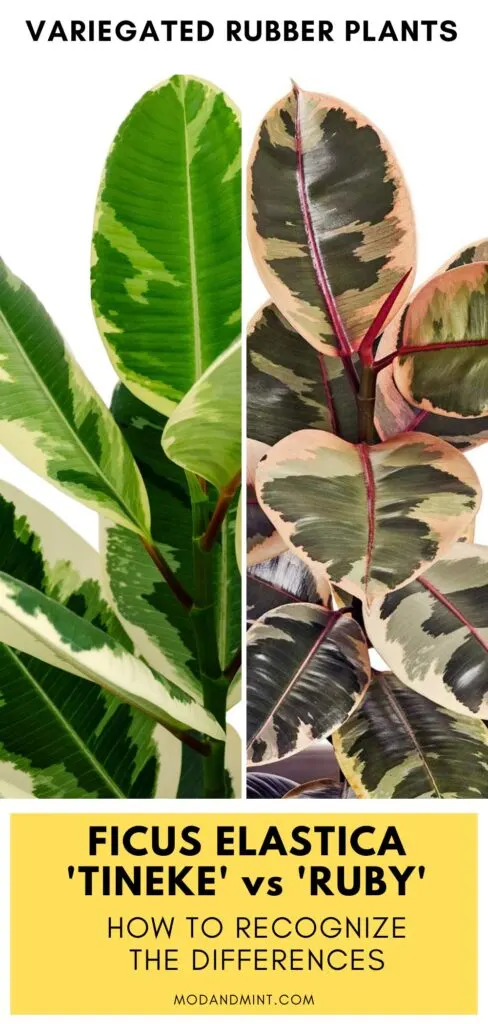
Leaf Color Differences
The biggest difference between the Ficus Tineke and the Ficus Ruby is their leaf color. Both start with a pinkish tint on new leaves, but as they grow, the colors change in different ways.
The Ficus Tineke has green and cream variegated leaves with pinkish veins. When new leaves first appear, they have a soft pink hue, but that fades as they mature.
The Ficus Ruby, on the other hand, has leaves with a mix of pink, cream, and green. Its new leaves start out as a bold red-pink color. While the colors might soften a bit over time, the pink sticks around more on the Ruby than on the Tineke.


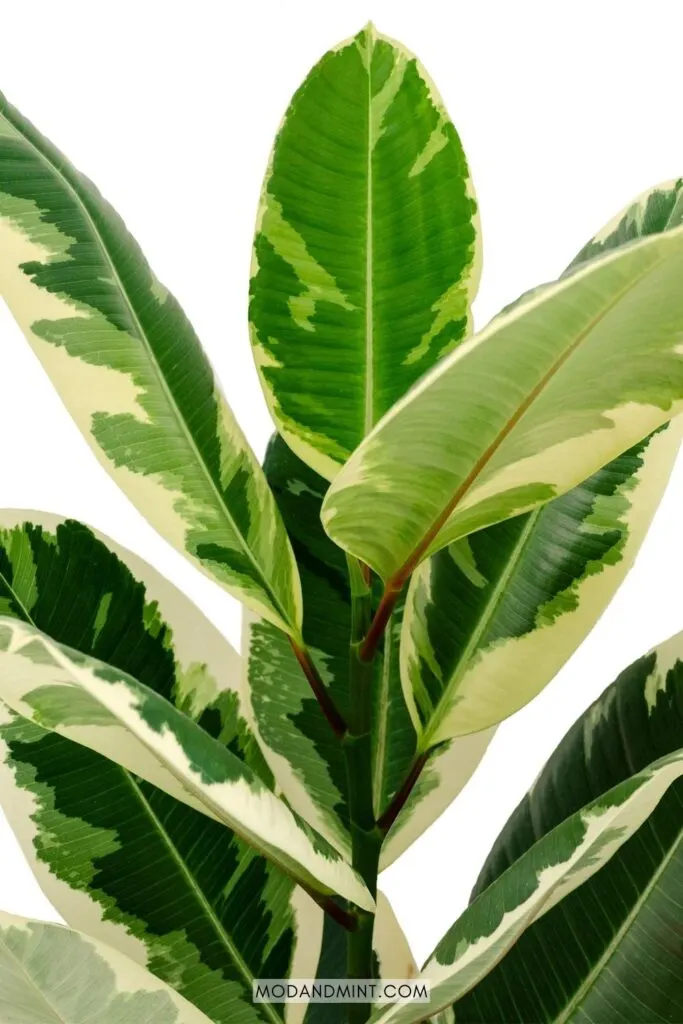
Sheath Color Differences
It’s easy to mistake a Ficus Elastica Tineke for a Ruby because of the light pink color on its new leaves. I’ve done it myself! But there’s a simple way to tell them apart—just check the color of the leaf sheath.
The leaf sheath is the protective covering that wraps around new leaves as they grow from the stem or branch. On a Ruby, this sheath is a deep red or pink before the leaf uncurls. On a Tineke, it’s much paler, with more of a greenish tint.
So next time you’re unsure which one you have, take a look at the sheaths—they’ll give you the answer!


Care Similarities
If you’ve taken care of a regular green rubber plant, (Ficus elastica), you already know how to care for variegated ones. Other than their color, they’re pretty much the same.
The main difference is that variegated rubber plants need more light to keep their colors. If they don’t get enough, the variegation will start to fade, and over time, the leaves can turn almost completely green.
To keep the colors from fading, try moving your plant closer to a window where it gets plenty of bright, indirect light. If that’s not an option, a grow light can help give it the boost it needs.