
Epipremnum Aureum Care – How to Grow Indoor Pothos Plants

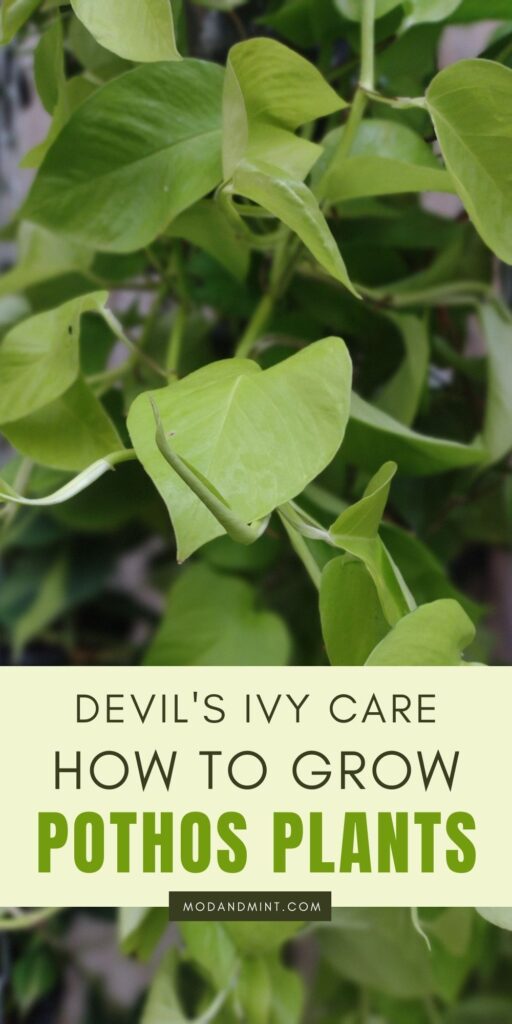
The Epipremnum aureum, commonly known as Devil’s Ivy or Pothos plant, is a popular, low-maintenance house plant.
These plants are a great choice if you are just starting with plants. An Epipremnum aureum can handle some neglect and survive in low light if needed.

Epipremnum Aureum
The pothos is native to the Solomon Islands in the South Pacific. There it grows in the rainforest as a trailing or climbing vine, often on the ground or trees. It thrives in warm, humid, and shaded tropical conditions.
Basic Plant Care Refresher: House Plant Care for Beginners.
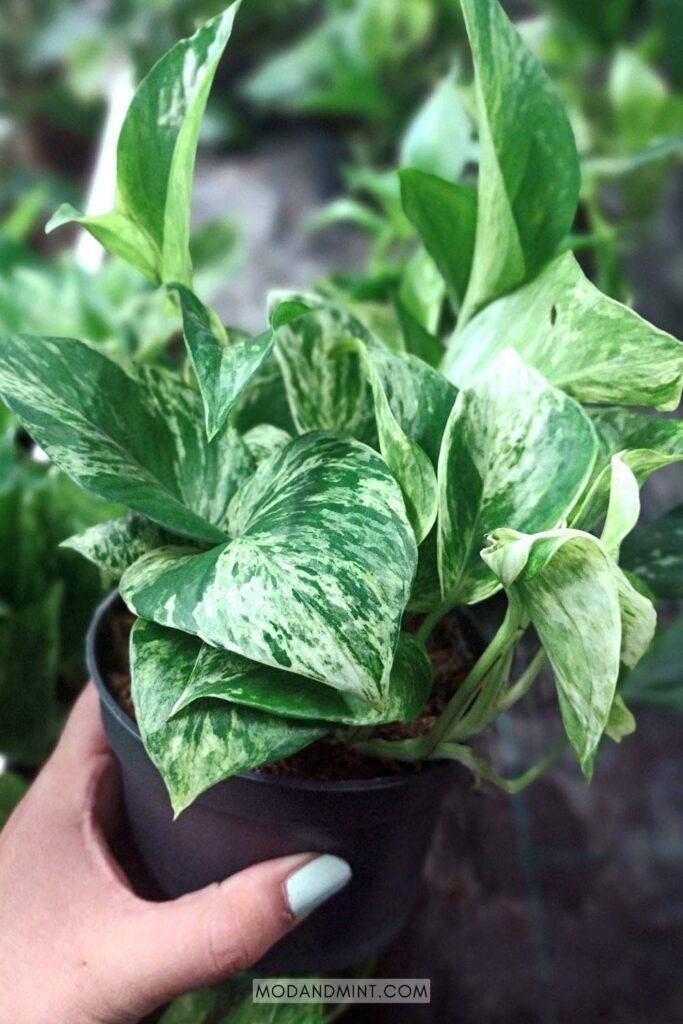
Want to buy an Epipremnum aureum plant? Find it for sale on Amazon!
Light Requirements
The Epipremnum aureum prefers bright, indirect light. They can tolerate lower light conditions, which is common in many indoor settings.
But if the light is too dim, the leaves stay smaller and maybe lose variegation (if there was any). Vines may also grow leggy with more space between the leaves reaching for the light.
Variegated pothos plants grow better with more and brighter light compared to the green-leaved plants.

Watering
Water regularly to keep the soil slightly moist. You want it to feel like a wrung-out sponge.
If the soil feels moist, wait for a few days and check again. If the soil is dry, go ahead and water generously, saturating the soil. Allow any excess water to drain out of the bottom of the pot. Then allow the top layer of soil to dry out before watering again.

Overwatering can lead to yellow leaves and root rot, while underwatering can cause the leaves to droop, curl, wilt, and dry out. Leaves should feel firm.
When in doubt, hold off on watering. It’s easier to fix underwatering than overwatering. You can use a moisture meter to help you with when to water. And read up on the basics of watering your indoor plants.

Fertilizing
Use a diluted liquid fertilizer to feed your plant once a month during the growing season in spring and summer. You can also treat your plant to a specially formulated fertilizer for Pothos plants.
Over-fertilization can be more harmful than under-fertilization. If you notice signs of nutrient burn, such as yellowing or browning leaf tips, cut back on the fertilizer.
Be sure the soil is damp before fertilizing and don’t fertilize in winter when growth slows down. Also never fertilize if your plant is recently repotted or is having problems. Fertilizer gives your plant a boost of nutrients when it is actively growing, it is not plant medicine.

Humidity
The Epipremnum aureum likes warm temperatures and moderate to high humidity. It can grow and adapt to average household humidity levels. However, they will do better if you raise the humidity.
Brown, crispy leaf tips are often a sign it needs more humidity. The best way to raise the humidity is to place a small humidifier near your plant.

Hanging vs Climbing
In nature, they grow as an epiphyte, using aerial roots to grow on trees and other structures for support. These roots also absorb moisture and nutrients from the air.
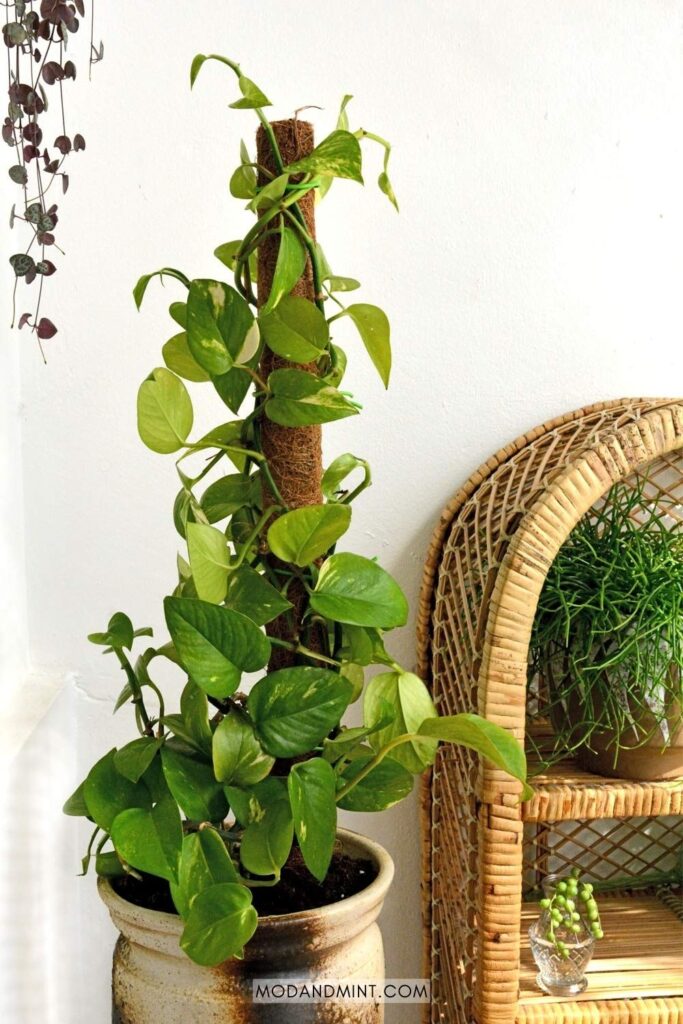
Indoors you can give it climbing support in the form of a moss pole. Place the pole in such a way that leaf nodes are touching it, or at least are very near to it. Aerial roots will grow from these nodes, grabbing onto the stake. Mist frequently so the roots can attach themselves more easily.
Read more: How to attach a Pothos to a moss pole!
Repotting
Repot every two to three years in spring when the plant is actively growing. The soil will have lost its nutrients and will need to be replaced with fresh well-draining potting soil. A special aroid potting mix is a good choice for indoor pothos plants.
Repot in a pot one size up if your plant has outgrown its original pot. Roots will have filled the pot or growing from the bottom of the pot.
Make sure the new pot has drainage holes on the bottom. If it doesn’t, use the pot as an outer cache pot and place a planter with drainage inside it.
Read More: How to repot your plants.

Related reading: Meaning and Symbolism of Pothos plants.
Pothos Propagation
The easiest way to propagate is by taking stem cuttings and rooting them in water or soil.
Take cuttings with a few leaves and remove the leaves from the lower part of the cuttings. Or cut the stem just before and just after a leaf. The part where the leaf petiole meets the vine is where the node is where the roots will grow. Cut the vine around each leaf in this way, and discard any bare in-between stem pieces.

- To water propagate, place the cuttings in water and keep them in bright, indirect light. Change the water regularly and transplant to soil when roots have grown to about 1 – 2 inches.
- To propagate in soil, plant the cuttings in a small pot with well-draining soil. Keep in bright, indirect light. Mist or water very sparingly until you see new growth.
Roots grow relatively fast on this plant, usually in about 1-2 weeks. But you can still use a rooting hormone powder to speed up the propagation process and help in growing stronger roots.
Propagation may be done at any time of year but is best done during the active growing period in spring or early summer, as in winter growth slows down. The warmer weather and longer daylight will help encourage new growth.
Read more: 6 different ways to propagate all your plants.
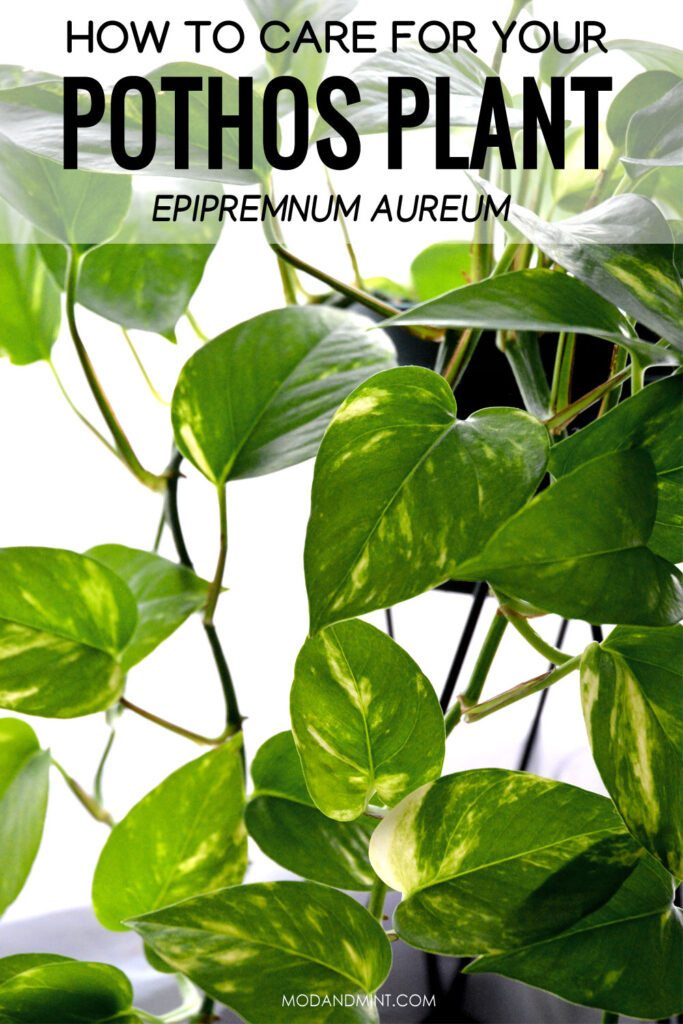
Beware: The Epipremnum aureum is considered an invasive species in parts of the United States. Better to not plant them outdoors in areas with mild winters.
Epipremnum aureum Toxic to Cats?
Unfortunately, yes. These plants are considered mildly toxic when ingested. It may cause irritation of the mouth, tongue, and lips, excessive drooling, vomiting, and difficulty swallowing.
Although it is uncommon for pets to get seriously hurt from eating plants, keep this one out of reach of children and pets.
Read more: Popular Pets Safe Plants.
Want more hanging plants? Check out this list full of hanging houseplants!



Will my pothos plant overgrown it’s planter if I cut it back?
@Suzan, i notice that my plant was throwing alot of yellow leafs and it started so beautiful the growth. now i see it kinda sad. what should i do to nourish my plant so it could revive as it was normally. my plant is a epipremnu