
Pothos Spiritual Meaning and Symbolism
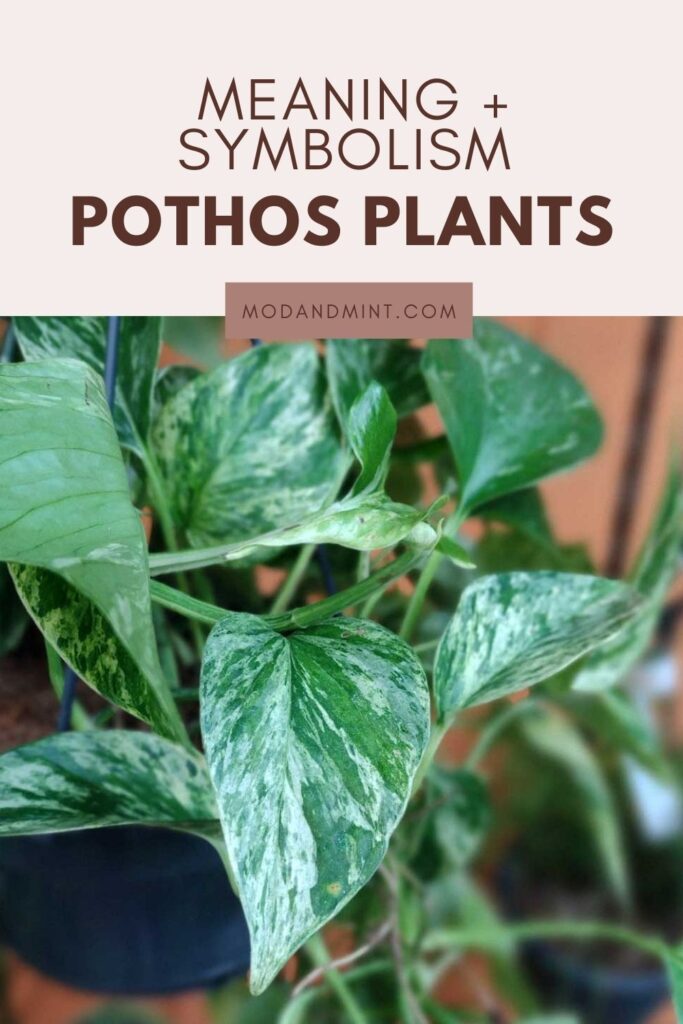
Pothos plants, scientifically known as Epipremnum aureum or commonly referred to as Devil’s Ivy, are popular indoor hanging plants.
If you are anything like me, you enjoy knowing more about the back story of the plants in your home. You might want to know about the various symbolic meanings attributed to them. At the end of this article, I will also share a bit about the history of the Pothos as a houseplant. Enjoy!
Here are some common meanings and symbolism associated with pothos plants:
- Prosperity and abundance
- Positive energy and purification
- Resilience and endurance
- Connection to nature and growth.
- Feng shui Chi
Related reading: Pothos plant care – How to propagate pothos plants.
Prosperity and abundance
Pothos plants are often seen as symbols of prosperity and good fortune, especially the golden Pothos. Their rapid growth and ability to thrive in various conditions are interpreted as signs of abundance and wealth.
In Chinese culture, pothos is often associated with good luck, prosperity, and fortune, making it a popular choice for interior decoration and gifting.
Positive energy and purification
Pothos plants purify the air and in some cultures are seen as promoting positive energy within a space. They are often placed indoors to improve air quality and create a harmonious environment.

Resilience and endurance
Pothos plants are known for their resilience and ability to survive in low light conditions and neglect. As a result, they symbolize resilience, endurance, and adaptability in the face of adversity.
Connection to nature and growth
Pothos plants are also associated with nature and growth, representing the cycle of life, renewal, and transformation. Their trailing vines and lush foliage evoke a sense of natural beauty and vitality.
Feng Shui
In Feng Shui, pothos plants are believed to bring positive chi (energy) into a space, especially when they are placed in the wealth and prosperity area of a home or workplace.

History & Origins of the Pothos Plant
Pothos plants have a rich history dating back centuries. Originating from the tropical regions of Southeast Asia, pothos were initially valued for their lush foliage and resilience in various environmental conditions.
As a houseplant, it gained popularity in ancient cultures for its ornamental qualities and spiritual significance. During the 18th century, European explorers and botanists brought the pothos plants to the West, where they quickly became cherished as prized indoor plants due to their low maintenance requirements and ability to thrive in low light conditions.
Pothos gained further recognition in the 1970s and 1980s during the peak of the houseplant trend, becoming a staple in households worldwide. Its popularity was fueled by its air-purifying properties, making it not just aesthetically pleasing, but also beneficial for indoor air quality.
Today, pothos plants remain one of the most beloved houseplants, cherished for their trailing vines, heart-shaped leaves, and ease of care.