
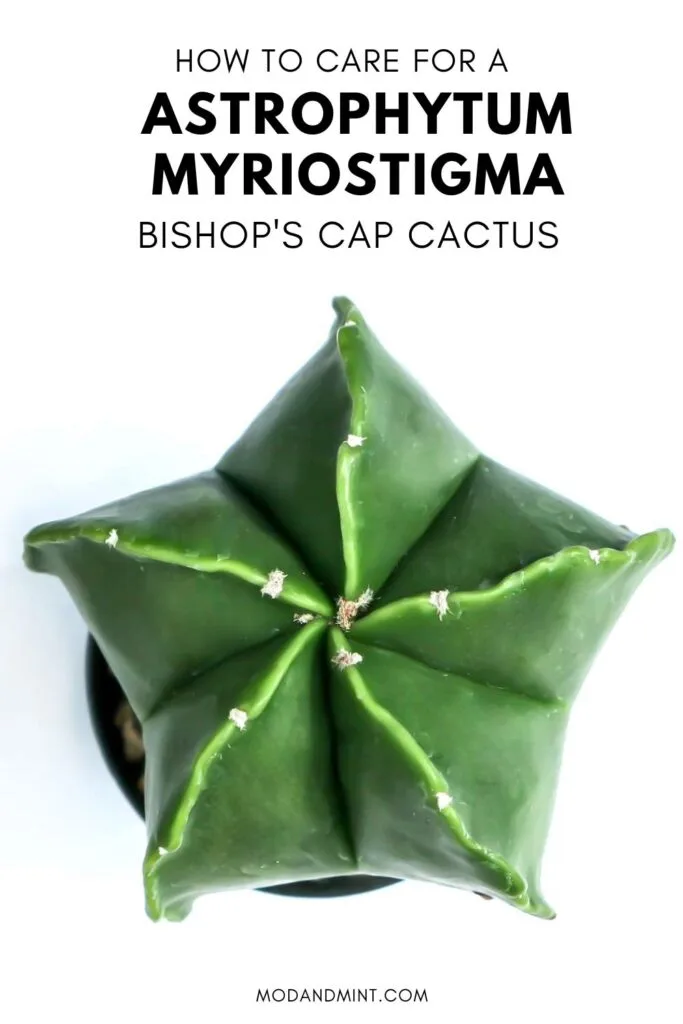
The Astrophytum myriostigma is an unusual-looking cactus that grows well as an indoor plant. This cactus goes by the easier common name of Bishop’s cap cactus due to its resemblance to a bishop’s miter cap.
Astrophytums make excellent houseplants. They are easy to grow indoors with minimal care.
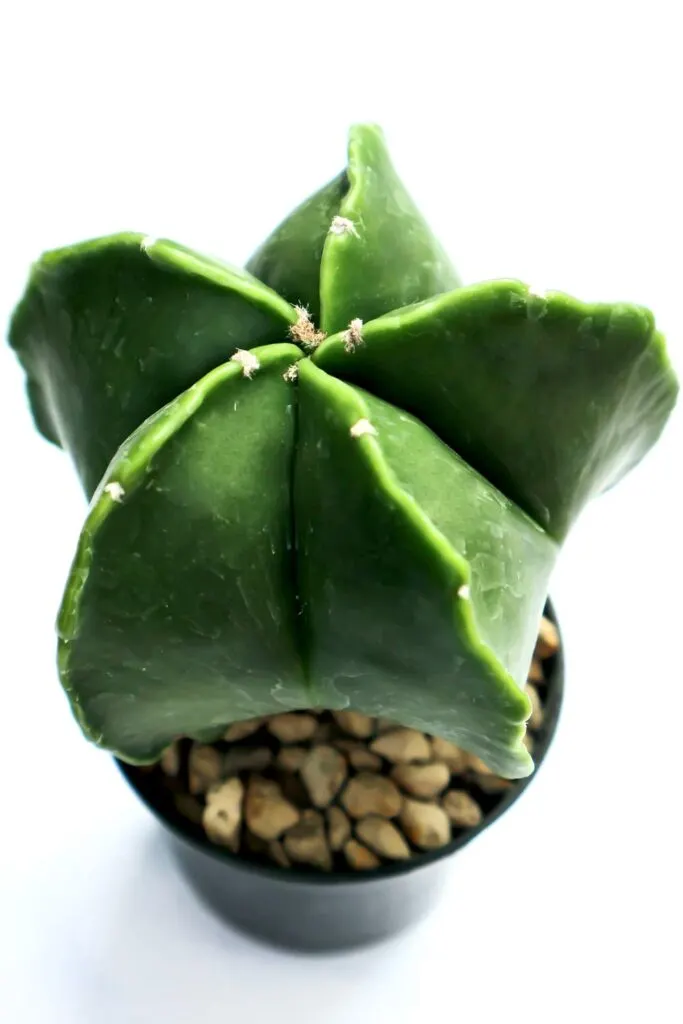
The spineless succulent body of the Astrophytum myriostigma is divided into segments. It usually has four or five ribs, but that number increases with age. The star-shaped body is formed as a dome when young, growing into a taller column as it ages.

Looking to buy an Astrophytum myriostigma plant? Check out the plant growers on Etsy that deliver them right to your doorstep.


Astrophytum Myriostigma
The Bishop’s cap cactus is native to Texas and northeast Mexico where it grows in warm and dry conditions with plenty of bright sunlight.
Between different Astrophytum myriostigma varieties, the green bodies can be smooth, or covered with tiny tufts of white hairs that give it a chalk-white or silver-grey appearance.
Like this plant? Check out its relative, the Astropythum asterias, or the so-called Star cactus!


Light Requirements
The Bishop’s hat cactus likes lots of light. Indoors, they do best in a bright, sunny window with 6 to 8 hours of bright sun.
Avoid too much direct afternoon sunlight, especially on hot summer days. Protect your plant during the hottest midday hours. Dry, brown spots can be a sign of sunburn. Move your plant further away from the window, or filter the light with a sheer curtain. If you can not give your plant enough natural light, consider getting a grow light.
Watering
The Astrophytum myriostigma cactus is very drought resistant. In its native habitat, it is used to long dry spells followed by heavy rain. These plants store water inside while waiting for the next rainfall (or indoor watering).
Don’t water your Bishop’s cap cactus too often. Overwatering is the most common problem with these plants and can lead to root rot.
The body of the plant should feel firm but will become soft and mushy inside when overwatered. You might notice brown rotting at the base. Astrophytum cactus problems are almost always because of too much water and loss of roots.
Indoors, allow the soil to dry out completely in between waterings. When you water, be generous with it. This is called the soak-and-dry method. Soak the soil when you water, then let it dry out before watering again.
Slow down watering in autumn and don’t water in winter. Keep it bone dry from October till March. If in doubt, don’t water yet. Underwatering is easier to fix than overwatering.
You can use a moisture meter to tell if it’s time to water. And read up on the basics of how and when to water your cactus plants.

Soil and Repotting
If your Astrophytum myriostigma cactus has outgrown its pot, transplant it in spring in a pot one size bigger than the original. Don’t be tempted to put it in too large of a pot. The soil mix will stay wet for too long.
It is a slow grower so you won’t have to repot more than about once every 2-3 years.
Transplant your Bishop’s cap cactus in a very fast-draining potting mix. You can purchase a premixed gritty succulent mix. If you want to prepare your own, use just a little bit (not more than 1/3rd) succulent soil. Mix in a lot of pumice and grit to help aerate the soil and improve drainage.
Make sure the new pot has drainage holes on the bottom. Without those, excess water has no way to get out and could drown the roots.
In need of a repotting reminder? Follow the steps on how to repot your plants.


Flowers
Astrophytum Bishop’s cap cactus can grow large, fragrant yellow flowers throughout early spring and summer.
Mature Astrophytum myriostigma plants can bloom multiple times during the growing season. But be patient, it can take up to five or six years to flower for the first time.
Astrophytum Myriostigma Propagation
You can propagate a Bishop’s cap cactus from seed. Purchase good quality seeds or, if you are lucky and your plant has flowered, you can collect seeds from the spent flowers.
Use seeds as fresh as possible, and plant them quickly after harvesting. They don’t tend to keep well for a long time.
- Fill a tray or container with fresh rooting potting mix.
- Sow the seeds about half an inch deep and an inch apart.
- Cover tray with plastic to retain humidity and warmth.
- Place in a bright, warm location (no direct sun), and keep the medium slightly damp.
- Allow air into the tray every day or two by removing the plastic for a while and wiping off condensation.
- Remove the plastic completely when the seeds have germinated.
- When the baby cacti have grown large enough to handle, transplant them into small individual pots and start regular care.
Want to learn more about plant propagation? Read the complete guide explaining the 6 different ways to propagate all your plants.
Plant Pests
The Astrophytum myriostigma is not very prone to pests, but can occasionally be affected. Watch out for mealybugs and scale insects.
Inspect your plant regularly for signs of bugs to catch a possible infestation before it becomes severe.
Learn more about common houseplant pests and what you can do to get rid of them.
Is the Astrophytum Myriostigma Toxic to Cats?
Astrophytum myriostigma plants are considered non-toxic. It is safe to grow this cactus at home around your cats or dogs.
Further reading: Toxic houseplants and pets.