
The Sansevieria Francisii Spiky is a compact and eye-catching snake plant variety. The slender, cylindrical leaves are arranged in a fan-like or rosette pattern, where the leaves emerge in a neat and compact stack.
The Sansevieria francisii is an easy-care succulent plant that can grow indoors in low light, needs very little water, and does not have many care problems, making it a great plant for beginners and those with many plants but little time to tend to them.

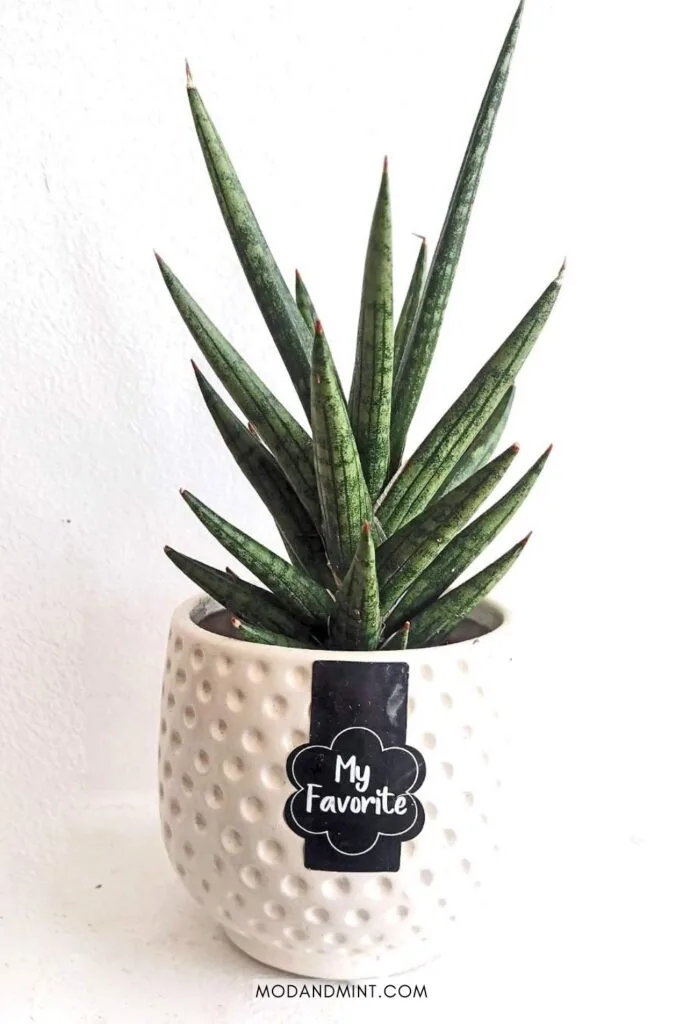
Sansevieria Francisii
Scientific name: Sansevieria Francisii. Common names: Sansevieria Francisii Spiky or Spikey, Francisii Snake Plant.
The Sansevieria Francisii is a somewhat rare Snake plant cultivar. Sansevieria francisii is native to the region of Kenya in East Africa. It typically grows in dry conditions, often in rocky or sandy soils.
Read More: Succulent care for beginners.


Want to buy a Sansevieria Francisii Snake plant? Find it for sale on Amazon!
Light Requirements
Sansevieria Francisii plants can tolerate growing in low light. But for optimal growth, provide plenty of bright indirect light.
Direct sunlight can leave dry, brown burn marks on the leaves, while too little light can cause slower growth.
Love Snake plants? Check out these popular Sansevieria varieties!
Watering
The Francisii Sansevieria is very drought-resistant. It stores water in the leaves, roots, and underground rhizomes, as a result, it can go without water for a long time.
It is prone to root rot so let the soil dry out completely between waterings to prevent overwatering. If you are not sure when to water, you can use a moisture meter to help you.
Healthy leaves are firm and thick. Signs of an underwatered francisii are wrinkled, shriveling leaves with dry brown tips. Signs of overwatering are leaves turning yellow, soft, and mushy from the bottom up.
Further reading: When to water indoor succulents – How to use a moisture meter.
Humidity
Sansevieria plants thrive in warm temperatures and are not very needy regarding humidity. They prefer some humidity but can grow in average household humidity conditions.


Related reading: Fun Facts about Snake Plants.
Soil and Repotting
The Sansevieria Francisii is a slow-growing plant that does not need to be repotted often.
When mature, it grows pups around its base. It will outgrow its pot when it’s overcrowded with new clusters. Repot in spring in a pot one size bigger than the original.
Plant in well-draining succulent soil. Make sure the new pot has drainage holes on the bottom. Without those, excess water has no way to get out and will drown the roots.
Read More: Guide to repotting house plants.
Sansevieria Francisii Propagation
You can propagate the Sansevieria francisii by rooting leaf cuttings, but the easiest way to propagate is by removing the offsets. The offsets, also known as pups, grow from underground rhizomes around the base of the mature parent plant.
You can gently divide the rhizomes to separate the baby plants. Plant separately and give them more room to grow into independent plants.
Read more: How to propagate snake plants and 6 ways to propagate all your plants!


Is the Sansevieria Francisii Toxic to Cats?
The Sansevieria francisii plant is considered mildly toxic. It can cause nausea, vomiting, and diarrhea when ingested.
Although it is uncommon for pets to get seriously hurt from eating plants, keep this one out of reach of children and pets.
Further reading: Are Sansevieria Snake Plants Toxic to Pets?