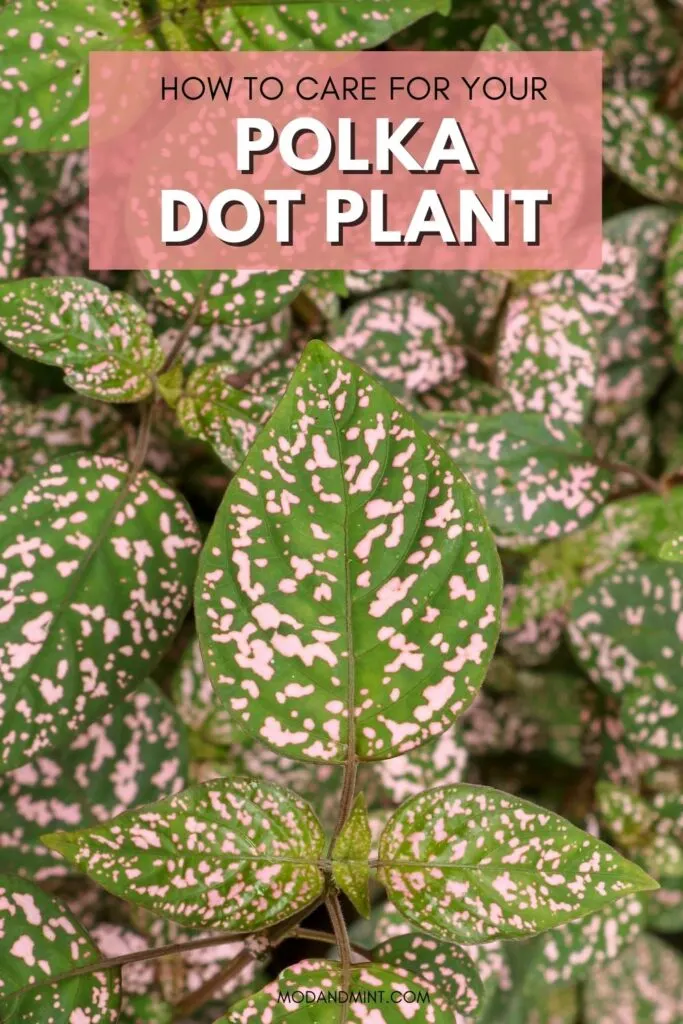
The Polka dot plant (Hypoestes phyllostachya) is a popular tropical house plant. And I completely understand why.
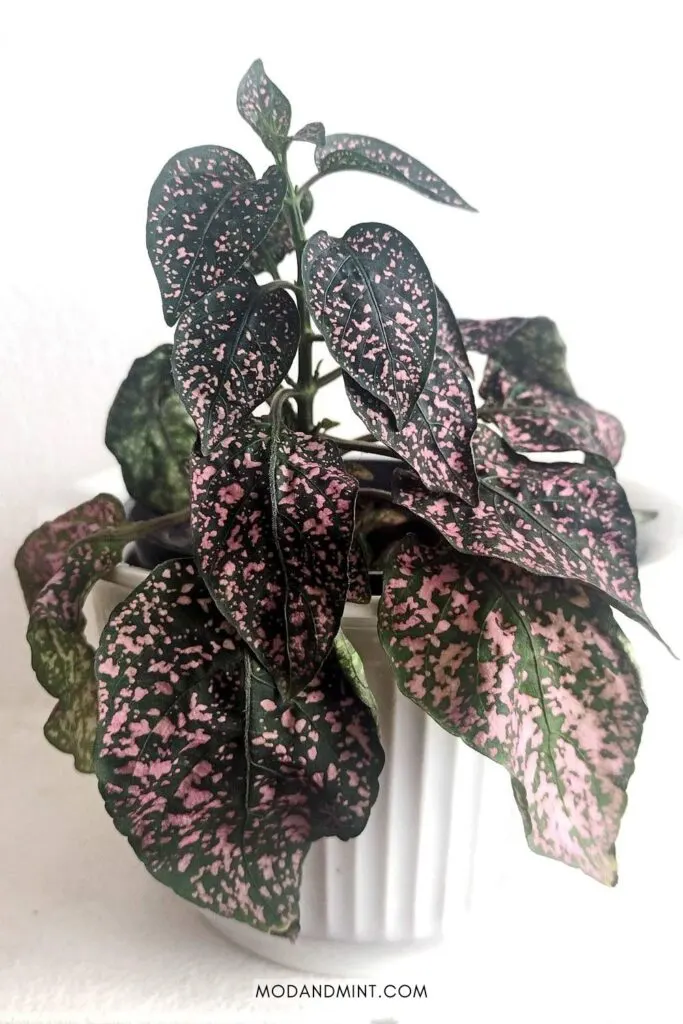
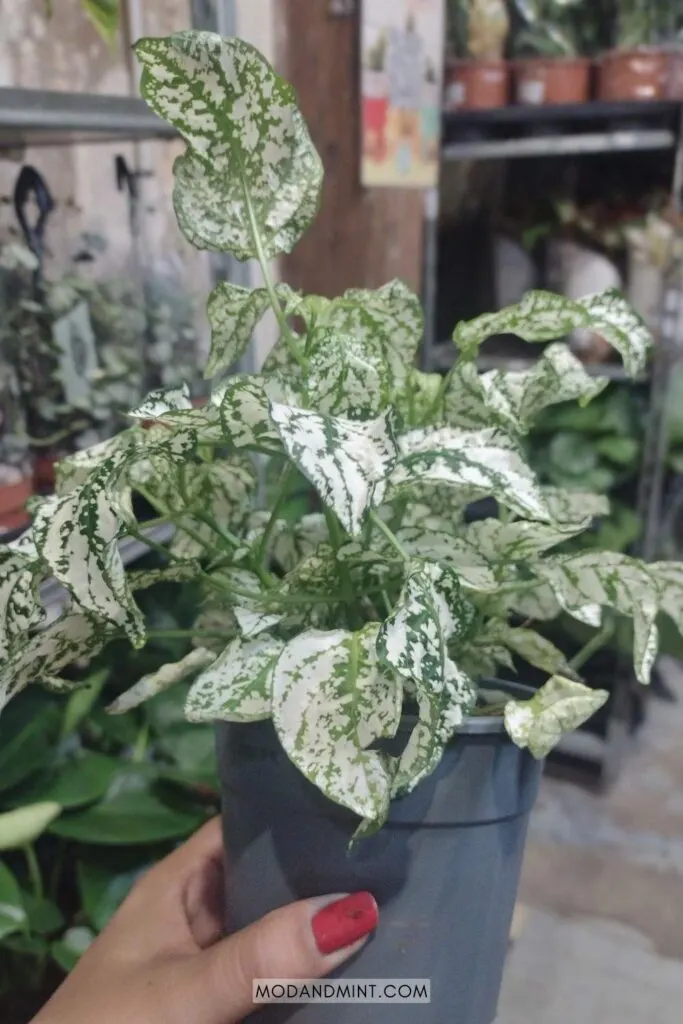
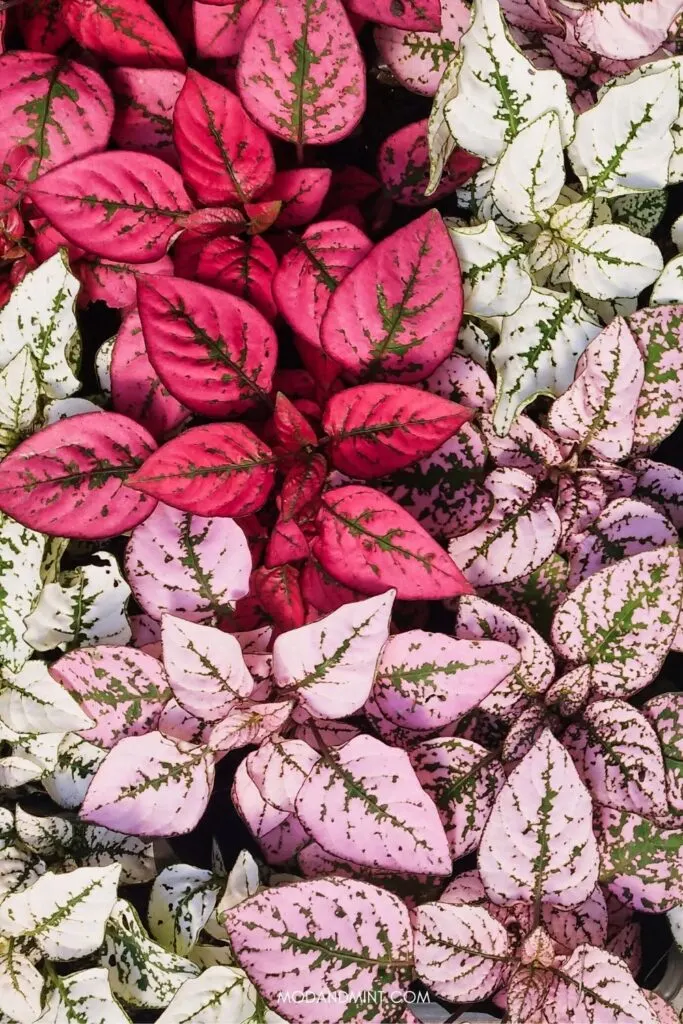
It grows beautiful variegated leaves, splashed with white, pink, red, or burgundy red spots, dots, and splashes. This small plant brightens up your windowsill!
The different varieties are often offered together as a mix, sometimes even mixed together in a single pot.
In this plant guide, I share my experience and easy care tips on watering, light, humidity, propagation, and more, so you can successfully grow the polka dot plant in your home!

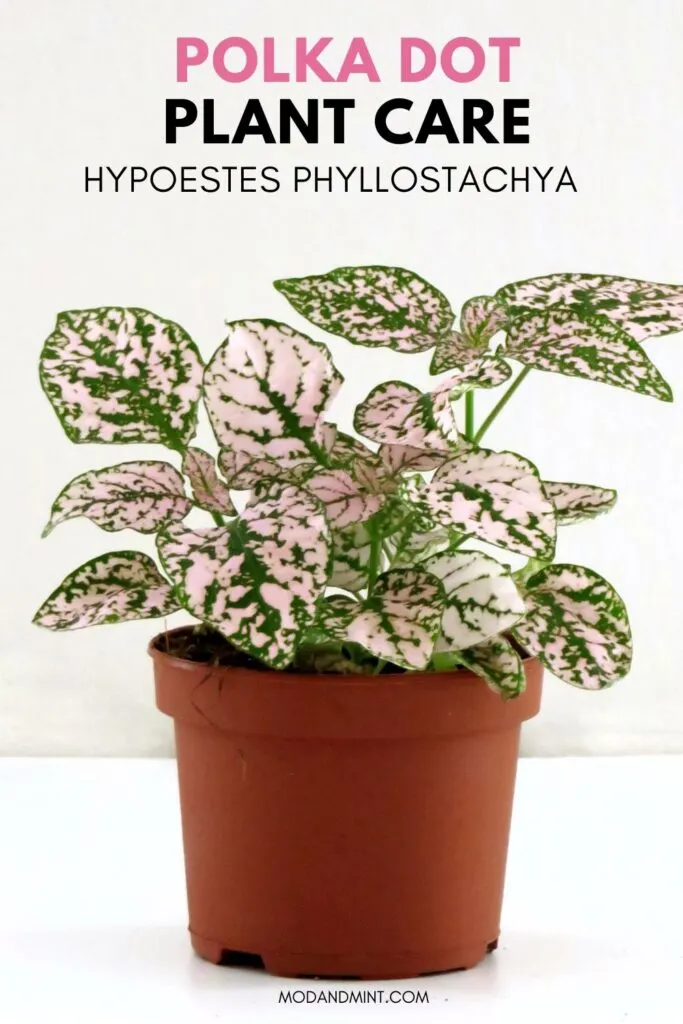
Want to grow your own Polka dot plant? Find them for sale on Amazon!
Hypoestes Polka Dot Plant
Scientific name: Hypoestes phyllostachya. Common names: Pink polka dot plant, Freckle face plant, Pink splash, or Confetti plant.
The Hypoestes phyllostachya is native to tropical Madagascar. There it grows under the canopies of larger plants and trees.
Polka dot plants can act a bit dramatic and be a little tricky to care for. Having said that, under the right conditions polka dot plants can grow indoors and do very well.
Generally, these delicate plants don’t live more than a few years. When it starts declining you can take cuttings and propagate them to start a new plant.
Mix and match! Pair your polka dot plant with another small windowsill plant with pretty leaves. Not the same, but a very similar plant relative: the fittonia, or nerve plant.


Read more: House plant care made easy for beginners.
Light Requirements
In their natural environment, hypoestes plants typically only receive filtered or dappled sunlight. Indoors they prefer bright, indirect light.
Avoid too much direct sunlight. This can scorch the delicate leaves, leaving dry brown spots that won’t heal. Move your plant away from the window, or filter the light with a sheer curtain.


Watering
Indoors, water your plant regularly to keep the soil slightly damp. The soil should feel like a wrung-out sponge.
Check the soil frequently. When the soil feels moist, wait for one to two days and check again. If the soil is dry, go ahead and water generously to saturate the soil. Allow any excess water to drain out of the bottom of the pot. Then allow the top layer of soil to dry out before watering again.
To prevent overwatering, don’t water too often. Roots will rot in consistently wet soil. If you are uncertain, you can use a moisture meter to help you with when to water.
If the soil gets too dry, the leaves will droop dramatically, but they will quickly recover once the plant receives water. Don’t wait too long. Hypoestes does not like dry soil.

Read more: Discover the right way to water your indoor plants.


Humidity
The Hypoestes likes warm temperatures and high humidity. Too little humidity is the most common problem in keeping these plants alive indoors. I’ll raise my hand. It happened to me.
Keep the plants away from radiators, and space heaters. Signs that the air around your plant is too dry: the plant will wilt and leaves curl or cup. Leaf tips and edges may turn brown and crispy.
A good place to keep your plant is in a bathroom or kitchen with a bright window. The steam from the shower or cooking will provide the humidity it needs. If your home has dry air, you might want to purchase a small humidifier for your plant.


Polka Dot Plants in a Terrarium
Indoor Hypoestes plants love closed terrariums because they thrive in the humid, cozy space. Plus, their polka-dotted leaves add a fun pop of color to your terrarium!
In a closed terrarium, they don’t need to be watered. There will be enough humidity and moist soil inside for your plant. Only add a little bit of water if you have had the terrarium open for some time. All the humidity will be evaporated and needs to be refilled.
Ready to get started? Learn how to make a closed plant terrarium.


Regularly pinching and pruning your Hypoestes helps maintain a bushier, more compact shape and encourages fresh, vibrant growth by stimulating the branching of new side shoots.

Polka Dot Plant Propagation
The easiest way to propagate a polka dot plant is by taking stem cuttings and rooting them in water or soil. Take cuttings with a few leaves and remove the leaves from the lower part of the cuttings.
Propagation may be done at any time of year but is best done during the active growing period in spring or early summer, as in winter growth slows down. The warmer weather and longer daylight will help encourage new growth.


- To water propagate the cuttings, place them in water and keep in bright, indirect light. Change the water regularly and transplant to soil when roots have grown to about 1 – 2 inches.
- To propagate in soil, plant the cuttings in a small pot with well-draining soil. Keep in bright, indirect light. Mist or water very sparingly until you see new growth.
To speed up the propagation process, you can apply a rooting hormone powder to the cutting before planting it. This powder stimulates the formation of roots and results in stronger, better-rooted plants.
Read more: 6 different ways to propagate all your plants.


Is the Hypoestes Toxic to Cats?
Hypoestes phyllostachya is considered non-toxic to cats and dogs when ingested. It is safe to grow at home around your cats or dogs.
However, it’s always a good idea to prevent pets from chewing on houseplants, as it can cause mild digestive upset.
Pin and save for later!

Want more pink plants? Explore our list of stunning pink house plants (with pictures!)