
When you care for indoor plants, knowing when to water is key to keeping them healthy and growing. A moisture meter is a simple tool that measures soil moisture and takes the guesswork out of watering.
In this guide, I’ll walk you through the basics of how to use a moisture meter for your plants, so you can give just the right amount of water they need!

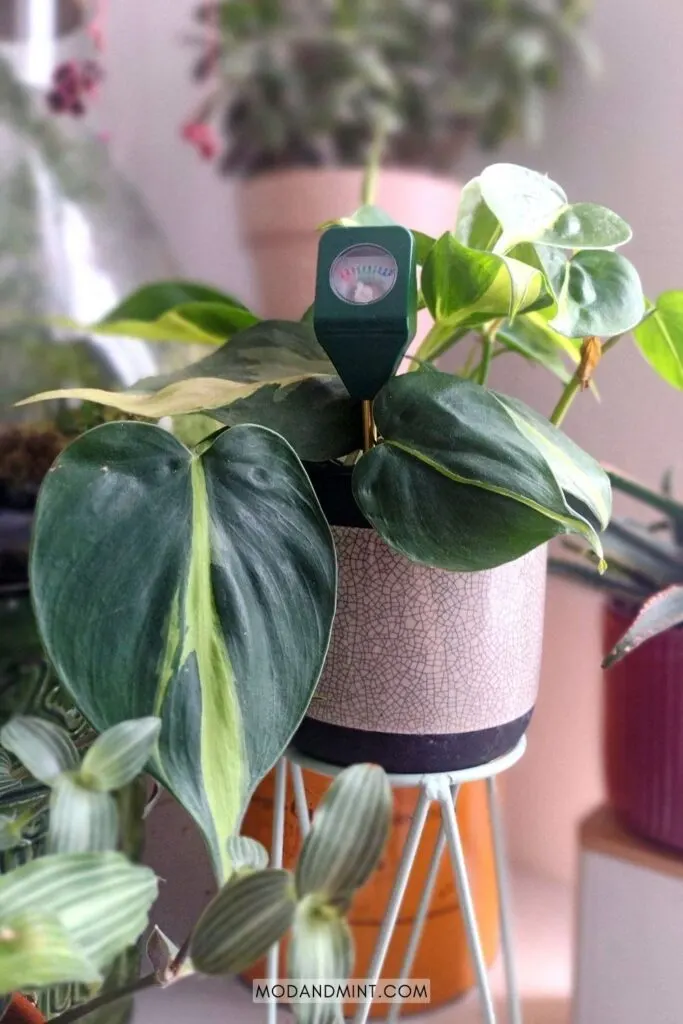
What is a Moisture Meter and Why You Need One
A moisture meter is a small handheld device designed to measure the moisture content in the soil around your plants. It’s a game-changer for plant enthusiasts who want to avoid the common pitfalls of overwatering or underwatering. This tool helps you giving your plants the right amount of water at the right time.
Want to buy a moisture meter? Find them for sale on Amazon!
Getting Acquainted with Your Moisture Meter
Most soil moisture meters have a simple design with a probe that you insert into the soil. The plant water meter then provides a reading indicating the moisture level.
Familiarize yourself with the meter’s scale, typically with a color-coded reading system labeled as “Dry,” “Moist,” and “Wet.” Some meters may also have numerical readings, providing a more precise measure of soil moisture.


How to Use a Moisture Meter For Plants Indoors
1. Select the Right Spot
Choose a good spot in the plant’s pot to insert the moisture meter. Avoid placing it too close to the edge or directly against the container wall.
2. Insert the Probe
Gently insert the probe into the soil until it reaches the root level. Ensure the probe is deep enough to give an accurate reading but not so deep that it touches the pot’s bottom.
3. Wait for the Reading
Allow the moisture meter a few moments to stabilize and provide an accurate reading. The meter will indicate whether the soil is dry, moist, or wet.
4. Interpret the Reading
Use the moisture meter’s scale to understand the soil moisture level. Adjust your watering routine based on the reading. If it’s dry, it’s time to water. If it’s wet, hold off for a few days and check again.


Tips for Optimal Use
Consistency is Key: Establish a routine for using the moisture meter, checking different areas of the soil to ensure an accurate representation.
Calibrate as Needed: Some moisture meters may allow for calibration. Follow the manufacturer’s instructions to ensure precise readings.
Clean the Probe: Wipe the probe clean after each use to prevent soil residue from affecting future readings.
Benefits of Using a Moisture Meter
- Prevent Overwatering: Avoid the common pitfall of overwatering, which can lead to root rot and other issues.
- Combat Underwatering: Ensure your plants receive adequate hydration, preventing wilting and stress.
- Tailor Watering to Plant Needs: Different plants have varying moisture requirements. A moisture meter helps you customize your watering approach for each plant.
Related reading: How to bottom water plants – How to water plants when traveling – When to water succulents – When to water cactus plants.
Roseann Lecce
Wednesday 6th of August 2025
How deep do you insert your moisture meter when checking if it’s time to water? Thank you