
The Alocasia Baginda Dragon Scale plant is a tropical plant known for its textured, dark green leaves, resembling the mythical skin of a dragon.
If you want to grow it indoors, provide it with bright, indirect light, slightly moist soil, and high humidity. Oh yeah, it’s a relatively slow but steady grower.

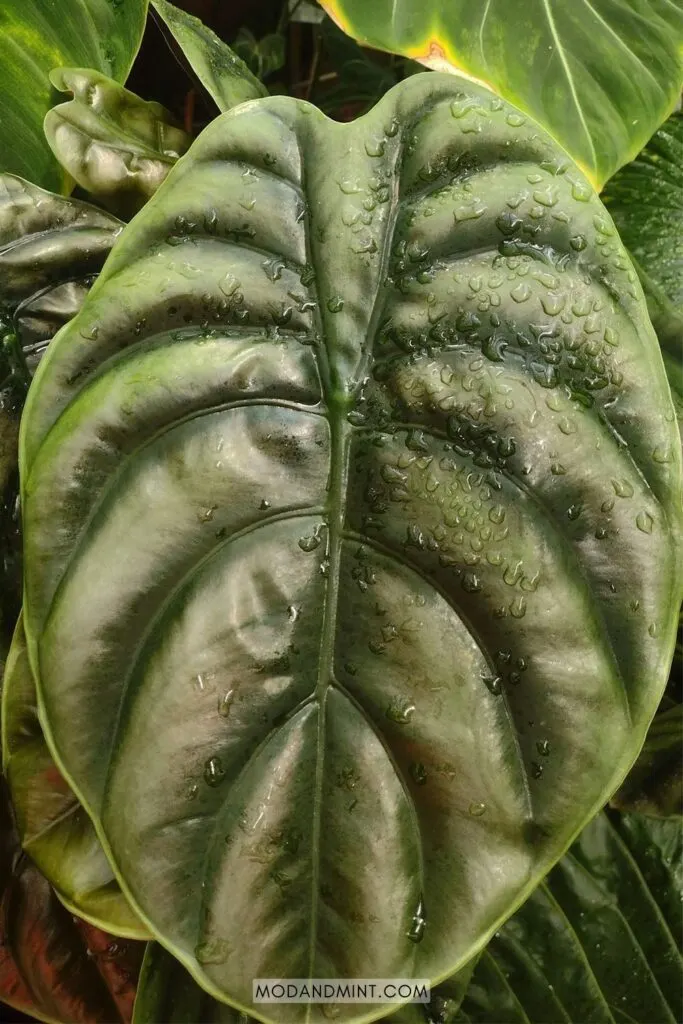
Scientific name: Alocasia Baginda Dragon Scale. Common names: Dragon Scale Alocasia or Dragon Scale Elephant Ear.
Alocasia Dragon Scale Care
The Alocasia Baginda is native to the rainforests of Southeast Asia, particularly in Borneo. In its natural habitat, it grows under the canopy of larger trees, in well-draining soil, and in a consistently warm and humid climate.
Basic Plant Care Refresher: House Plant Care for Beginners.
Light Requirements
These plants thrive in bright, indirect light, making them an excellent choice for homes with ample natural light.
Avoid too much direct sunlight, as this can scorch the leaves. If you notice your Dragon Scale reaching towards the light source, rotate the pot fo rmore even growth.

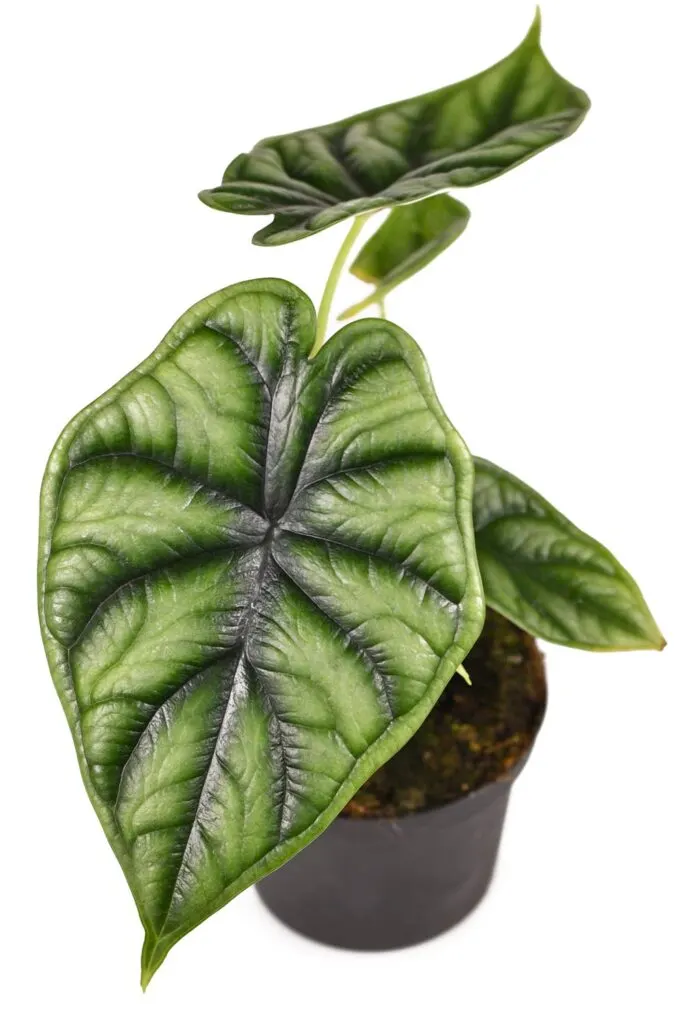
Want to buy an Alocasia Dragon Scale? Find it for sale on Amazon!
Watering
Water regularly to keep the soil slightly moist. The soil should feel like a wrung-out sponge.
If the soil feels moist, don’t water but wait one or two days and check again. If the soil is dry, go ahead and water thoroughly to saturate all of the soil. Then allow the top layer of soil to dry out before watering again.
Be cautious not to let the soil completely dry out, as this can lead to stress and leaf drop. If you’re unsure, a moisture meter can be a valuable tool to help determine when to water.
Watering too often may result in root rot and yellow leaves.
Read more: When to water house plants.
Fertilizing
Feed your Alocasia Dragon Scale with a diluted liquid plant fertilizer once or twice a month during the growing season in spring and summer.
Be sure the soil is damp before fertilizing and don’t fertilize in winter when growth slows down.
Too much fertilizing can be more harmful than not enough. If you notice signs of nutrient burn, such as yellowing or browning leaf tips, you might want to cut back on the fertilizer.


Humidity
As a tropical plant, the Alocasia Baginda Dragon Scale thrives in high humidity.
Crispy or brown leaf tips are often the first sign that your plant is not getting enough humidity. The leaves may also start to curl. You can raise the humidity by placing a small humidifier near your plant if the air in your home is dry.

Alocasia Baginda Propagation
Propagating can be done through rhizome division and separating and planting offsets.
The offsets, also known as pups, grow from underground rhizomes around the base of the mature plant. The baby plants can be removed with roots already attached, ready to be potted, and grown into full new plants.
When dividing, make clean cuts through the rhizomes. Make sure each section has roots and leaves before transplanting them into separate pots.
Read more: 6 Plant propagation methods.
Is the Alocasia Baginda Toxic to Cats?
The Alocasia Baginda Dragon Scale is considered toxic to cats (and dogs) when ingested. It may cause irritation and discomfort.
So take precautions and keep this plant out of their reach. Or opt for a pet-safe plant instead, for a safe environment for everyone.
Further reading: Indoor Alocasia polly care.