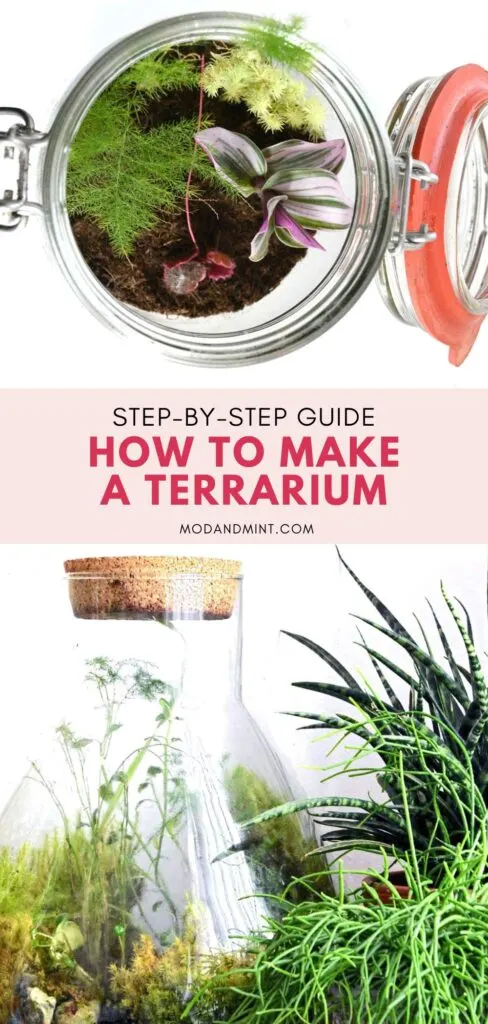
A plant terrarium is a super low-maintenance way to grow plants in your home. A closed plant terrarium basically needs nothing: it is an enclosed ecosystem that mostly takes care of itself.
If you choose the right plants and place your terrarium where it gets plenty of bright but indirect light, you can enjoy your DIY terrarium for years without doing barely anything.
This guide provides practical tips on which container to use for your terrarium, the best plants to grow in your terrarium, and of course, how to make your own plant terrarium. Step by step!

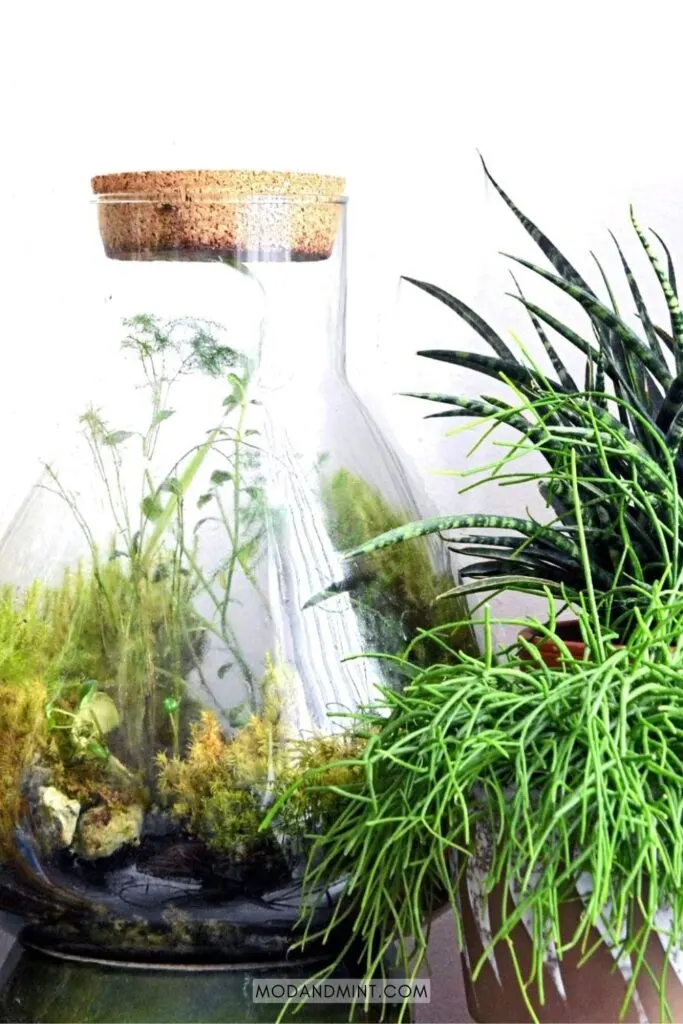
You can buy a ready-made terrarium complete with plants at your local plant nursery, but with just a few supplies you can make your own DIY plant terrarium!
Open or Closed Plant Terrariums
There are two basic types of plant terrariums. They can be open or completely closed.
- An open terrarium is best for plants that grow in low humidity, such as cacti, succulents, and air plants.
- A closed terrarium holds more humidity and is ideal for tropical plants like small ferns, moss gardens, and other plants that grow in high humidity and moist soil.


How Does a Closed Plant Terrarium Work?
It is somewhat of a balancing act, but you can transform a regular glass container into a self-sustaining ecosystem.
An established well-cared-for closed terrarium has a climate of its own. This means your tropical plants can survive inside your terrarium for many years.
The terrarium water cycle works as follows:
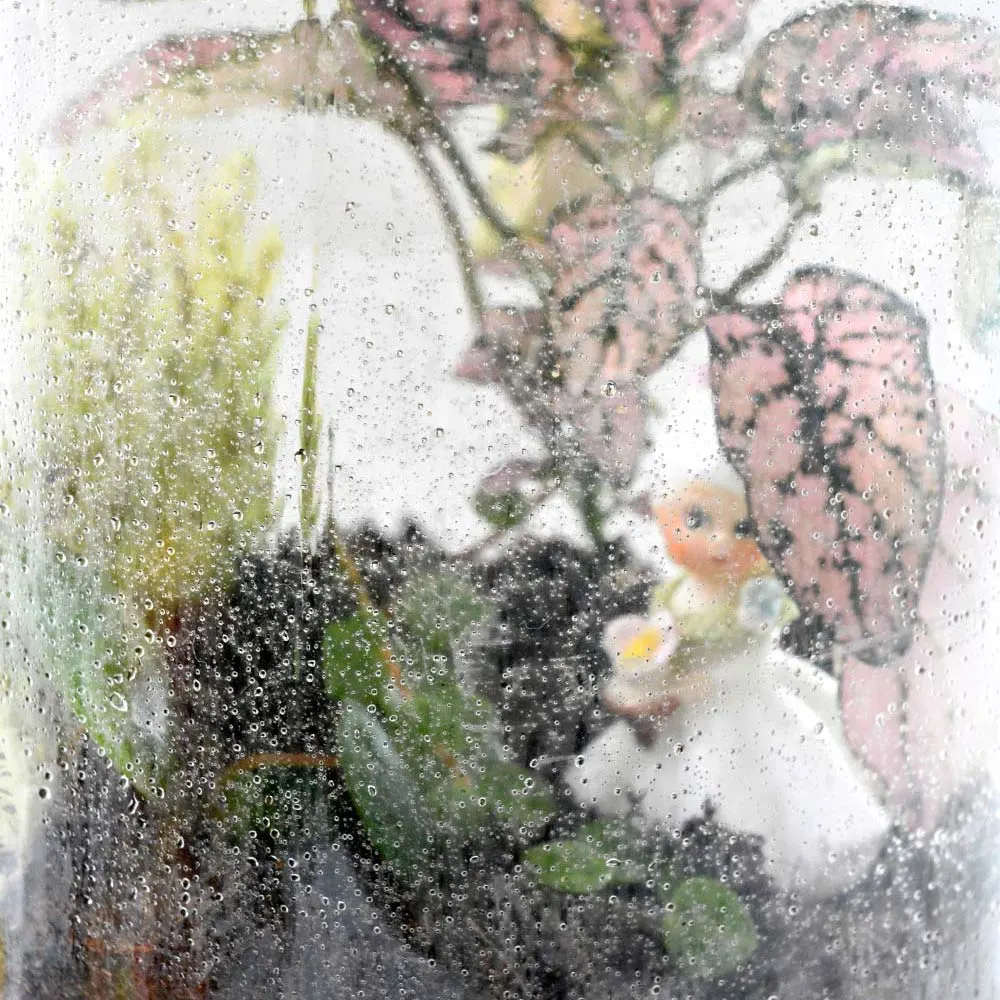
Water is added when the terrarium is created, the plants take it in through their roots, and the leaves evaporate the water back into the terrarium, creating condensation droplets on the glass, dripping down and moistening the soil. Similar to natural rain cycles.


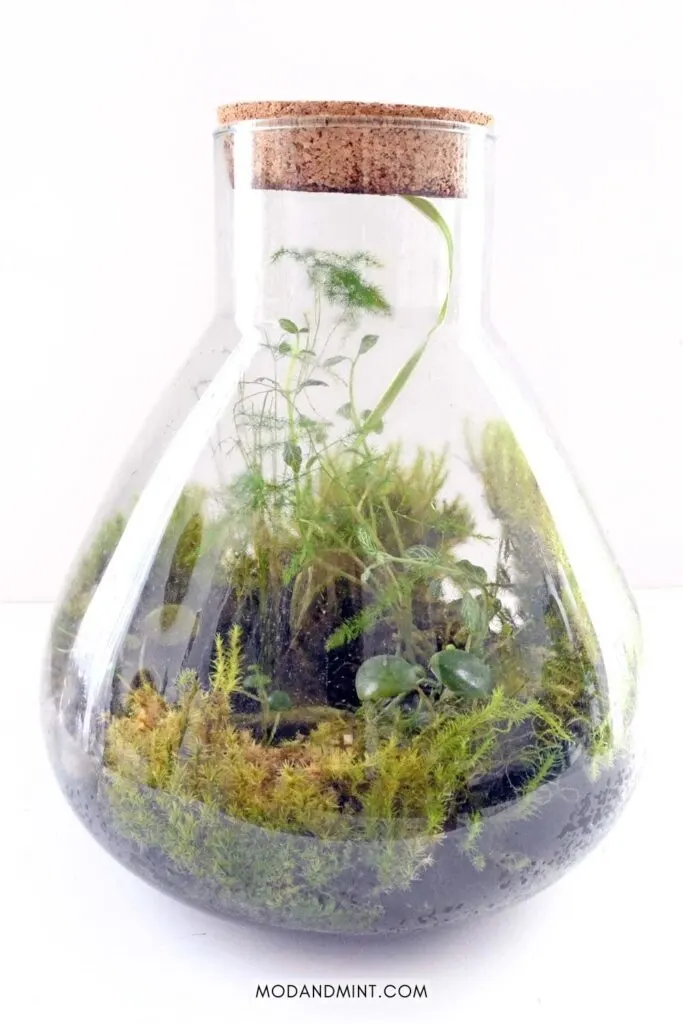
What to Use for a Closed Plant Terrarium?
If you want to make your own terrarium start with a glass jar or container large enough to fit at least one small plant and that can be closed with a lid or cork.
You can purchase a glass terrarium on Amazon, or go to your local thrift shop or flea market. They are a great source of cheap and useful glassware.


Almost any glass jar or container will do. Look for glass bottles, domes, or jars. Larger mason jars make great closed terrarium containers.
Choose a container with a wide neck so your hand can fit through the opening, making it easier to set up the terrarium.
Avoid colored, frosted, or patterned glass which will reduce the light reaching the plants.


The Best Terrarium Plants
Not every plant grows well inside a closed terrarium. The best plants to use are small, slow-growing plants that like high humidity.
You can purchase your favorite plants at your local nursery, or buy a set with assorted mini plants on Amazon that are specially selected to grow in terrariums.


Some of the best terrarium plants for beginners are miniature ferns, Fittonia nerve plants, and Hypoestes polka dot plants.
Moss is probably the easiest plant to grow in an enclosed terrarium, large or small. Mosses are strong, love the humidity, and can survive in low-light conditions.
You can even make a terrarium with only moss, this is also known as a mossarium. Moss does not have roots and does not need soil to grow. You can simply plant the moss on some rocks or tree bark inside your mossarium.
Other moisture-loving plants that grow well inside a closed plant terrarium are English ivy, strawberry begonias, Tradescantia, and small carnivorous plants like the Venus fly trap.
A few attractive ground covers for your terrarium are plants like the Pilea glauca, string of turtles, or Soleirolia soleirolii.
Further reading: The best small plants to grow in a closed terrarium.


If you have a large terrarium container, you can add multiple plants. Just don’t overcrowd them, make sure to give them some space to grow.
Plant Terrarium Layers
If you want to have a terrarium that can last for a long time, it takes a few more layers than simply filling a glass jar with soil and plants.
You can purchase all the tools and supplies for your terrarium separately, or buy a complete starter plant terrarium kit. There are some fun kids terrarium kits available which are great if you want to involve your little ones in the plant fun!


A properly set up plant terrarium has the following five layers:
- Drainage material
- Activated charcoal
- Soil separator
- Terrarium soil
- Plants
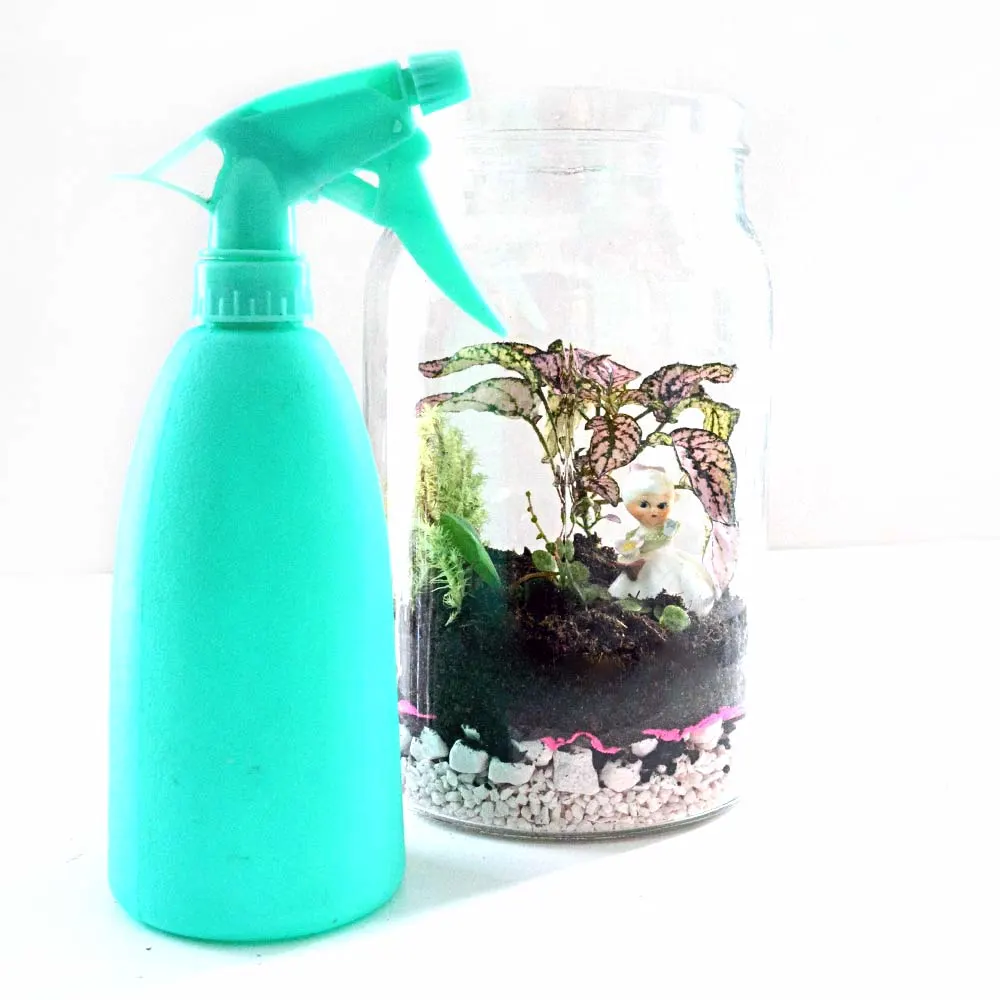
Layer 1: A glass terrarium has no drainage holes so the first layer has to be a drainage layer. This is very important to help water drain to the bottom, away from the soil and the roots, protecting the plants from overwatering. You can use gravel, small stones, pebbles, or Leca balls.


Layer 2: The charcoal layer helps keep the terrarium clean. Activated charcoal acts like a filter, absorbing toxins that might build up in your terrarium. You don’t need a lot, a thin layer will suffice.


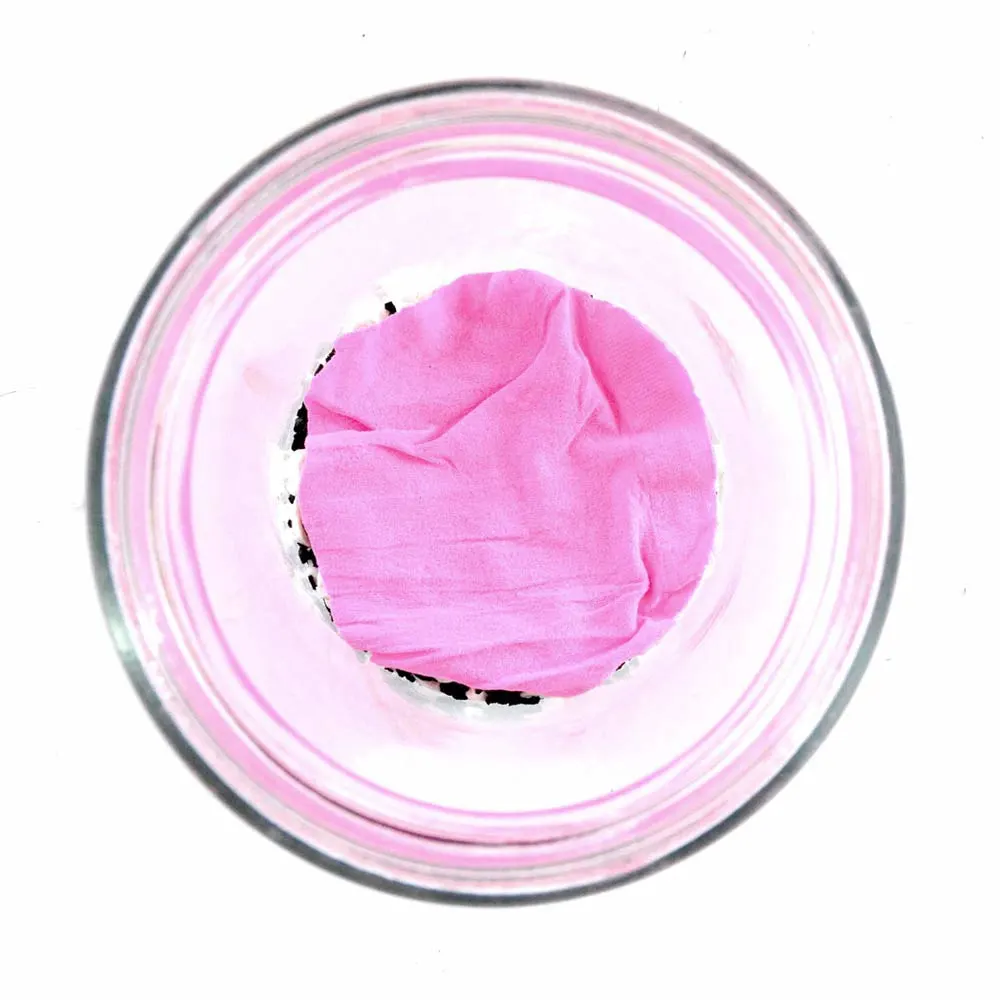
Layer 3: A separation layer is important but often skipped over. This barrier prevents the soil from falling into the lower drainage layer. Different materials can be used, thin mesh screen, sphagnum moss, fine burlap, or a piece of an old pantyhose all work well as soil separators. Cut it a little smaller if you don’t want it to show.

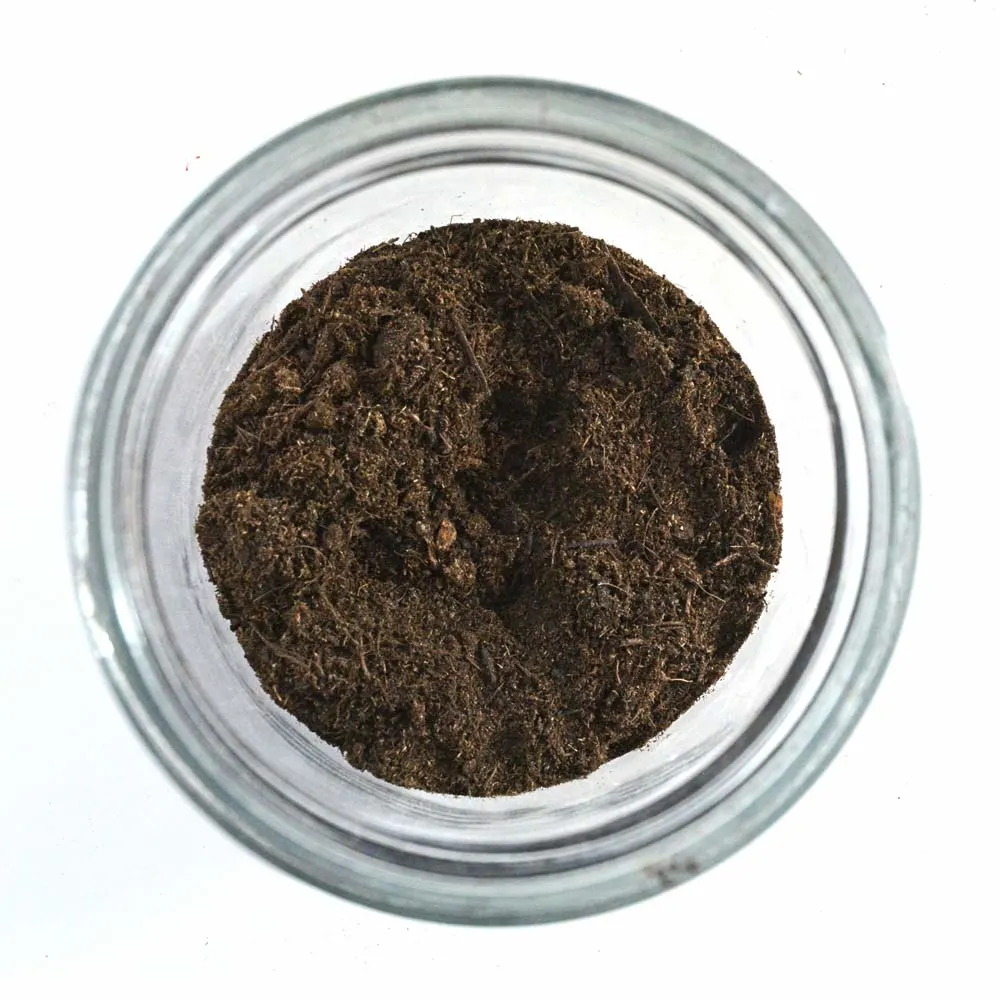
Layer 4: Next is the soil layer. You can purchase specially formulated terrarium soil. Make sure this layer is deep enough to fit the plant roots.

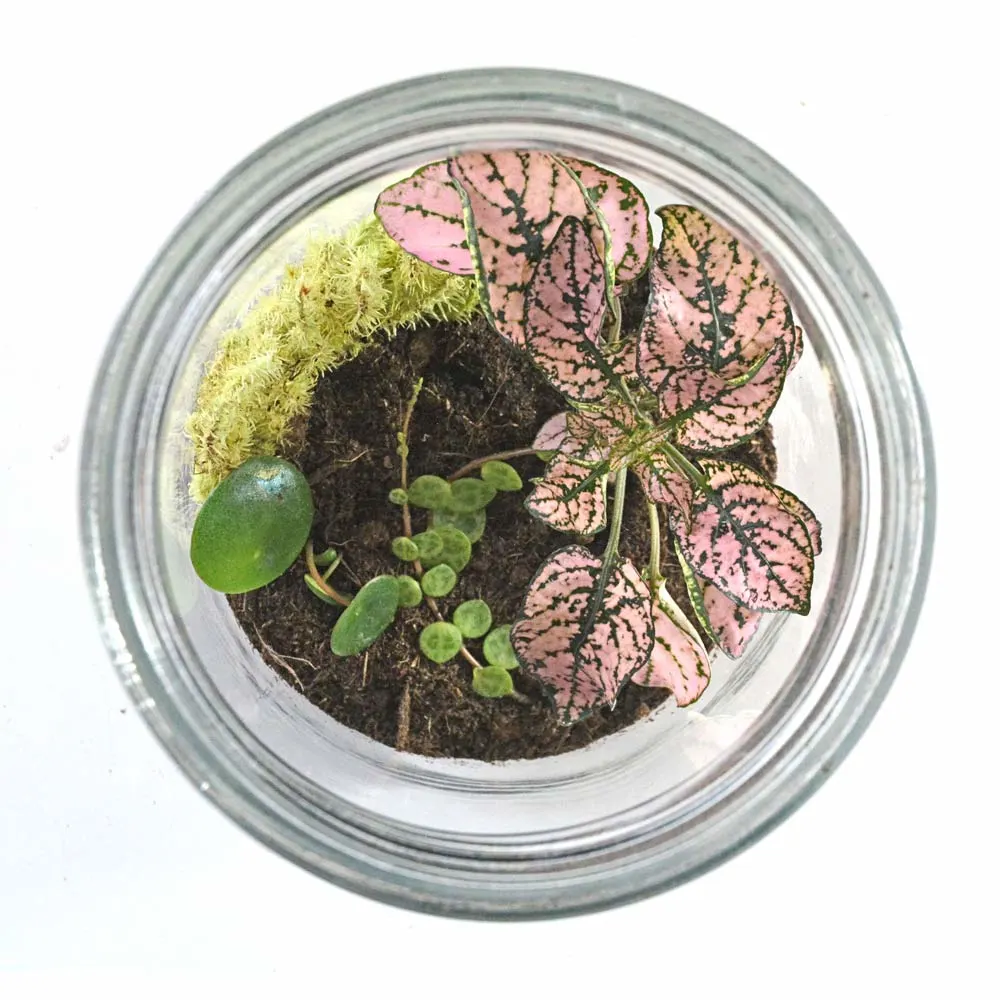
Layer 5: The final layer is the plant layer. Choose small tropical plants of different heights and leaf colors for the most interesting terrarium.

Step 6: Give your terrarium water and light. Use a spray bottle to give your terrarium some water. You want it moist, not soaking wet. Close the lid and place the terrarium in a bright place out of direct sunlight.

Step 7: Closely monitor the moisture in your terrarium for the first weeks. Some condensation in the morning and at night is normal. If it’s too much, remove the lid for a while to let some moisture air out.

Ideas to Decorate a Plant Terrarium


Making your own plant terrarium means you can completely personalize it to suit your style. Look around your home for small trinkets to spark those creative plant terrarium ideas!
You can add (colored) stones and marbles, seashells, and or crystals.
Or turn your terrarium into a dreamy fairy garden by adding cute figurines, miniature birds, butterflies, and small toadstools.
Play with toys and decorate your terrarium with plastic animals, Lego figures, or miniature dinosaur toys.