
The Pilea Glaucophylla / Libanensis is a popular, fairly easy-to-care-for houseplant.
It grows red trailing stems with small silvery-blue round leaves. These form a dense mat making it great as a ground cover. If you let the stems grow longer, spilling over the edge of the pot, you end up with a lovely hanging plant.
Although fairly easy to grow, the Pilea glauca does need some care and attention. These are not plants that thrive on neglect.


Want to buy a Pilea Glauca? Find it for sale on Amazon!
Indoor Pilea Glauca
It is unsure exactly where this plant originates from. Many say it comes from the rainforests of Brazil and Central America like some other Pilea types.
These low-growing pilea plants like bright indirect light, warm temperatures, and high humidity.
This plant is often called Pilea Glauca, but also goes by many other common names like the Pilea libanensis, Red Stemmed Pilea, Pilea aquamarine, Gray Artillery Plant, Pilea Greysy, or Silver Sparkle Pilea.
Need a plant care refresher? Check out the Beginners Guide to Basic Houseplant Care. It has all the basics on how to care for your indoor plants.


Yes, the Pilea Glaucophylla is a relative of the famous Pilea Peperomioides plant!
Pilea Glauca Light Requirements
An indoor Pilea glauca can grow in partial shade but will thrive in bright indirect light.
A few hours of morning sun is great but keep out of direct sun. The delicate leaves of the Pilea glauce are prone to sunburn. Leaves will turn brown with dry edges when it is getting too much light.
Rotate your Pilea glauca regularly to make sure it gets adequate light on all sides and grows evenly.

Watering
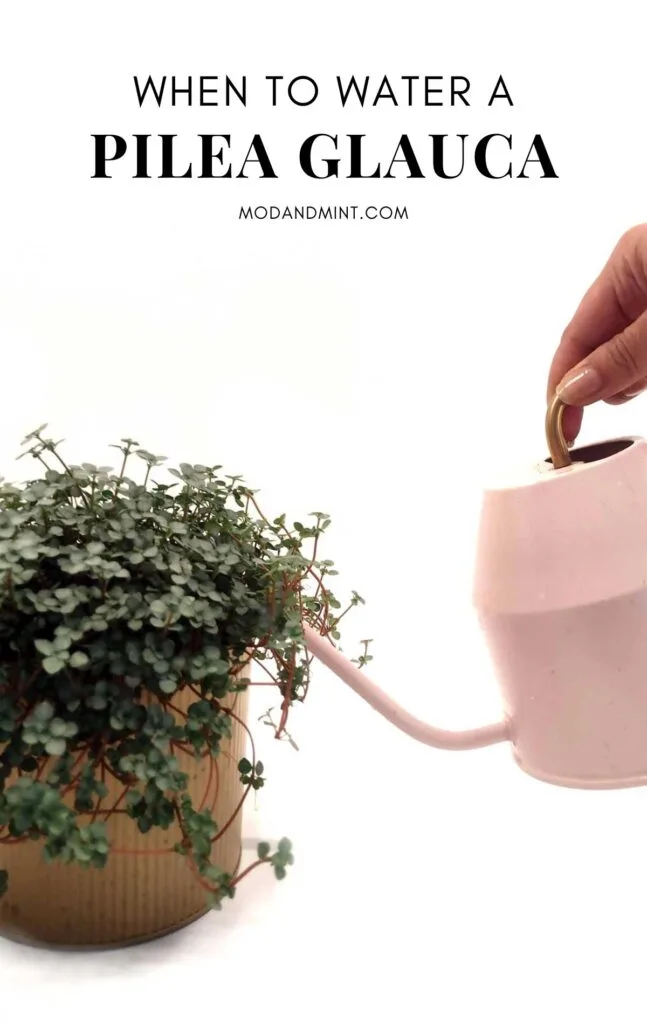
Water your indoor Silver Sparkle regularly to keep the soil evenly moist, but not soggy. You want the soil to feel like a well-wrung-out sponge.
Overwatering will cause the roots to rot. But with this plant, underwatering is a more common problem.
Never let the soil dry out completely. Too little water will cause dry, dropping leaves that will eventually fall off, leaving the plant with bare stems.
Feel the soil, if the top layer of the soil is dry, it’s time to water.
Allow all excess water to drain out of the bottom of the pot. Make sure the pot has drainage holes on the bottom. Without those, excess water has no way to get out and will drown the roots.
The Pilea glauca can also be watered from the bottom. To do this, fill a bowl or cachepot with water. Place your plant in it so it can soak up the water through the drainage holes on the bottom of its pot.
The Pilea glauca is sensitive to chlorine in tap water. Use distilled or purified water instead. Rainwater is even better. If this is not practical, leave tap water out for a day or two in an open container to release the chemicals, before watering the plant.
A moisture meter can help you with when to water. And check out How to water indoor plants for a quick refresher on houseplant watering.
Fertilizing
Use a diluted liquid plant fertilizer to feed your Pilea Glauca once a month in spring and summer. Don’t fertilize in winter when growth slows down.
Also never fertilize when your Pilea is recently repotted or is having issues. Fertilizer is not a plant medicine. It will only add stress to an already stressed plant. Analyze, adjust, and when your plant recovers, continue your normal care routine.


Humidity
The Pilea Glaugophylla prefers high humidity. Brown, crispy leaf edges are a sign that your plant needs more humidity.
Occasionally mist your Pilea glauca. This will temporarily up the humidity. Even better is to put your plant on a tray with water and pebbles in such a way that the bottom of the pot doesn’t touch the water. The water will evaporate and raise the humidity around your plant.
Another option is to buy a hygrometer and a small humidifier to help with the humidity.
A good place for your Pilea glauca is in a bathroom or kitchen with a bright window. The steam from the shower or cooking will provide your plant with the humidity it loves.
For even more humidity, grow the Pilea glauca as a ground cover in a closed terrarium.
Pilea Glauca Propagation
The Pilea glauca can be easily propagated by division or from stem cuttings. Both are explained below.
Plant propagation is most effective at the start of the growing season. This is usually in spring, though you can propagate any time of year.
Want to learn more about plant propagation? Read the complete guide explaining the 6 different ways to propagate your plants.

Propagate Stem Cuttings in Water or Soil
Follow these simple steps to propagate Pilea glauca cuttings in water or on soil:
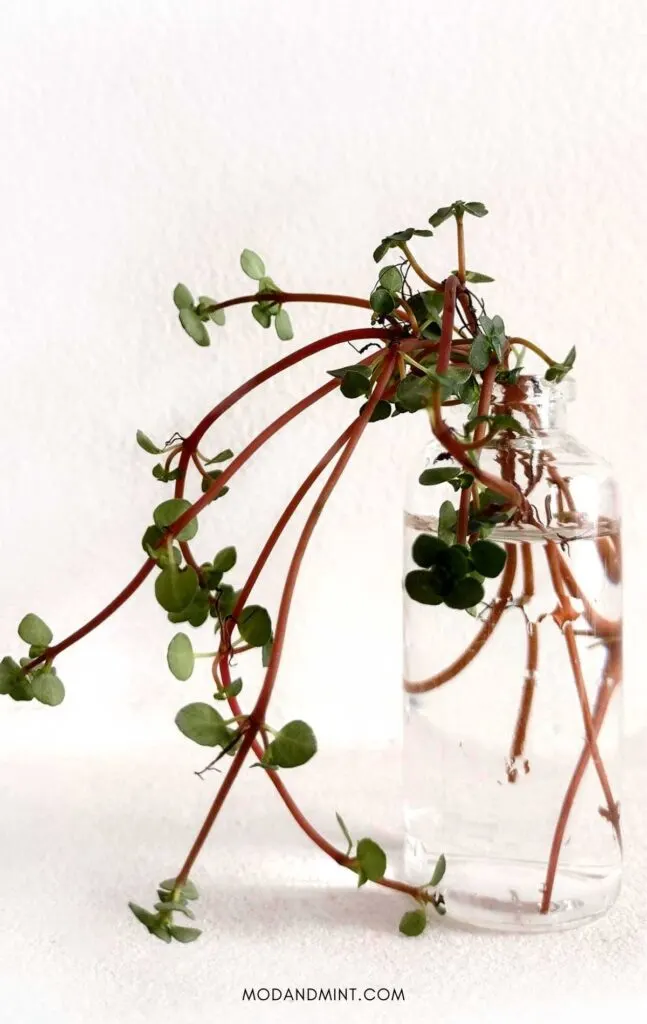
- Take a healthy stem cutting with at least a few sets of leaves.
- Strip a few leaves from the bottom of the cutting. This is where the roots will grow from.
- Let the cutting rest and dry out for a day or two.
- Dip the bottom in rooting hormone. This powder helps the roots to grow faster and stronger. If you don’t have any, you can skip it, the process just might take a little longer without.
- Place the cutting in water and wait for roots to grow. Change the water regularly. Transplant into well-draining soil when the roots are about 2″ long,
or - To propagate on soil: Place the cuttings on the soil, cover the ends, and make sure the stems are touching the soil. Mist lightly. Resume regular care when there are roots and new growth.
Roots will usually start to grow after about one or two weeks.
Propagate by Division
Propagate a large Pilea glaucophylla by splitting the rootball and repotting the parts in separate, smaller containers.
Propagating by division is a much quicker way to propagate than propagating cuttings in water or soil. You basically have a complete plant already, whereas cuttings may take a long time to grow into full new plants.
- Take the plant out of the pot. Gently remove as much old soil as possible without damaging the roots.
- Decide where to divide the plant. Each section needs some leaf growth as well as roots attached.
- Separate the roots and foliage with your hands.
- If the root ball is very tangled, make a clean cut with a sharp knife to split the plant.
- Pot each section in its own planter. Keep them in bright indirect light.
- Water once, and wait to water again until your see new growth.
Flowers on a Pilea Glauca
If you are lucky and your plant is happy with its overall care, it can grow clusters of small white or pink flowers along the stems.
It’s these flowers that give the Pilea Glauca its nickname of Grey Artillery Plant since the flowers shoot bursts of pollens into the air after watering like an artillery cannon!
Leggy Stems
Leggy growth, or etiolation, are long stems with lots of space in between the leaves. It is caused when your plant is getting insufficient light.
It is easy to fix a leggy Pilea glauca. First, remove the leggy stems. Prune them to keep your plant compact. Propagate the cuttings as described above and plant them back in the pot to make the parent plant fuller and bushier.
To stop the leggy growth going forward, move the plant closer to a window or use a plant grow lamp to supplement the light.
Plant Pests
Watch out for the usual suspects like aphids, spider mites, mealybugs, whiteflies, thrips, and fungus gnats.
Inspect your plant regularly for signs of pests to catch a possible infestation before it becomes severe.
Learn more about common houseplant pests and what you can do to get rid of them.


Is the Pilea Gluaca Toxic to Cats?
Good news for pet owners, Pilea Glaucophylla plants are considered non-toxic.
It is safe to grow this Pilea at home around your cats or dogs.
Learn more about the possible risks of toxic houseplants around your pets (and find out which plants are safe!).


Want more round leaf plants? Check out this list of stunning round leaf plants!
Nisar
Saturday 23rd of July 2022
There are some white bugs growing in my Pilea Glauca plant. I am afraid if it is something unusual and what is exactly happening to the plant. Kindly help me to know how to get rid of these bugs.
Thanks in advance
Mod and Mint
Tuesday 9th of August 2022
Hi Nisar, How is your plant doing by now? Were you able to get rid of the white bugs? Without seeing them it is hard to identify which pests are bothering your plant. But white bugs on indoor plants often are mealybugs. You can see photos of these pests and other common pests in this article that also describes how to prevent and get rid of houseplant pests. Good luck, hope you are able to save your plant!