Tillandsia Xerographica Care – How to Grow the Large Air Plant
The Tillandsia xerographica is a large air plant with long light grey-green leaves that grow in a curly rosette shape.
The beautiful xerographica air plant is used to dry and sunny conditions, making it very drought-tolerant and easy to care for!

Tillandsia Xerographica Air Plant
Because of its size, this extra large air plant is sometimes called the King or Queen of Air plants.
It is part of the Bromeliad plant species. Like most Bromeliads, it is a so-called epiphyte, which means that in nature they grow on other plants, usually on high tree branches where they receive very bright light.
With its impressive size and unique shape, the Tillandsia xerographica is a true statement piece. Caring for this big air plant is very similar to caring for the smaller Tillandsia air plants.

Light Requirements
The Tillandsia xeropgraphica is one of the few Tillandsia plants that can handle some direct sunlight. Indoors, display this curly air plant where it gets plenty of bright indirect light with some direct morning sun.

Watering
Air plants absorb all their moisture and nutrients through their leaves. In general, mist your xerographica air plant frequently and water it about twice a month by giving it a good soak.
The leaves of a large Tillandsia xerographica will be more tightly curled when it needs water. They will hang more loosely when it’s fully hydrated.
- Submerge your Tillandsia xerographica in a large bowl or sink filled with tepid water (preferably rainwater).
- Let your plant soak in water for about 30 minutes. Remove from the bowl and gently shake off excess water.
- Place upside-down on a towel until it is completely dry.
It is crucial to let your air plant completely dry out after watering to avoid that it will rot from the center of the curly leaves.
Related reading: How to water Tillandsia air plants at home.
Fertilizing
Air plants don’t get nutrients from the soil as potted plants do, so it is wise to fertilize your Tillandsia xerographica about once a month in spring and summer. This will help it grow, flower better, and produce more healthy pups.
There are special fertilizer sprays for air plants to mist your plant with, or you can add liquid Bromeliad fertilizer to the water that you soak the plant in.

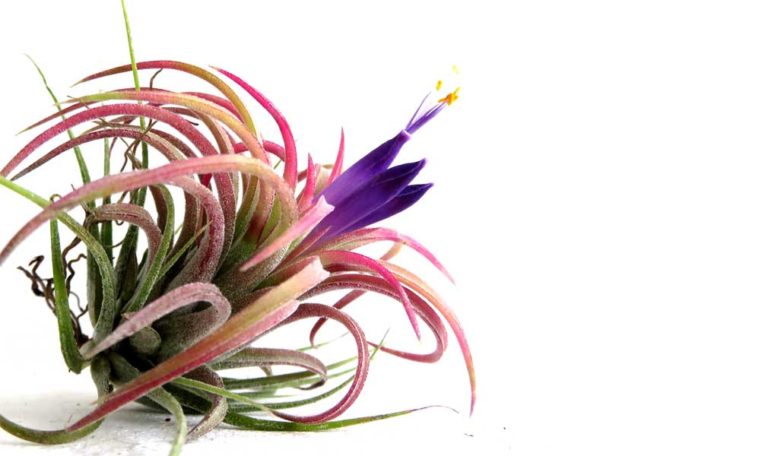
Tillandsia Xerographica Flower
Mature Tillandsia xerographica plants can bloom when they get enough light and are overall happy with their growing conditions. Frequent summer fertilizing can help the blooming process.
The showy flower will grow from a tall stem from the center of the rosette and will last a long time. If your Tillandsia is blooming, don’t get the flowers wet when you water. It can cause them to rot and decrease how long they last.
Unfortunately, Tillandsia air plants are monocarpic and will only bloom once. Once the flower has dried up, the plant will slowly decline. Before it is completely gone, it will grow pups around the base that will grow into full new plants.
Tillandsia Xerographica Propagation
The Tillandsia xerographica can be propagated or grown from seed, but it is easiest to propagate the pups that grow from the base of the parent plant after it blooms.
You don’t have to remove the baby pups, you can keep them attached and growing in a clump. If you want to propagate them, be patient and let them grow a bit before removing them from the parent. When the pup has grown to at least 1/4th of the parents’ size, gently wiggle and separate it at the base. Try not to pull and damage the leaves.
Related reading: 6 ways to propagate your plants.
Is the Tillandsia Xerographica Toxic to Cats?
This large air plant is considered non-toxic. It is safe to grow at home around your cats or dogs. However, it’s always a good idea to prevent pets from chewing on house plants, as it can cause mild digestive upset.

Tillandsia air plants are related to the Ananas comosus aka the Pineapple plant which is also part of the Bromeliad plant family!