Callisia Repens Pink Lady Plant Care (Turtle Vine)

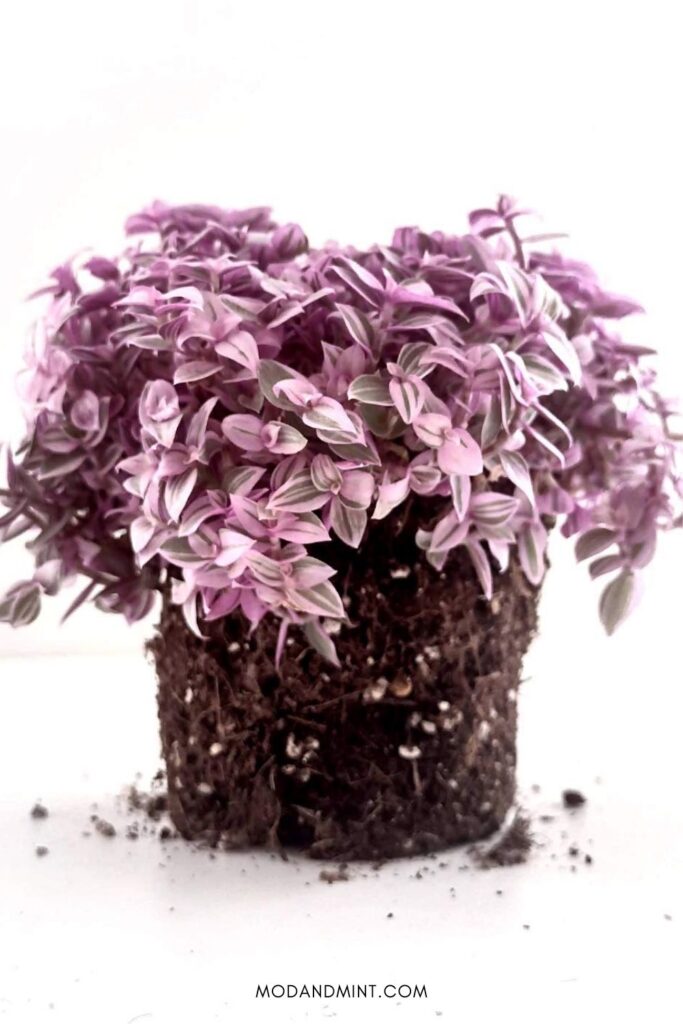
The Callisia Repens Pink lady is a small houseplant with ovate leaves in variegated pink and green stripes. The dense foliage makes this plant a real eye-catcher.
You can grow it as an indoor plant, but it has some specific needs. Place it in bright, indirect light, keep the soil consistently moist but not soggy, prune regularly, and maintain high humidity.
Take some time to get to know this plant and read about how to take care of it. It’s totally worth it!

Callisia Repens Pink Lady
The pink lady vine grows trailing stems (aka runners or stolons). As an indoor potted plant, the stems can grow long, spilling over the edge of the pot. Outdoors it spreads quickly as a ground cover. If not controlled, it becomes weedy and is even considered invasive in certain areas.
Want to buy a Callisia repens Pink lady? Find it for sale on Amazon!
Is the Callisia repens the same as a Tradescantia?
Both the Callisia repens and the Tradescantia are part of the Commelinaceae plant family. They are not the same, but they are related and very similar. You might even see plants listed as Tradescantia Callisia which isn’t a correct name. It’s either the one or the other.

Light Requirements
Indoors place your plant in an east-facing window where it gets at least 4-6 hours of bright, indirect sunlight. This will make sure it stays compact and keep the pink leaves vibrant.
In low light, the plant will stretch and get leggy, and the colors will fade. Leaves can even turn solid green when grown in too little light for a longer time.
Keep it out of bright, direct sunlight. It can burn the leaves, marking them with dry brown spots, and variegation may become dull. Move your plant away from the window, or filter the light with a sheer curtain.

Watering
The fleshy leaves store water inside, but even though it’s semi-succulent, it doesn’t like its soil to dry out completely.
Let the top of the soil dry out slightly in between waterings. If you water too often, the roots will rot. Drooping, yellow leaves are often a sign of overwatering.
If the Callisia repens gets too little water, the bottom leaves at the soil end of the stem will turn brown and wilt.
Water very sparingly in winter. Water just enough to make sure the soil doesn’t dry out completely. If you are uncertain, you can use a moisture meter to help you out with when to water.
Fertilizing
Use a diluted liquid plant fertilizer to feed your plant biweekly in spring and summer. Be sure the soil is damp before fertilizing and don’t fertilize in winter when growth slows down.
Also never fertilize your pink lady if it is recently repotted or is having problems. Fertilizer is not a plant medicine. It will only stress out an already stressed-out plant. Analyze, adjust, and when your plant recovers, continue your normal care routine.
Humidity
This plant is not very needy when it comes to humidity levels. It can grow in average medium household humidity.
But it is still a tropical plant, so if the air gets too dry, mist often to temporarily raise the humidity or consider using a small humidifier.
Soil and Repotting
Repot every 1 or 2 years when the roots have filled the entire pot. Repot in spring in a pot one size bigger than the original. Plant in well-draining succulent soil.
Make sure the pot has drainage holes on the bottom. This is a must. Without those, excess water has no way to get out and will drown the roots.
The dense leaves might make it look like the plant is getting too big for its pot, but the roots might not be rootbound yet and still have plenty of space inside the pot. If so, prune instead of repotting.
In need of a repotting reminder? Follow the steps on how to repot your plants.
Pruning
During the growing season, regular pinching and pruning is necessary to keep your plant growing bushy and compact.
As the plant ages, stems grow tall and leggy, especially if grown in low light. Using clean scissors or pruning shears, snip the leggy stems down to the leaf node closest to the desired length. Or gently pinch off the stem tips with your fingers.
Also remove any stems with leaves losing variegation, reverting from pink to green.

Callisia Repens Propagation
It is easy to propagate stem cuttings in water or soil. Or propagate large plants by division.
Simply cut a few stem cuttings with a couple of leaves. Remove the leaves from the lower part of the cuttings. Let the cuts heal and dry for a day to prevent rotting.
To water propagate, place them in water and keep in bright, indirect light. Change the water regularly and wait for roots to grow. Transplant to soil when the roots are about 1 to 2 inches.
To propagate straight in soil, plant the cuttings in a small pot with well-draining soil. Keep in bright, indirect light. Mist or water very sparingly until you see new growth.
You can use a rooting hormone powder on your cuttings to speed up the propagation process. Dip the bottom of the cuttings in water first, then dip them in rooting powder before you plant them.

Propagating by division is a much quicker way to propagate than by propagation in water or soil. You basically have a complete plant already, whereas when propagating cuttings it may take much longer to get to a full new plant.
Gently split the rootball and foliage. Repot the parts in separate, smaller containers.
Want to learn more about plant propagation? Read the complete guide to succulent propagation and get all the details on the 6 different ways to propagate your plants.

Want more pink plants? Check out this list full of stunning pink houseplants!