
Certain houseplants can improve indoor air quality by removing harmful chemicals from the air. Their air-purifying properties can help reduce indoor pollutants, making the air cleaner and safer to breathe.
We know this because in 1989 NASA did a clean air study researching if plants could cleanse the air inside their space stations. They measured their ability to remove harmful chemicals such as benzene, formaldehyde, and trichloroethane from the air.
Several common house plants were found to be effective air purifiers. I will share some of my personal favorites here with you.


Can Plants Actually Clean the Air?
Even with the Nasa study, if you grow houseplants because you want to improve the air quality in your home, it is important to put things in perspective and set realistic expectations.
NASA did the study to find ways to clean the air in their space stations. They were using activated carbon air filter systems testing the plants in small, sealed environments. These laboratory conditions are different from the environment in our homes.
To effectively clean all the air in your home you would need many, many plants. In most instances, opening some windows and letting the indoor air flow out and outdoor air flow in will have a bigger effect on the air quality than a few plants.
So grow these plants indoors because you love having plants. If they improve the air quality a bit, take that as an added bonus.
1. Snake Plant


The Sansevieria snake plant, also known as Mother-in-Law’s Tongue, is an incredibly hardy houseplant ideal for beginners. It thrives in various light conditions, requires minimal watering, and can handle some neglect.
This succulent is perfect for bedrooms as it releases oxygen at night, improving air quality and potentially enhancing sleep. Additionally, it effectively filters out toxins like formaldehyde and benzene. Its sword-like leaves add visual interest to any room, making it both functional and decorative.
Related reading: House plants that can survive in low light.
2. Peace Lily


The peace lily (Spathiphyllum) is a top indoor houseplant for purifying air, efficiently removing toxins like ammonia, benzene, formaldehyde, and trichloroethylene. It thrives in low to medium light and requires weekly watering. Provide more light if you want it to bloom.
Its beautiful white flowers signify balance and rebirth, making it a thoughtful gift. However, it releases pollen when flowering, which may affect allergy sufferers and is mildly toxic to pets and humans, so handle with care and keep it out of reach of animals.
Related reading: Spiritual meaning of the Peace Lily.
3. Spider Plant

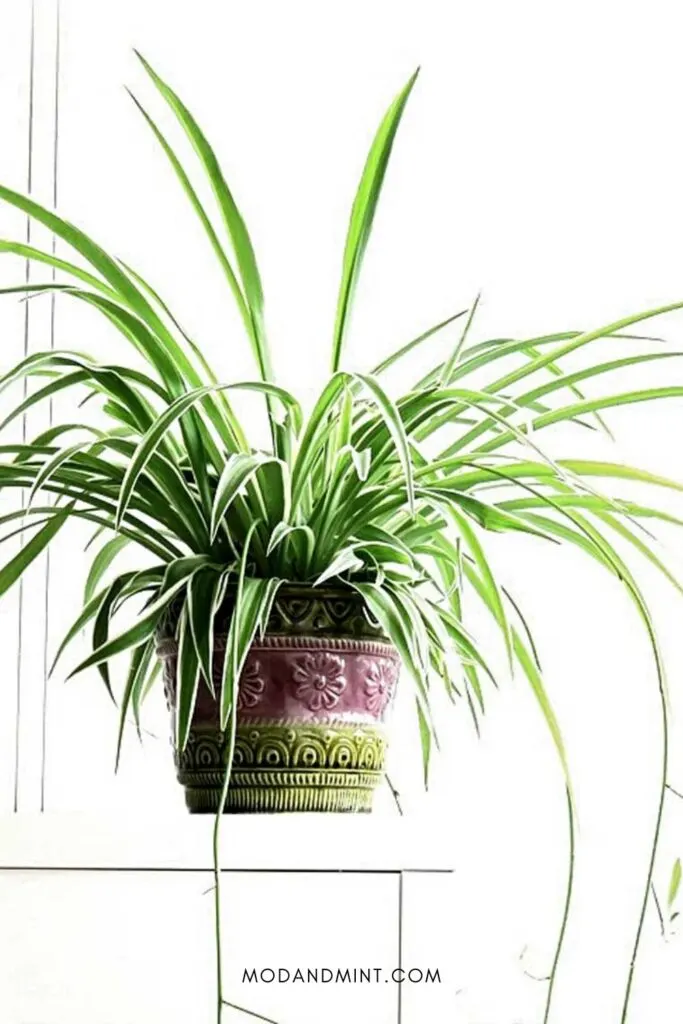
The spider plant (Chlorophytum comosum) is an incredibly resilient and easy-to-grow houseplant, making it perfect for beginners and those who may forget to water their plants. It thrives in all light conditions, including low light, and is excellent at removing toxins such as carbon monoxide, formaldehyde, and xylene from the air.
Spider plants are non-toxic to kids and pets and look fantastic in hanging baskets. Especially when they grow baby “spiderettes” that can be propagated into new plants.
Related reading: Easy to care for hanging plants for your home.
4. Aloe Vera


Aloe vera is a remarkable succulent known for its air-purifying abilities and impressive medicinal benefits. Not only does it effectively reduce toxins like benzene and formaldehyde from the air, but the leaves also contain a gel rich in amino acids, vitamins, and enzymes with antibacterial, wound-healing, and anti-inflammatory properties. Ideal for sunny locations and requiring minimal watering, this plant is a must-have for every household. It’s also useful for treating kitchen burns and can be chilled to reduce puffiness under the eyes.
Related reading: Beginners guide to indoor succulent care.
5. English Ivy


English ivy (Hedera helix) is a classic and versatile indoor plant known for its elegant appearance and rapid growth. Ideal for hanging baskets or shelves, it thrives in low light and can effectively remove toxins like formaldehyde, benzene, carbon monoxide, and even fecal particles from the air. This makes it a great choice for bathrooms and other indoor spaces.
However, it’s important to note that English ivy is toxic to cats and dogs and can irritate sensitive skin, so it should be placed out of reach of pets and handled with care.
Related reading: House plants for beginners.
6. Boston Fern


Boston ferns (Nephrolepis exaltata) are beloved for their lush, green fronds and their ability to purify the air, particularly by removing formaldehyde. These classic plants thrive in cool, humid environments with indirect light, making them perfect for hanging baskets or plant stands.
While relatively easy to grow, Boston ferns require regular attention to their moisture and humidity needs, including daily soil checks to prevent dryness. Their elegant appearance creates a soothing atmosphere in any room. Plus they are non-toxic to pets!
Related reading: Tropical plants for your home.
7. Golden pothos

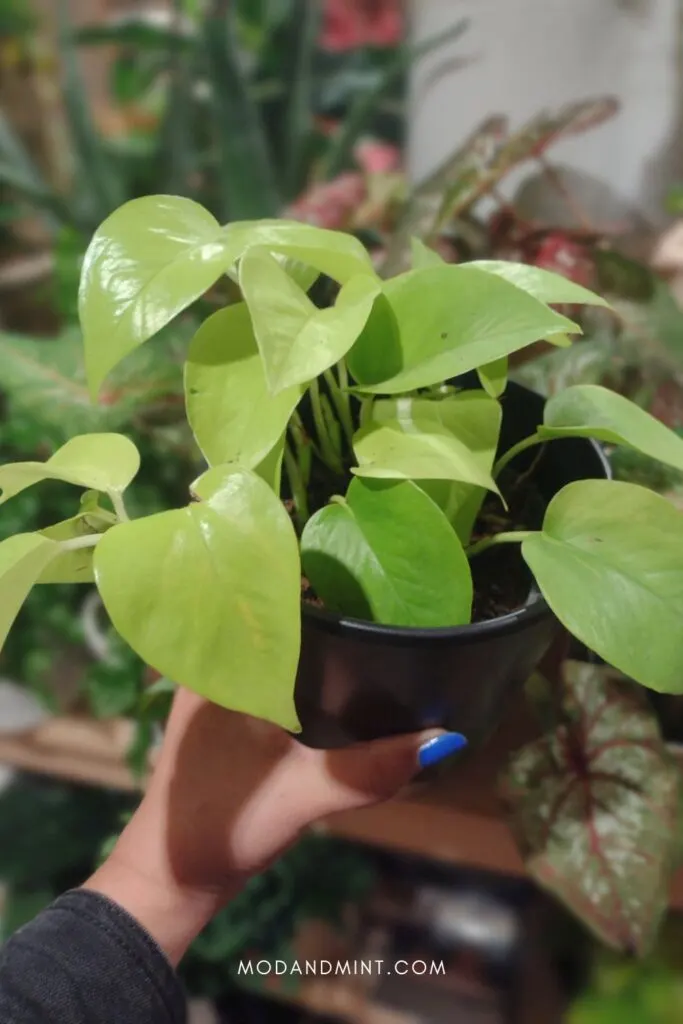
Pothos plants are versatile and hardy. Their beautiful, vine-like, heart-shaped leaves effectively remove indoor pollutants such as formaldehyde, benzene, xylene, and toluene. The golden pothos (Scindapsus aureus) can grow in low light and is rated by NASA as one of the best air-purifying plants. However, they are toxic to pets, so keep them out of reach of cats and dogs.
Related reading: Climbing plants to grow on moss poles.
8. Banana Plant

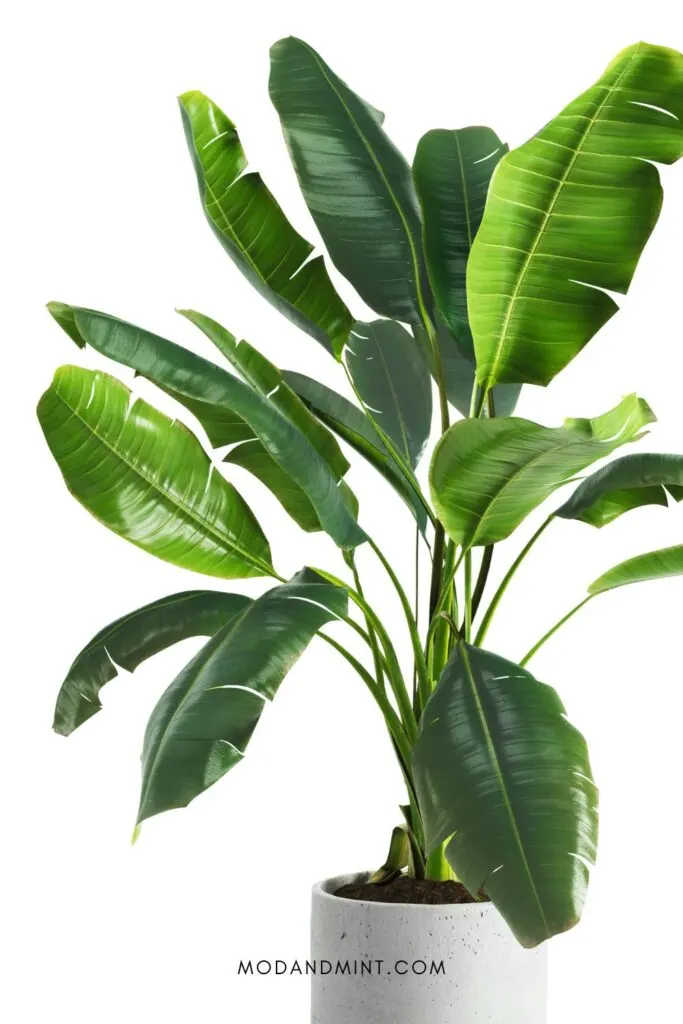
The banana plant (Musa) is native to tropical Indomalaya and Australia and can grow into a large statement piece in your home. The banana plant has numerous small pores on its large leaves, which help convert CO2 into oxygen during daylight hours.
This tropical plant is also effective at removing formaldehyde from the air. Banana plants thrive in sunny, humid environments, making bathrooms ideal if space allows. Alternatively, place them in sunny spots and maintain humidity levels up to keep it thriving.
Related reading: Big leaf plants for your home.
9. Dracaena Marginata


The red-edged Dracaena Marginata (dragon tree plant) is native to South Asia, and can remove a wide array of chemicals such as benzene, formaldehyde, trichloroethylene, xylene, and toluene—commonly found in household materials like paint removers, adhesives, and aerosol degreasers. This makes it an ideal choice for those undergoing home improvements. Despite its effectiveness, caution is advised around pets due to its toxicity.
It thrives in low light conditions and requires minimal watering, making it easy to care for. With proper attention, these plants can grow up to 10 feet tall and live for decades.
10. Heartleaf Philodendron

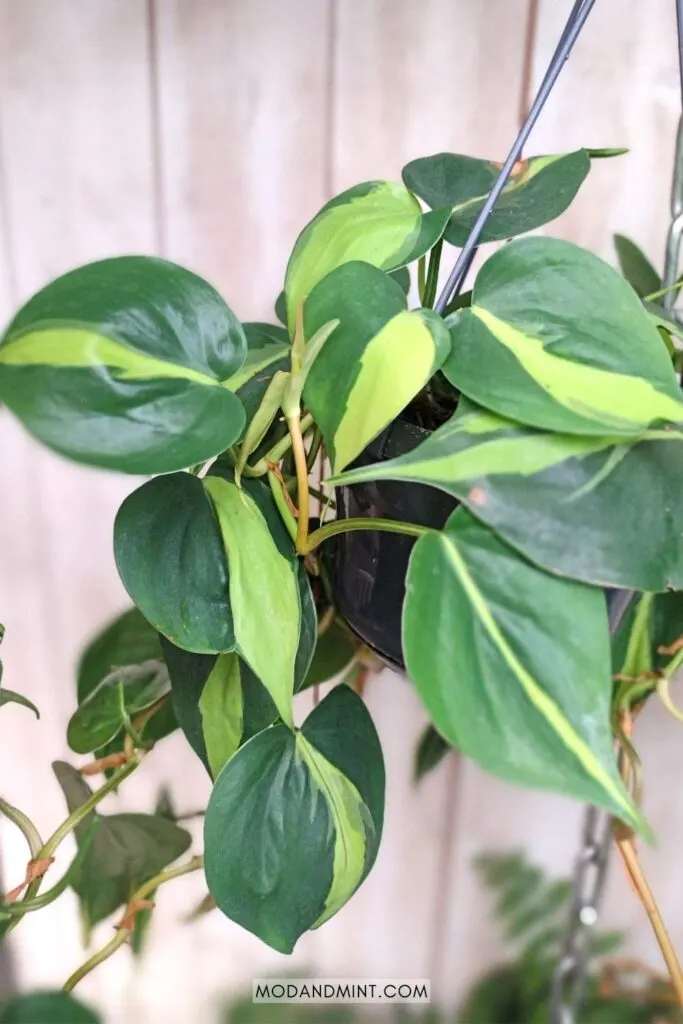
The Nasa study included the Heart leaf philodendron (Philodendron oxycardium) and the Elephant ear philodendron (Philodendron domesticum). Philodendrons can survive occasional neglect and grow in low-light conditions, making them ideal for beginners.
They gracefully trail down shelves or plant hangers, adding a tropical touch to any room or office space. They effectively remove formaldehyde from the air, though caution is advised as it is toxic to pets.
Puck Monk
Monday 5th of May 2025
I can't believe people continue to misrepresent the NASA study. This has been debunked so many times. A 2019 meta-analysis review looked at decades-worth of research on this topic and concluded something different. In their study, named “Potted plants do not improve indoor air quality: a review and analysis of reported VOC removal efficiencies,” (https://pubmed.ncbi.nlm.nih.gov/31695112/) researchers found that to achieve the same benefits seen in other research studies, you would need 10-1,000 plants per square meter of floor space in your home, office or other indoor environment. To reach this number, researchers used past research observations, standardized the metrics, and extrapolated the findings to larger rooms and a larger number of plants. They found that the natural ventilation of a building would be doing most of the work of removing indoor VOCs, rather than the plants themselves. That is, unless you have 680 plants in your 1,500 square foot home or office.
Mod and Mint - Deborah Green
Friday 9th of May 2025
Hi Puck, Thank you for your thoughtful comment! Much appreciated. I agree with you, and you probably saw that I also point out that it is important to put things in perspective and set realistic expectations. I did not write a generic Plants-clean-the-air-in-your-home!!!- article. I wrote about the testing environment being different than your home. "... Nasa used activated carbon air filter systems testing the plants in small, sealed environments. These laboratory conditions are different from the environment in our homes. ..." and i mentioned "... To effectively clean all the air in your home you would need many, many plants. In most instances, opening some windows and letting the indoor air flow out and outdoor air flow in will have a bigger effect on the air quality than a few plants. ..." Again, thanks for taking the time to share your plant knowledge.