
The Haworthia cooperi is a charming succulent. It grows translucent leaves that form a beautiful rosette, this succulent is a true showstopper.
Its compact size makes this Haworthia perfect for any space, whether it’s a bright windowsill or a cozy corner in your home. Not to mention, it requires minimal watering and can thrive in various light conditions.

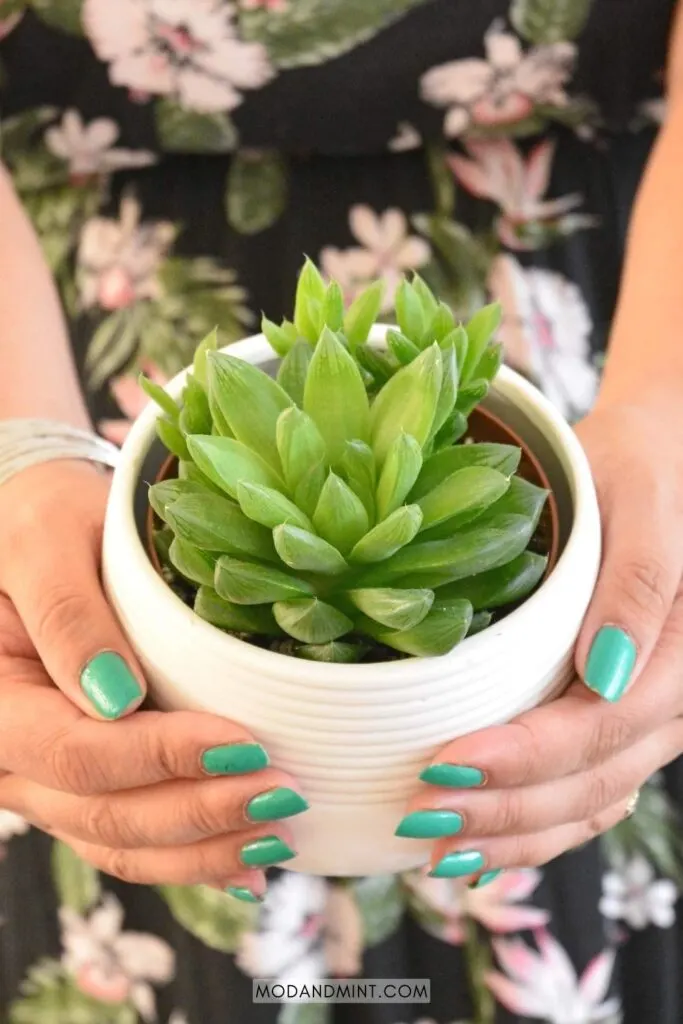
Want to buy a Haworthia Cooperi plant? Find it for sale on Amazon!
Haworthia Cooperi Care
The Haworthia cooperi is native to South Africa where it can be found in the Eastern Cape.
The cooperi is named after Thomas Cooper, an English botanist and plant explorer who collected plants in South Africa from 1859 to 1862.
There are several different varieties of the cooperi, all part of the Haworthia genus which has about 150 known different species.


Each type of Haworthia Cooperi has translucent, window-like tips at the end of their leaves. This is their way to adapt to their natural environment.
The see-through tips allow light into the leaves, maximizing photosynthesis. This helps the plants grow in the native rocky, sandy environment where they grow mostly buried with only the translucent part exposed.
As an indoor potted plant, it won’t grow in such strong sun, so there is no need to grow this plant buried deep in soil.
Botanical name: Haworthia cooperi. Common names: Cooper’s Haworthia, Window Haworthia.
Need a succulent care refresher? Check out the Indoor Succulent Care Guide.


Light
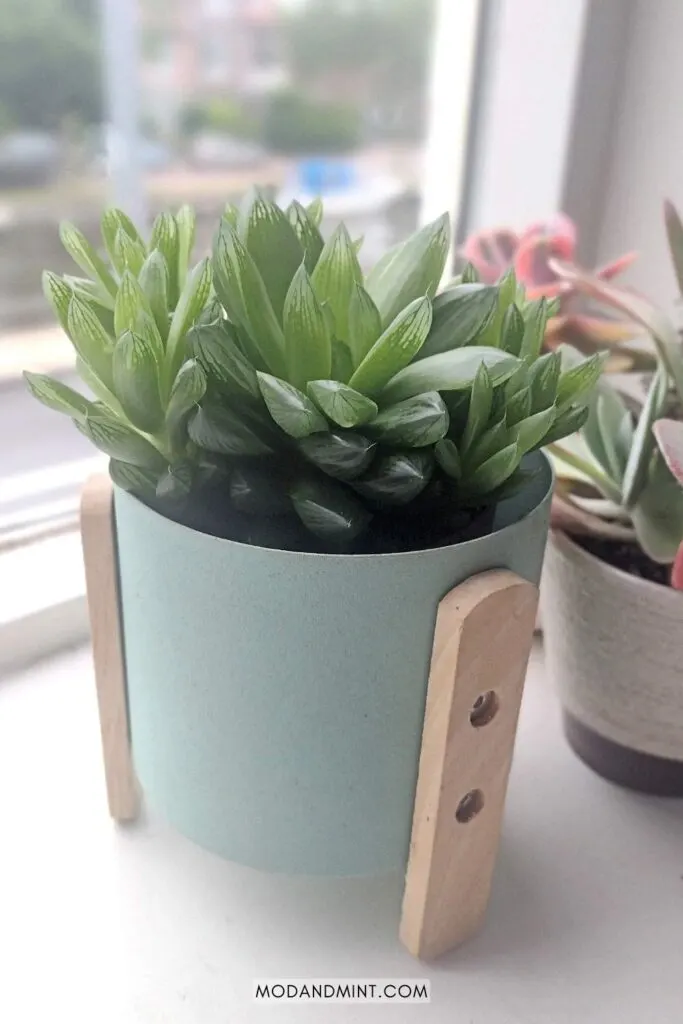
Indoors the Haworthia cooperi prefers a location near a window where it receives bright, indirect light.
A few hours of direct morning sun is fine but avoid placing it in too much direct sunlight, especially during the hottest parts of the day, as it can scorch the leaves.
On the other hand, when grown in lower light, growth will slow down and leaves get leggy, starting to stretch to reach the light. Consider getting a grow light if your home doesn’t receive enough natural light.
Read more: How much sun do succulents need?

Watering
Haworthia cooperi plants are very drought-resistant. Like most succulents, it stores water in its leaves.
Allow the soil to dry out completely between waterings. When you do water, be generous. This is called the soak-and-dry method. Soak the soil when you water it. Then let it dry out before watering again.
Water very sparingly in winter. Water just enough to make sure the leaves don’t shrivel up completely.
Don’t water your Haworthia cooperi too often. Overwatering is the most common problem with these plants and can lead to root rot.
If you are unsure if it is time to water or not, you can purchase a moisture meter to help you out. Or read up on how to water succulents for a quick watering refresher.


Fertilizing
Haworthia cooperi is a relatively slow-growing succulent and does not require frequent fertilization. In fact, it can thrive without regular fertilization. If you choose to fertilize your indoor Haworthia cooperi, it is recommended to do so sparingly.
A general rule of thumb is to fertilize once every 2-3 months during the active growing season, which is typically spring and summer. You can use a balanced, diluted fertilizer specifically formulated for succulents.
It’s always better to under-fertilize than to over-fertilize, as excessive nutrients can harm the plant. If you notice any signs of fertilizer burn, such as brown or crispy leaf tips, reduce the frequency or strength of the fertilizer.
Humidity
The Haworthia cooperi is not very needy when it comes to humidity.
It can adapt well to normal household humidity levels. No need for misting or using a humidifier to raise the humidity.
Soil and Repotting
Repot in spring in a pot one size up when roots have filled the pot, and or when you see roots growing from the bottom of the pot.
Even if your plant still has room to grow, you want to refresh the soil every two to three years. The soil will have lost all its nutrients and will need to be replaced with fresh well-draining succulent soil.
Make sure the new pot has drainage holes on the bottom. Without those, excess water has no way to get out and will definitely drown the roots.
Read more: How to repot your houseplants.


Haworthia Cooperi Propagation
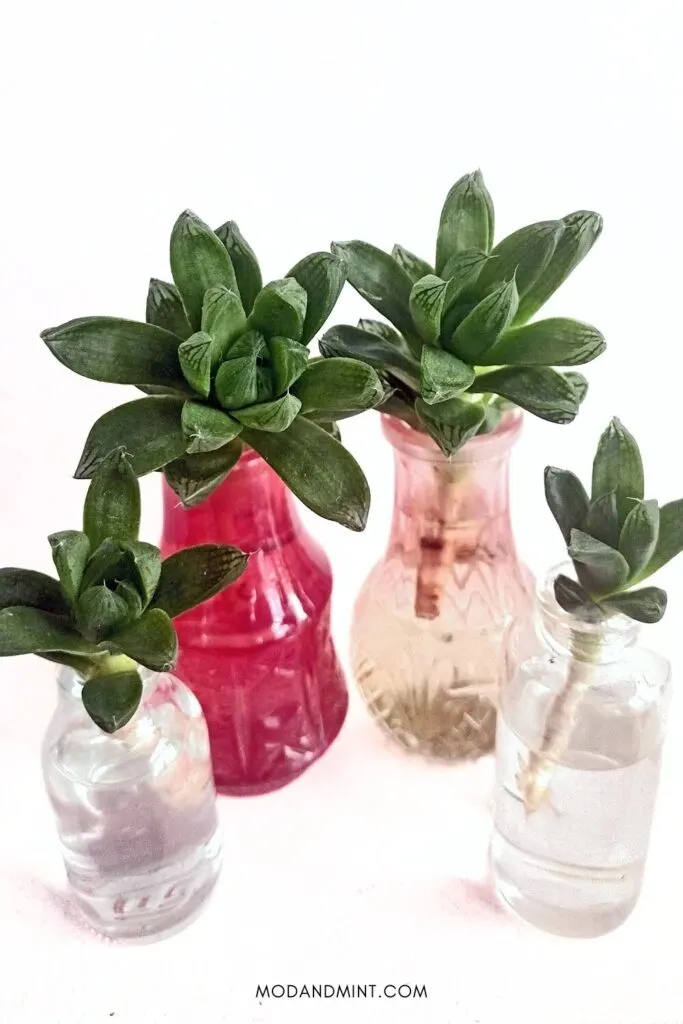
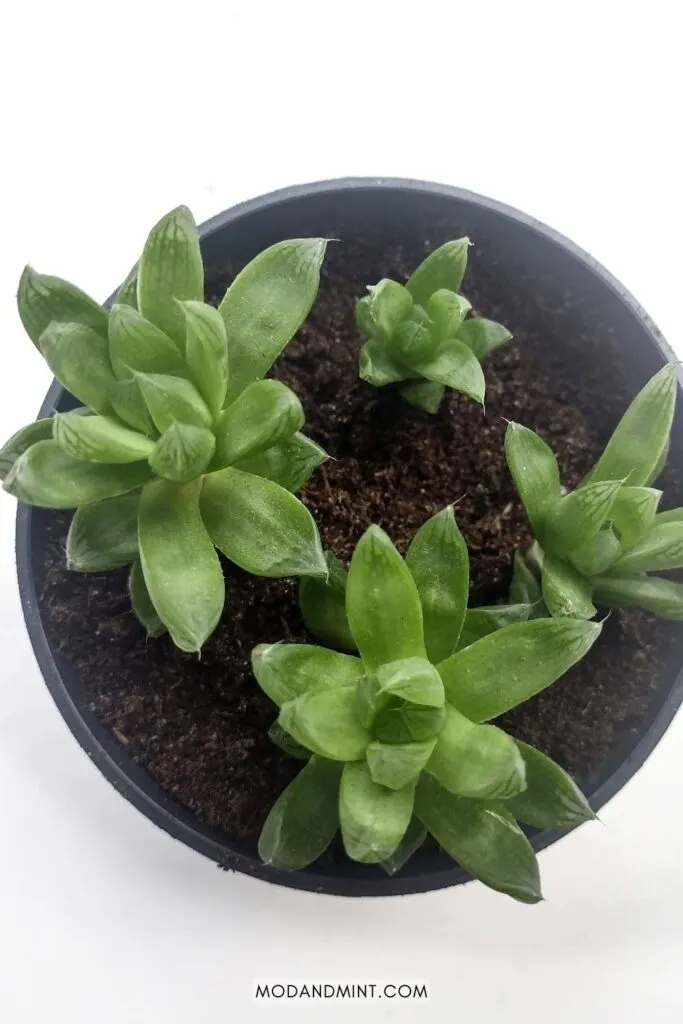
The easiest way to propagate a mature Haworthia cooperi is by removing offsets. These offsets, also known as pups, grow around the base of the parent plant.
These baby plants can be removed with roots already attached, ready to be potted, and grown into full new plants. Or you can opt to water propagate them first to grow more roots and then transplant them to soil.
Another method to propagate Haworthia cooperi is by propagating leaf cuttings.
Gently remove a healthy leaf from the plant, allow it to callus for a day or two, and then place it in a well-draining soil mix. Keep the soil lightly moist until new roots and growth appear.
Want to learn more about propagation? Read the complete guide to succulent propagation and get all the details on the 6 different ways to propagate your plants.


Plant Pests
Like many houseplants, the Haworthia cooperi can be susceptible to pests such as spider mites, mealybugs, and scales.
Inspect your plant regularly for signs of pests to catch a possible infestation before it becomes severe.
Read more: Identify Common Houseplant Pests and How to Get Rid of Them
Is Haworthia Cooperi Toxic to Cats?
In general, Haworthias are considered non-toxic for pets. However, if consumed in large quantities it can cause vomiting and diarrhea.
Learn more about the risks of toxic houseplants around your pets (and find out which plants are non-toxic and safe!).
Read more: Keep Your Pets Safe: Identify Toxic Plants in Your Home.