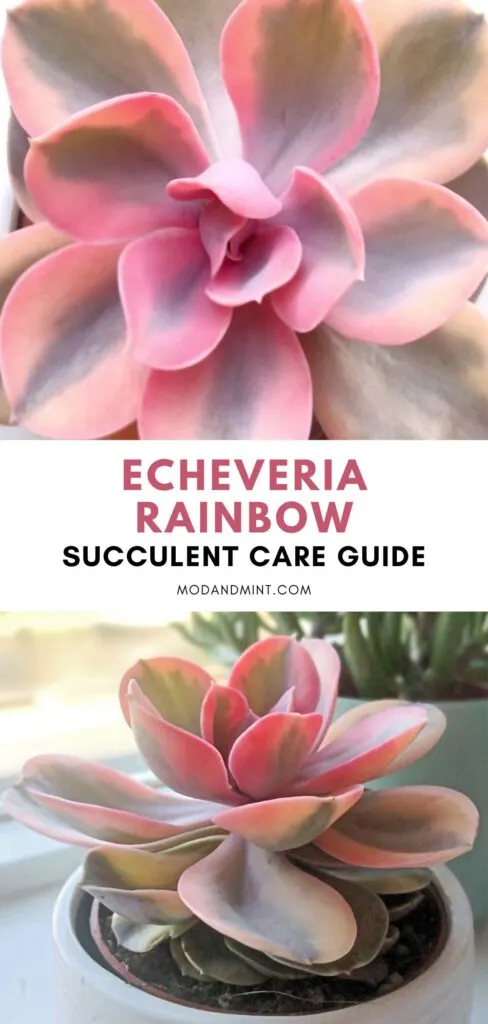
Echeveria rainbow is a stunning, much sought-after pink variegated Echeveria succulent.
This multicolor succulent is easy to care for; it doesn’t need high humidity and the leaves store water inside, so no need for frequent watering!

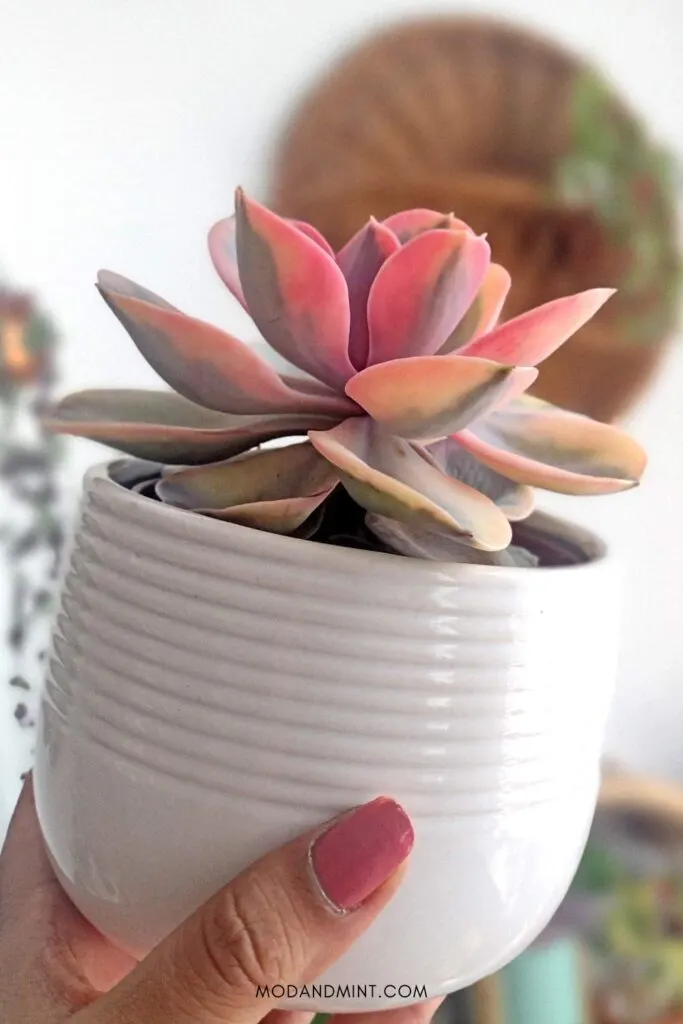
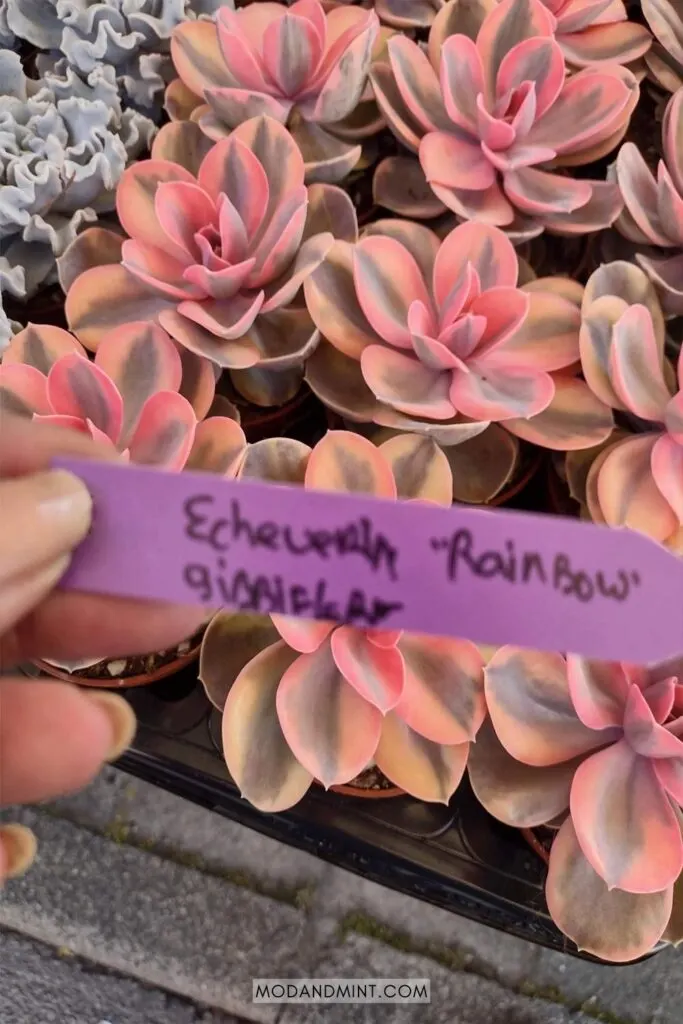
Want to buy a Rainbow Echeveria succulent? They are somewhat rare and can be hard to find, so ask at your local plant shop, or look around for plant growers that occasionally sell them on Amazon!
Echeveria Rainbow Care
The Echeveria rainbow succulent does not naturally occur in the wild. It is a man-made cultivar, said to be a variegated mutation of the Echeveria Perle Von Nürnberg, which is a purple hybrid of Echeveria gibbiflora and Echeveria elegans.
Echeveria leaves grow in stacked layers forming a tight rosette. The leaves of the rainbow Echeveria change color over time. New leaves in the center of the rosette start out a vibrant pink and light purple, going to cream and blue-green in the lower leaves.

Need a succulent plant care refresher? Check out the Beginners Guide to Succulent Care. It has all you need to know to take care of indoor succulents.


Light Requirements
Provide your indoor Echeveria rainbow with a few hours of morning sun and plenty of bright, indirect light the rest of the day.
In general, the brighter the light, the more vibrant the pink leaves will be. Do watch out for too much direct sun. Dry, brown spots on the leaves can be a sign of sunburn. These marks can not be fixed. Protect your plant from direct sun with a sheer curtain.
Echeverias can grow in less light but the color may fade and growth can get leggy. Leaves curl downward to maximize leaf surface area to get more light. Eventually, the leaves will start falling off.
If your rainbow Echeveria is growing tall and leggy, it is seeking and stretching for more light. To stop the leggy growth, move the plant closer to a window or use a plant grow lamp.
Read more: Do succulents need sun?

Watering
As a succulent, the Echeveria rainbow stores water in its leaves, making it very drought-resistant.
Indoors, allow the soil to dry out completely between waterings. When you do water, be generous. This is called the soak-and-dry method. Saturate the soil, then let it dry out before watering again.
Only water your Echeveria like this in spring and summer. Slow down watering in fall and water only very sparingly in winter.
The leaves should feel firm. The first signs of underwatered succulents are drooping wrinkled leaves.
Don’t water too often. Overwatering is the most common problem with these plants and can lead to root rot.
If the roots rot, they can’t absorb any water and can’t supply water to the plant. Signs of overwatering are soft and mushy leaves, looking translucent yellow before turning brown or black and dropping off.
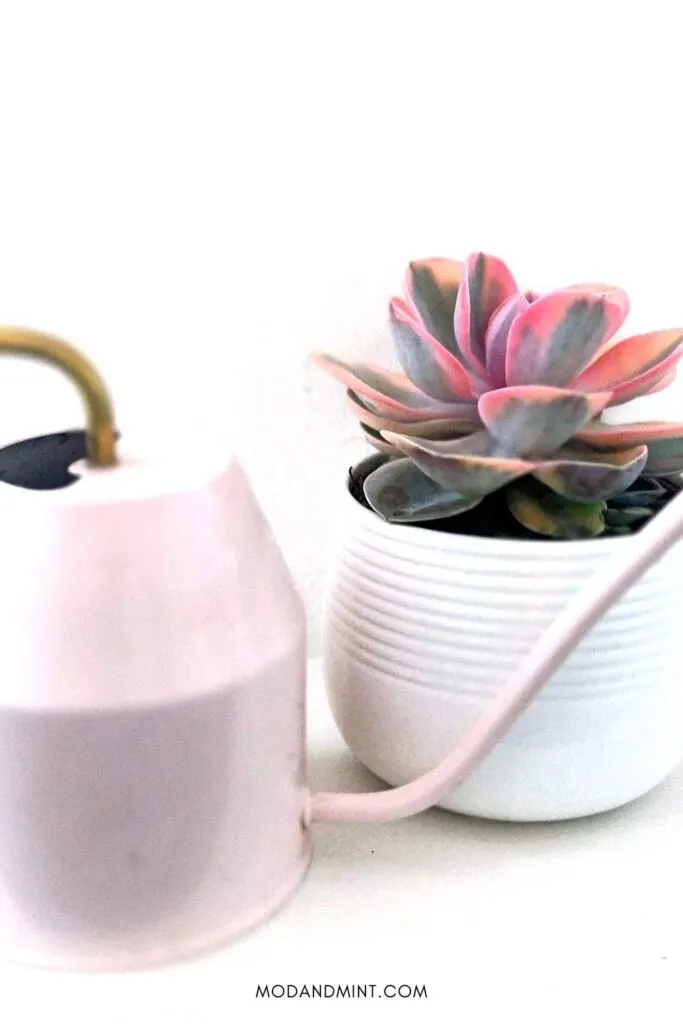
Use a watering can with a long spout to reach the soil and not get any water in the crown of your rainbow succulent.
If in doubt, don’t water yet. Underwatering is easier to fix than overwatering. If you are uncertain, you can use a moisture meter to help you out with when to water.
Read more: How often to water succulents.


Fertilizing
Use a diluted liquid succulent fertilizer to feed your Echeveria rainbow once a month in spring and summer.
Be sure the soil is damp before fertilizing and don’t fertilize in winter when growth slows down.
Also never fertilize if your plant is recently repotted or is having problems. Fertilizer gives your plant a boost of nutrients when it is actively growing. It is not plant medicine.
Newly bought or recently repotted plants don’t need to be fertilized for at least the first 4-6 months. The potting mix usually already has slow-release fertilizer in it.
Humidity
The Rainbow Echeveria thrives in warm temperatures and is not very needy when it comes to humidity. They tolerate and can grow in average household humidity levels.
No need for misting to raise the humidity.


Repotting
Repot in spring in a pot one size up when roots have filled the pot, and or when you see roots growing from the bottom of the pot.
Every two to three years repot even if your plant still has room to grow. The soil will have lost its nutrients and will need to be replaced with fresh well-draining succulent soil.
Make sure the new pot has drainage holes on the bottom. Without those, excess water has no way to get out and may drown the roots.
After repotting wait at least four to six months before using any fertilizer. The potting mix usually already has slow-release fertilizer in it.
Read more: How to repot your plants.
Echeveria Rainbow Propagation
The Echeveria rainbow is easy to propagate by stem or leaf cuttings. Unfortunately, it tends to lose the pretty variegation when propagated from just leaves.
Removing the head rosette as a stem cutting is the best way to propagate the rainbow Echeveria and keep the color.
Cut the main stem of the rosette. Remove a few leaves on the bottom, freeing up part of the stem. This is where roots will grow. Let it dry and callus over before propagating.
Want to learn more about propagation? Read the complete guide to succulent propagation and get all the details on the 6 different ways to propagate your plants.
Plant Pests
Echeveria rainbow succulents are not prone to pests, but like any plant, they can occasionally be affected.
The most common pests on indoor echeverias are mealybugs. Inspect your plant regularly. These small white bugs like to hide in between the leaves. Use a cotton bud and gently reach in between the leaves to soak the mealybugs in alcohol.
Read more: Identify Common Houseplant Pests and How to Get Rid of Them
Are Echeveria Succulents Toxic to Pets?
Echeveria rainbow succulents are considered non-toxic. It is safe to grow this plant at home around your cats or dogs.
Want more pink plants? Check out this list full of stunning pink houseplants!