
Pilea peperomioides, also known as the Chinese Money Plant or Pancake Plant, is a popular houseplant known for its round, coin-shaped leaves.
The Pilea is low maintenance and mature plants grow babies that are easy to propagate. This plant care guide provides practical tips on watering, light, humidity, and more.


Want to buy a Pilea Peperomioides plant? Find them for sale on Amazon.
Pilea Peperomioides Plant
This plant originates from China and is a member of the Urticaceae, also known as the Nettle family. In its native habitat, it grows in shady and moist environments, often near streams and river banks.
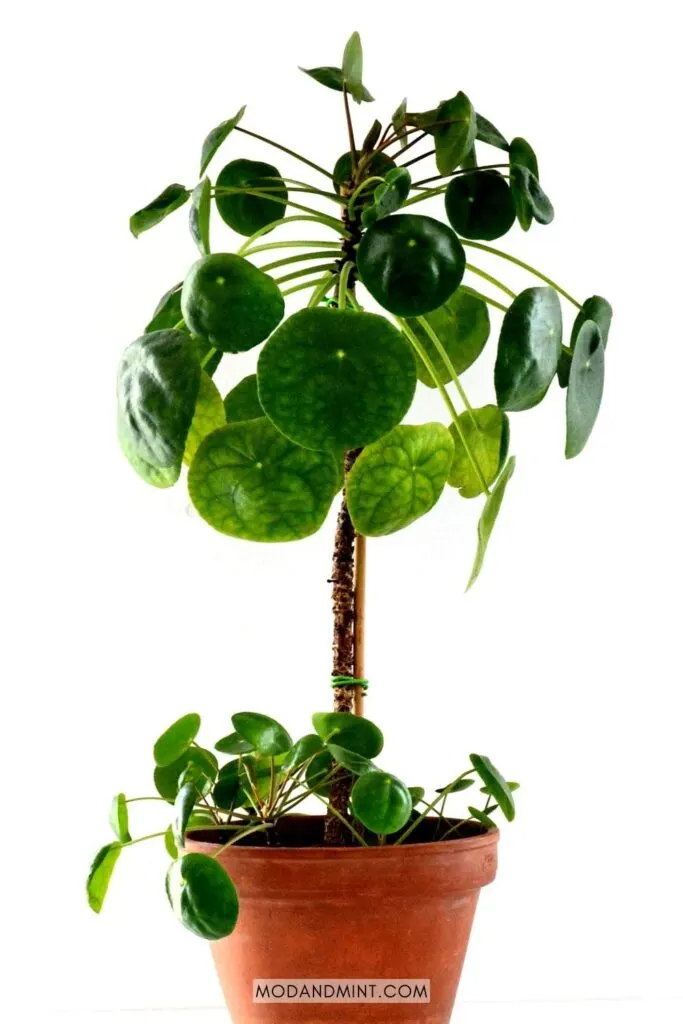
Pilea Peperomioides plants can grow quite tall. Indoors the plant can reach up to about 20 inches in height, and the stem can become woody as it matures. Older leaves may drop from the bottom, leaving the stem bare and giving the plant a tree-like appearance. A stake may be required to keep it upright.
Read more and learn about the rise of the Pilea peperomioides as a house plant and the meaning behind it.

Related reading: Beginners Guide to Houseplant Care.


Light Requirements
The Pilea peperomioides plant is used to grow in shady conditions. Indoors it prefers bright, indirect light or partial shade to thrive.
Protect it from intense, direct sunlight as it may cause brown, dry sunburn marks or yellowing of the leaves.
If it doesn’t receive enough light it may lose its compact shape. If this happens and it starts to grow leggy, consider getting a LED grow light to supplement the light.
Rotate regularly to make sure it gets adequate light on all sides and grows evenly.


Watering
To know when to water your money plant, feel the leaves and inspect the soil. Leaves should feel firm. Thin, drooping leaves are the first sign your plant needs water.
If the soil feels moist, don’t water but wait one or two days and check again. If the soil is dry, go ahead and water thoroughly to saturate all of the soil. Then allow the top layer of soil to dry out before watering again.
If in doubt, don’t water yet. An underwatered plant is easier to revive than an overwatered plant. Overwatering doesn’t mean you gave it too much water, but watering too often, not giving the soil a chance to dry out. If you are uncertain, you can use a moisture meter to help you out with when to water.
Allow all excess water to drain out of the bottom of the pot. Make sure the pot has drainage holes on the bottom. This is a must. Without those, excess water has no way to get out and will drown the roots, causing them to rot.
Related reading: the basics of watering indoor plants – Tips to use a moisture meter.
Fertilizing
Use a diluted liquid plant fertilizer to feed your plant once a month in spring and summer. Be sure the soil is damp before fertilizing and don’t fertilize in winter when growth slows down.
Also never fertilize your Chinese money plant if it is recently repotted or is having problems. Fertilizer is not a plant medicine. It will only stress out an already stressed-out plant. Analyze, adjust, and when your plant recovers, continue your normal care routine.
Humidity
The Pilea peperomioides likes it warm and the humidity high. It can grow and survive in average household humidity. However, they will do better if you raise the humidity to 50 – 75%.
Occasionally mist your Pilea plant. This will temporarily up the humidity. But the best way to increase humidity is to place a small humidifier near your plant.
Keeping the humidity high is especially important in winter when the heaters go on and the air indoors is usually drier.

Soil and Repotting
If the roots have filled the entire pot and your Pilea peperomioides has outgrown its pot, repot it in spring in a pot one size bigger than the original.
Every two to three years the soil will have lost its nutrients and will need to be replaced with fresh well-draining soil. For more information read my post about how to repot your plants.


Flowers on Pilea Peperomioides
Mature plants can flower when they get enough light and are overall very happy with their growing conditions.
Don’t worry if your plant doesn’t bloom. Many indoor Pilea plants don’t flower at all. If they do, it is usually in spring or early summer. The flowers are small, and come out in clusters on a stalk.


Pilea Peperomioides Propagation
Propagating is easy and can be done by using offsets, also known as plantlets or Pilea babies. These small plants form at the base of mature Pilea plants. They can be gently removed and propagated in water or in soil.
To water propagate, place the pilea baby in water and keep it in bright, indirect light. Change the water regularly and transplant to soil when roots are strong and about 1 – 2 inches.
To propagate in soil, plant the pilea babies in a small pot with well-draining soil. Keep in bright, indirect light. Mist or water very sparingly until you see new growth.
You can use a rooting hormone powder on the cuttings to speed up the propagation process. Dip the bottom of the plantlets in water first, then dip them in rooting powder before planting in soil.
Related reading: Pilea peperomioides propagation – 6 different ways to propagate your plants.


Plant Pests
The most common pests on indoor Pilea peperomioides are spider mites, mealybugs, aphids, and scale insects.
Inspect your plant regularly for signs of bugs to catch a possible infestation before it becomes severe. And read my post about common houseplant pests and what you can do to get rid of them.

Is the Pilea Peperomioides Toxic to Cats?
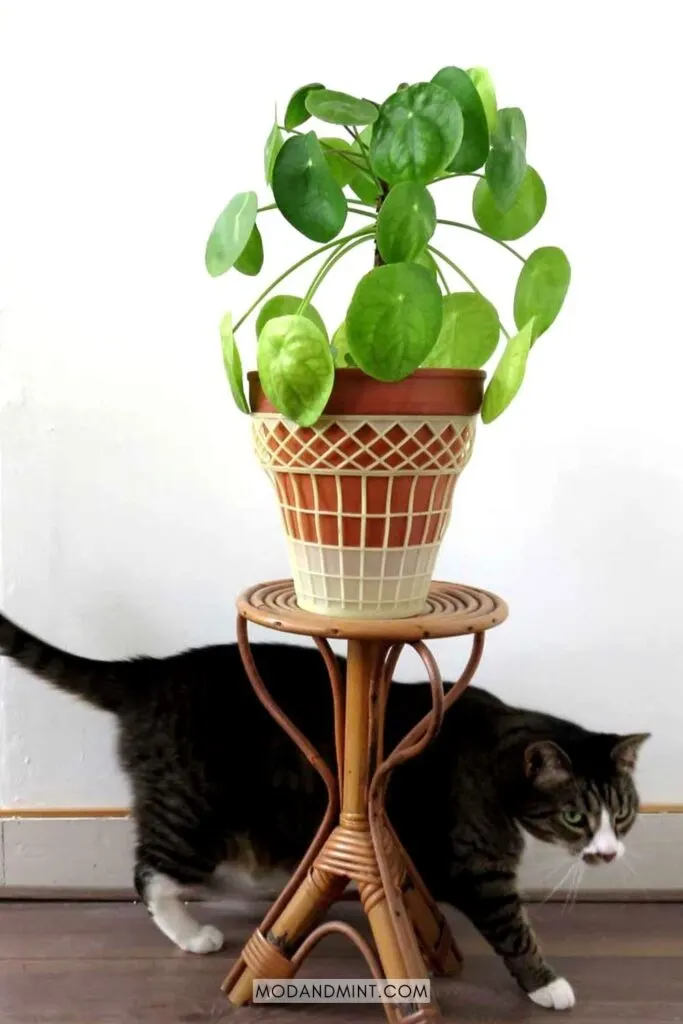
Chinese money plants are considered non-toxic. It is safe to grow at home around your cats or dogs.
However, it’s always a good idea to prevent pets from chewing on houseplants, as it can cause mild digestive upset.
Further reading: More non-toxic indoor plants.
Common Pilea Peperomioides Problems
Even though it is an easy-to-care-for houseplant, there are a few common problems. Issues like curling or yellow leaves, leaves drooping or falling off, they can turn brown or your plant might not be growing any babies.
Usually, these issues can be sorted out by adjusting things like your watering schedule, or by moving your plant to another location with more or less light.
For more information and how to safe your plant, ready my post about Pilea peperomioides care problems.
Related reading: Round leaf plants – Easy beginner houseplants.