
8 Reasons Why Plant Leaves Turn Yellow – And Easy Fixes!
One of the most common problems in houseplant care is when plant leaves suddenly turn yellow. This could be a sign that something is wrong and needs fixing.
But maybe there is nothing to worry about. It’s normal for older leaves to yellow and make way for fresh, new leaves. If a lot of leaves turn yellow at the same time, you need to start investigating.
There are various reasons behind yellowing leaves. By identifying the possible causes and taking the appropriate steps to fix it, you can definitely still save your plant.

Can Plants Recover from Yellow Leaves?
Plants can recover from yellow leaves with proper care and attention. By addressing why the yellowing is happening, such as watering frequency, more or less light, or addressing nutrient deficiencies, plants can gradually regain their health. In time, new growth will emerge, replacing the yellowed leaves, and restoring the plant to its vibrant state.
Why are Plant Leaves Going Yellow?
Check out this list of common causes to match symptoms with solutions and nurse your plant back to health.
- Overwatering
- Underwatering
- Temperature stress and drafts
- Too much light
- Nutrient deficiencies
- Too much fertilizer
- Fungal issues
- Plants pests
Related Reading: Houseplants 101 – Tips for Indoor Plant Care.
Overwatering
Yellowing leaves are most commonly caused by overwatering. This means your plant has been watered too often. Signs include soggy soil, wilting, and leaf discoloration. To remedy this, allow the soil to dry out more between watering and make sure the pot has drainage holes in the bottom.
Related Reading: When to Water your Indoor Plants.
Underwatering
Dehydration can also lead to yellowing leaves, accompanied by dry, crispy foliage and soil. To combat this, water your plants thoroughly, making sure the soil is evenly moist but not continuously soggy. Consider misting the leaves or using a small humidifier to increase humidity levels.
Temperature Stress and Drafts
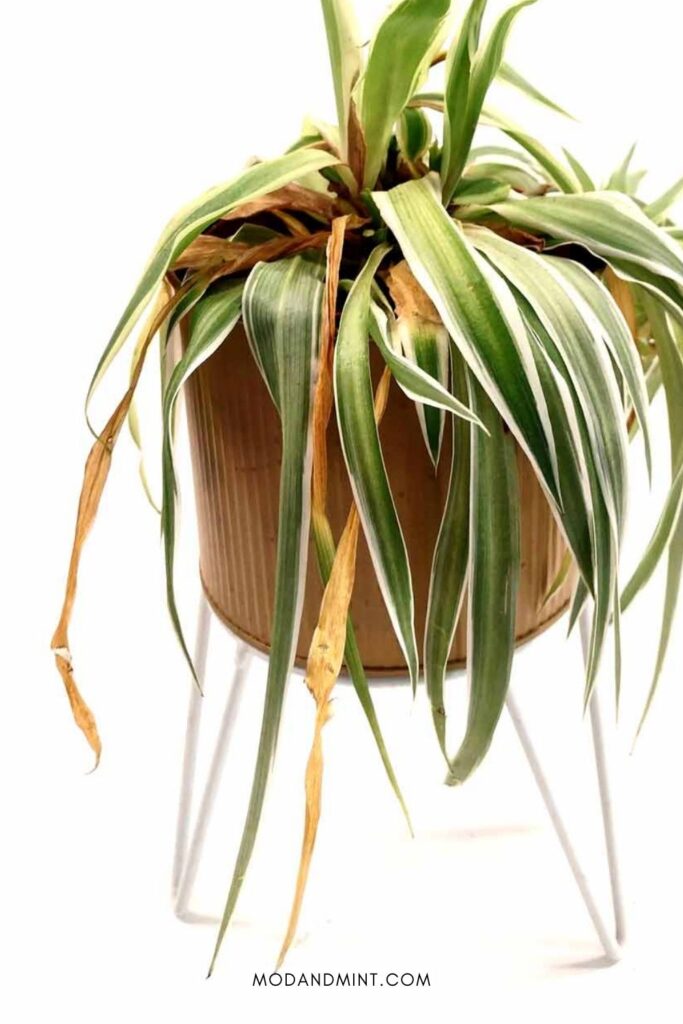
Extreme temperature changes or exposure to drafts can stress your indoor plants, causing their leaves to turn yellow and curl. Shield plants from hot or cold air drafts and maintain a consistent temperature range conducive to their growth.
Too Much Sun Light
While most plants thrive on sunlight, too much exposure can result in faded, yellow leaves. Signs include scorched or bleached foliage. Move plants to a shadier spot or filter direct sunlight with sheer curtains to alleviate this issue.

Nutrient Deficiencies
Yellow leaves may signal a lack of essential nutrients like nitrogen, iron, or magnesium. Treat deficiencies with a balanced liquid plant fertilizer or by incorporating nutrient-rich compost into the soil to facilitate absorption.
Too Much Fertilizer
On the other hand, excessive fertilization can disrupt the delicate balance of nutrients, leading to yellowing leaves and stunted growth. Follow the recommended dosages and frequency guidelines for fertilizing, and flush the soil periodically to prevent salt buildup.
Fungal Issues
Fungal infections such as root rot or powdery mildew can cause yellowing leaves and moldy growth or a musty odor. Improve air circulation around plants, avoid overwatering, and treat affected areas with fungicides to stop the fungal infections from spreading.
Plant Pests
Plant pests like aphids, spider mites, or mealybugs can wreak havoc on indoor plants, resulting in yellowing leaves, distorted growth, and visible pest infestations.
If you find any pests, isolate the affected plants to prevent spreading, and read up on the common houseplant pests to find out what you can do to get rid of them.
Can Yellow Leaves Turn Green Again?
Once leaves have turned completely yellow, they do not revert back to green. Yellowing is often a sign of irreversible damage or stress to the leaf tissue. However, with proper care, the plant can grow new healthy leaves, gradually replacing the yellow ones.
Should you Cut off Yellow Leaves?
You can safely trim yellow leaves from your indoor plants. Removing these leaves enhances the look of your plant and, at the same time, prevents the spread of possible diseases, redirecting energy towards healthier growth. However, you should always investigate and address the underlying cause of the yellowing leaves to prevent it from happening again.