
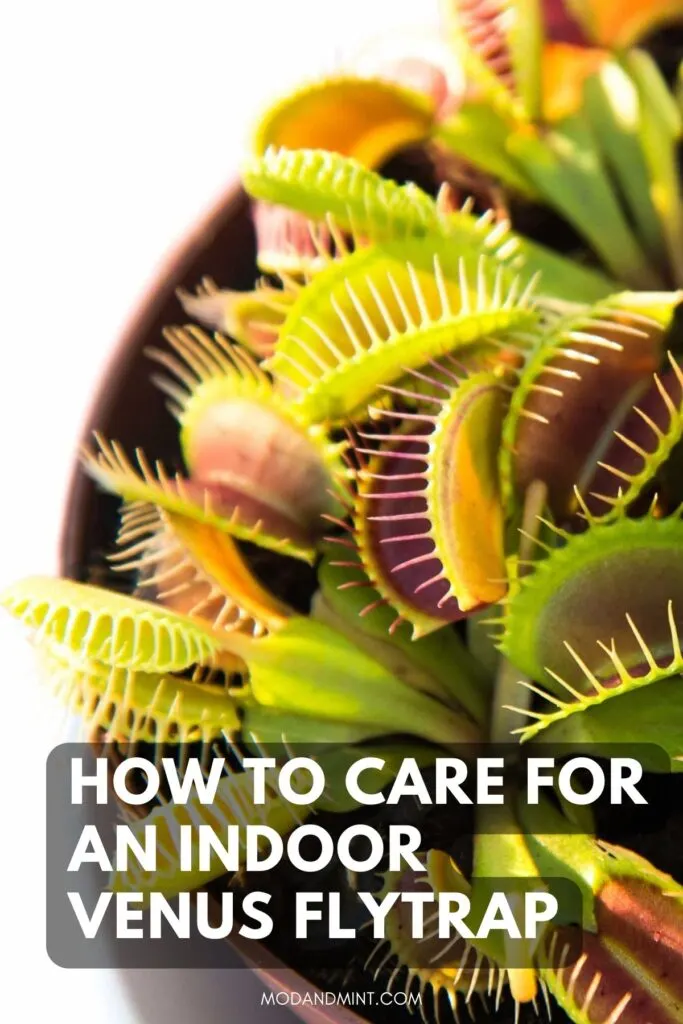
The Dionaea muscipula, better known as the Venus fly trap, is the most recognized and popular carnivorous plant. Venus flytraps are fascinating houseplants and guaranteed conversation starters.
Their sweet-smelling nectar lures flies and other small insects, then it traps them in its leaves.

Want to buy a Venus flytrap? You can find them for sale on Amazon!
The Venus Fly Trap
Venus fly traps are native to the United States. They come from just a 100-mile strip of humid swampland along the coast of North and South Carolina.
Good care is required to be able to grow it as an indoor plant.
Related reading: Sarracenia Pitcher plant.


How does a Venus Flytrap Work
Venus fly traps had to adapt to their living conditions in the bog and catch insects to supplement their diet. The way it snaps the leaves shut and digests its meal is a biological mechanism found in only a very few plants.
Venus flytraps have up to seven leaves that can grow in size to be about eight inches long. Each leaf has a chlorophyll-producing stem called a petiole that ends in the trap leaves.
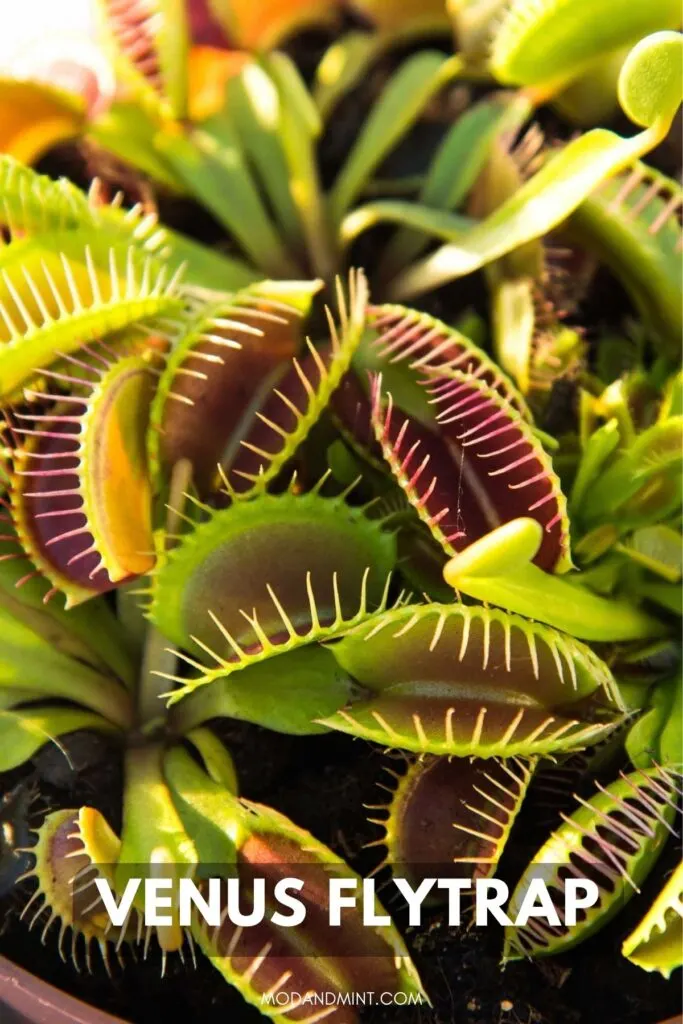
The trap leaves have fourteen to twenty bristles on the edges and tiny hairs on the inside. The inside is bright red and gives off sweet-smelling nectar. This tricks flies and other insects into getting into the trap. When something touches one of the hairs, it sends a signal, and the leaf snaps shut to trap the insect.
Trap leaves can only open and close a few times before they wither and fall off. The plant has developed a smart counting method to know if it is a living insect or a dead one. Or something like a fallen leaf that lacks nutrition.
When the hairs are touched only once, nothing happens. The trap stays open. If there is a second touch within a few seconds, the trap will snap shut.
To make sure there is no way out and no bacteria are getting in, the Venus flytrap has another clever solution. It releases a sticky substance called mucilage on the edges of its leaves to create an airtight seal.
Once trapped, digestive enzymes then consume the insect. Depending on the size, it can take between five and thirty days to be completely absorbed. The trap leaves will open, revealing the insect’s remains. Rain or wind will wash these away.


Don’t Touch the Leaves for Fun
Thousands of fly-catching Venus fly trap plants are produced and sold as fun curiosities. It’s sad to say, but most of these plants do not survive the care of their new owners.
They can only open and close their leaves so many times. Tapping the leaves for fun too many times can be the end of your plant.
Carnivores like the Venus fly trap are a favorite plant in classrooms. This is risky since young kids are often very curious and tap the traps to see what happens. Explain that it may be fun to see the trap leaves close, but doing so too often drains the plant’s energy. The leaves will turn black and fall off.

Feeding an Indoor Venus Fly Trap
Outdoors they supplement their diets by catching insects. They do this during the summer when they are in their active growing season.
Indoor fly traps can live without ever having eaten any insects. But they will be healthier if you do feed them an insect about once a week. Overfeeding is a common mistake and can shorten their life. They don’t eat much. So don’t overdo it.
Provide soft insects, like small flies or tiny bugs. Use tweezers to gently drop them into one of the traps. Make sure to touch the tiny trigger hairs inside of the trap, to activate it to close. If insects are hard to come by, you can buy freeze-dried insects online or at pet stores.
If you don’t want to mess with live or freeze-dried bugs, you can use a Venus flytrap fertilizer supplement.
Never feed your carnivorous plants human food like bits of hamburger meat or cheese. They are too fatty and will often spoil and rot the trap before it is digested.

Light Requirements
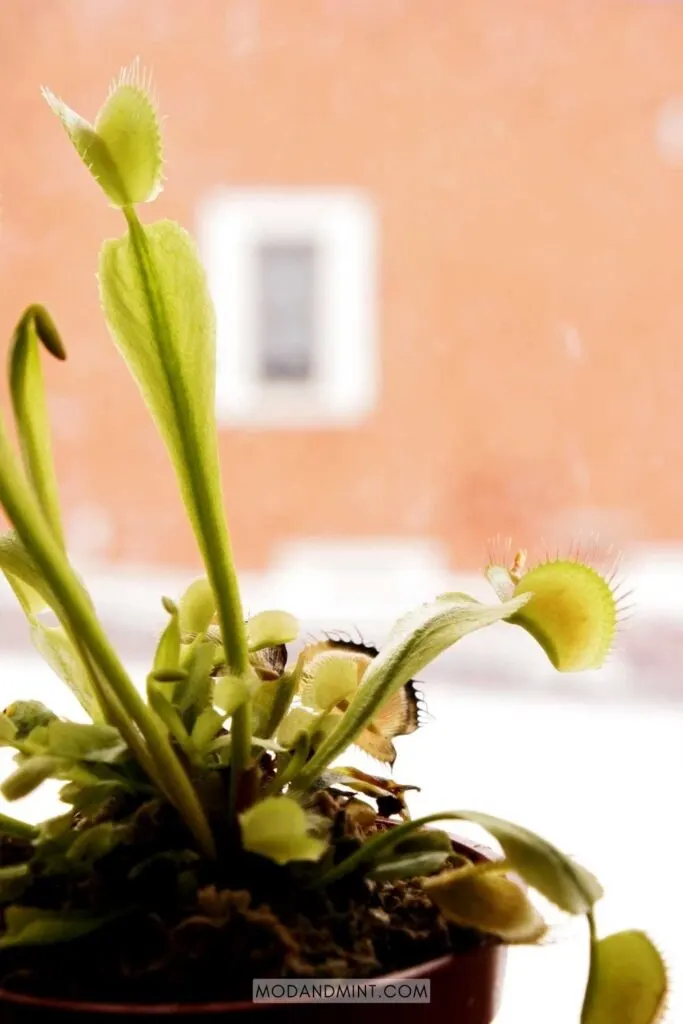
Give your indoor Venus fly trap ample bright light. Keep it on a sunny windowsill where it gets several hours of sunlight a day.
The more light, the better. A few hours of direct sun is fine, but watch out for harsh midday sun. It can scorch the leaves.
In summer you can set it outside for several hours a day to enjoy the sun and let it catch some flies.


Watering
Being used to swampy grounds, their roots like to be moist, but not waterlogged. The best indoor setup for the Venus fly trap is to set the pot in a shallow saucer filled with water. Let the plant soak up water from the bottom through the drainage holes.


Humidity
Venus fly traps are used to high humidity. Keep it away from dry air from heaters or air conditioning vents.
The best place to grow an indoor Venus fly trap is in a terrarium. You can also keep it in the plastic container they are often sold in. This will work as a terrarium, keeping the humidity high and protecting the plant from dry air.
You can buy complete Venus flytrap terrarium kits. These come with a live plant, potting medium, and terrarium. Some even include dried insects to feed your plant.
Open the terrarium or container occasionally for an hour or so. This helps with good air circulation and discourages fungal diseases.
Related reading: Make your own terrarium step-by-step!
Soil and Repotting
As a general rule, repot every two years. This is best done at the tail end of dormancy in February or early spring.
Go slow, try to disturb the leaves as little as possible during the repotting.
These plants do best in plastic pots. Plastic containers hold moisture inside, keeping the soil damper. Instead of regular potting soil, grow the plant in a special potting mix for carnivorous plants.


Leaves Turning Black
Leaves withering and turning black can be a normal part of the plant’s natural life cycle. Most traps last a month or two before falling off. New traps should grow within a few days.
Other Reasons for Venus Fly Trap Leaves to Turn Black
There are a few other reasons that have to do with care issues.
- Leaves can turn black because the trap got triggered too many times without a meal.
- Too much food. Overeating or eating prey that is too big will cause the leaves to go black.
- It is normal for a lot of leaves to turn black in winter when the plant goes into dormancy. Healthy leaves will come back in spring.
- Like many other plants, the Venus flytrap can react to repotting or moving locations. Like when you first buy it and bring it home. The stress of change can cause the leaves to go black.
- Leaves can turn black if you have added fertilizer, tap water, or human foods to your plant.
- When winter arrives, the plant goes dormant. This is part of its natural life cycle. During dormancy, growth will slow down and many leaves turn black at the same time.
Is the Venus Fly Trap Toxic to Cats?
According to the ASPCA Venus flytraps are non-toxic. So it is safe to grow them at home around your cats or dogs.
Also, the trap leaves can’t cause harm to humans. It hurts the plant more to close unneeded than it would hurt a human’s finger to get trapped by the leaves.
Venus Flytrap Endangered
Their popularity is leading to over-collection. Poachers started digging up the plants in the wild to sell to stores. Combined with habitat loss, the Venus flytrap is disappearing from the wild.
This has led to wild Venus fly traps becoming classified as vulnerable to extinction by the IUCN. The International Union for Conservation of Nature.
It is now illegal to remove Venus fly traps from the wild. Those offered for sale should all be grown either from seed or reproduced by tissue culture. Make sure to buy your plants from reputable sellers.


More Unique Plant Posts
Looking for more interesting houseplants? Check out these other popular plant articles.
- How to Grow Air Plants – Indoor Tillandsia Care
- 5 Rare and Unusual Indoor Succulents
- Care for a Fishbone Cactus or Zig Zag Cactus
- Bear Paw Succulent – How to Grow a Cotyledon tomentosa
Marty
Tuesday 7th of June 2022
Do they require a cold period during dormancy, or can they be kept indoors at normal temperatures. Thanks