
The Panda plant (Kalanchoe tomentosa) is an adorable plant with soft, fuzzy leaves. It is sure to capture your heart and add a touch of whimsy to your home.
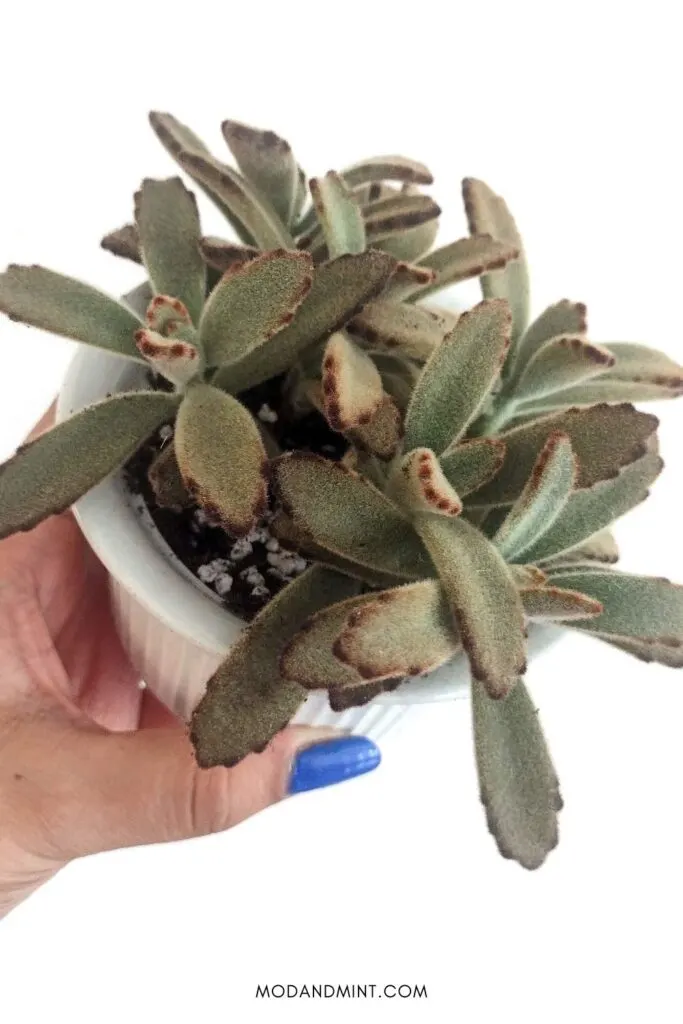
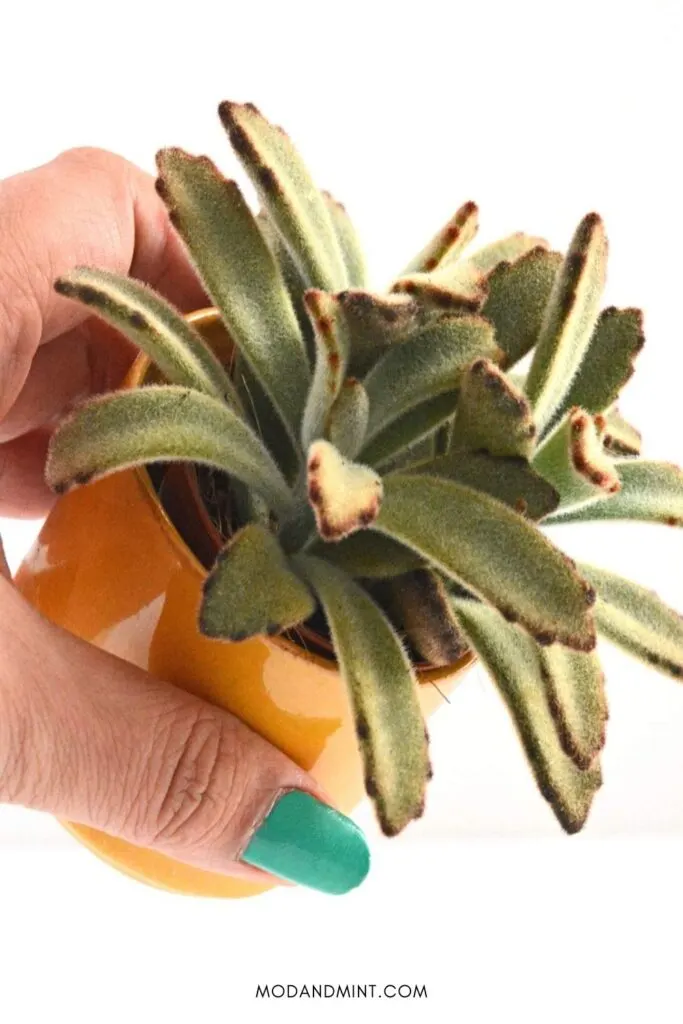
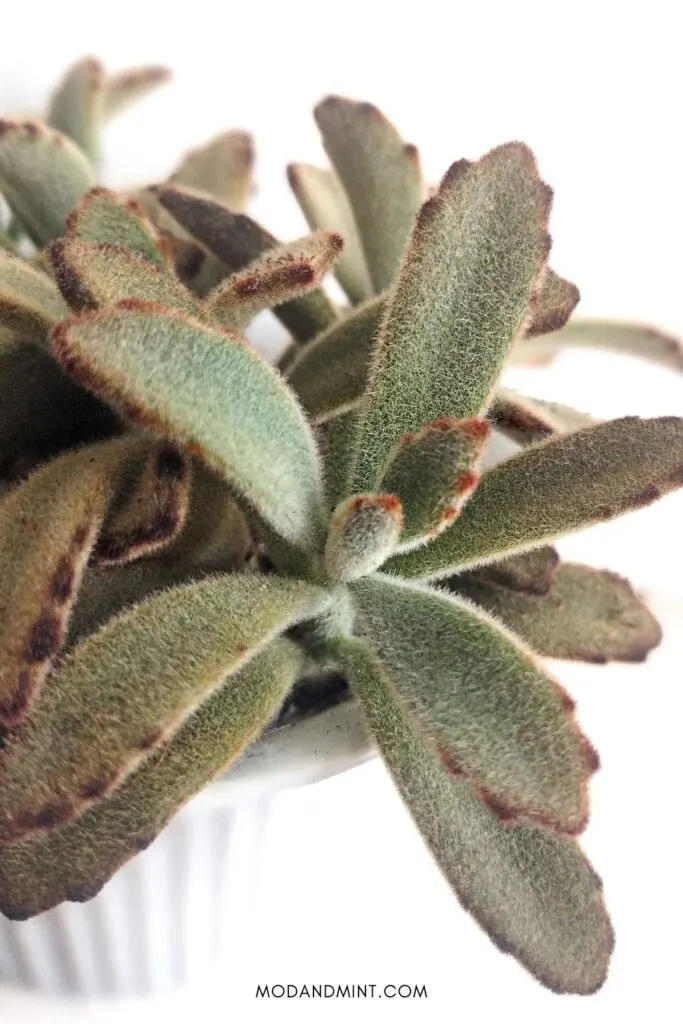
The Panda plant is a small succulent. The leaves are silvery green with brown tips along the edges. This sort of resembles the markings of a panda bear, and it is what gives the plant its charming name.
This plant care guide has all the practical tips on watering, light, humidity, propagation, and more, so you can successfully grow the Kalanchoe tomentosa Panda plant in your home!


Want to buy a Panda Plant? Find it for sale on Amazon!
Panda Plant Care
Botanical name: Kalanchoe tomentosa. Common names: Panda Ear Succulent, Panda Plant, Pussy Ears, Chocolate Soldier.
The Kalanchoe tomentosa hails from Madagascar and is part of the Kalanchoe plant family which has over 125 known different species.
This fuzzy succulent with brown tips is a popular plant among succulent collectors due to the cute way it looks and how easy it is to care for indoors.
Love the Panda plant? Check out the similarly cute with soft, fuzzy leaves, Bear paw plant!


Need a succulent plant care refresher? Check out the Beginners Guide to Succulent Care.

Light Requirements
Indoors, Panda plants do best on a bright windowsill with a few hours of morning sun and bright indirect light the rest of the day. Avoid placing it in too much direct sunlight, as it can scorch the leaves.
When grown in lower light, growth will slow down and get leggy. Consider getting a LED grow light if your home doesn’t receive enough natural light.
Read more: How much sun do succulents need?


Watering
The Panda plant is very drought-resistant. Like most succulents, it stores water in its leaves. Allow the soil to dry out completely between waterings. When you do water, be generous. This is called the soak-and-dry method. Soak the soil when you water it. Then let it dry out before watering again.
Water very sparingly in winter. Water just enough to make sure the leaves don’t shrivel up completely.
Don’t water your Panda ears plant too often. Overwatering is the most common problem with these plants and can lead to root rot. If you are uncertain if it’s time to water, you can use a moisture meter to help you out.
Use a watering can with a long spout to reach the soil and keep the leaves dry. The fuzzy leaves are prone to rotting when wet.
Further reading: How often to water succulents – How to use a moisture meter.

Fertilizer
Panda plants don’t need a lot of fertilizer. You can fertilize to supplement poor soil or give your plant a boost during the growing season.
Use a diluted liquid fertilizer specifically formulated for succulents to feed your panda plant once a month in spring and summer.
Humidity
The Kalanchoe tomentosa is not very needy when it comes to humidity.
It can adapt well to normal household humidity levels. There is no need for misting or using a humidifier to raise the humidity.


Soil and Repotting
Repot in spring in a pot one size up when roots have filled the pot, and or when you see roots growing from the bottom of the pot.
Even if your plant still has room to grow, you want to refresh the soil every two to three years. The soil will have lost all its nutrients and will need to be replaced with fresh well-draining succulent soil.
Make sure the new pot has drainage holes on the bottom. Without those, excess water has no way to get out and will drown the roots.
Read more: How to repot your houseplants.


Propagate Panda Plant
The easiest way to propagate large Kalanchoe tomentosa panda ear succulents is by dividing or removing offsets.
Smaller plants can be propagated by taking stem cuttings and rooting them in soil.
Gently remove a healthy stem from the plant, allow it to callus for a day or two, and then place it in a well-draining succulent soil mix. Keep the soil lightly moist until new roots and growth appear.
Further reading: Succulent propagation – 6 different ways to propagate your plants.
Leaves Curling
Curling leaves on a panda plant can happen because of a few reasons.
- Light: Insufficient light can lead to elongated stems and curling leaves as the plant stretches toward the light source.
- Watering: Overwatering or allowing the soil to remain consistently damp can cause root rot and subsequent leaf curling.
- Humidity: Low humidity levels can stress the plant, leading to leaf curling.
- Pests: Check for signs of pests, as their presence can stress the plant and result in leaf curling.

Common Pests
Panda plants are susceptible to several common indoor plant pests. Some of the pests that may affect panda plants include mealybugs, aphids, spider mites, and scale insects.
Regularly inspect your plant for any signs of pests, such as webbing or tiny insects. Thoroughly check under the leaves and in axils where insects tend to hide.
Read more: Identify Common Houseplant Pests and How to Get Rid of Them
Is the Panda Plant Toxic to Cats?
The Kalanchoe tomentosa plant is considered mildly toxic when ingested. It may cause nausea, vomiting, or diarrhea.
Although it is uncommon for pets to get seriously hurt from eating plants, keep this one out of reach of children and pets.
Read more: Keeping Your Pets Safe: Identifying Toxic Plants in Your Home.