
The Epipremnum pinnatum Njoy, also known as Pothos N’joy, is a popular and trendy vining houseplant. It is fast-growing, easy to care for, and can grow in various conditions, making it an ideal indoor plant.
With striking bright green and cream-white variegated leaves, the N’joy Pothos is a true beauty to grow at home as a hanging plant!
This plant guide has all the care tips on watering, light, humidity, propagation, and more, so you can successfully grow this stunning plant in your home!

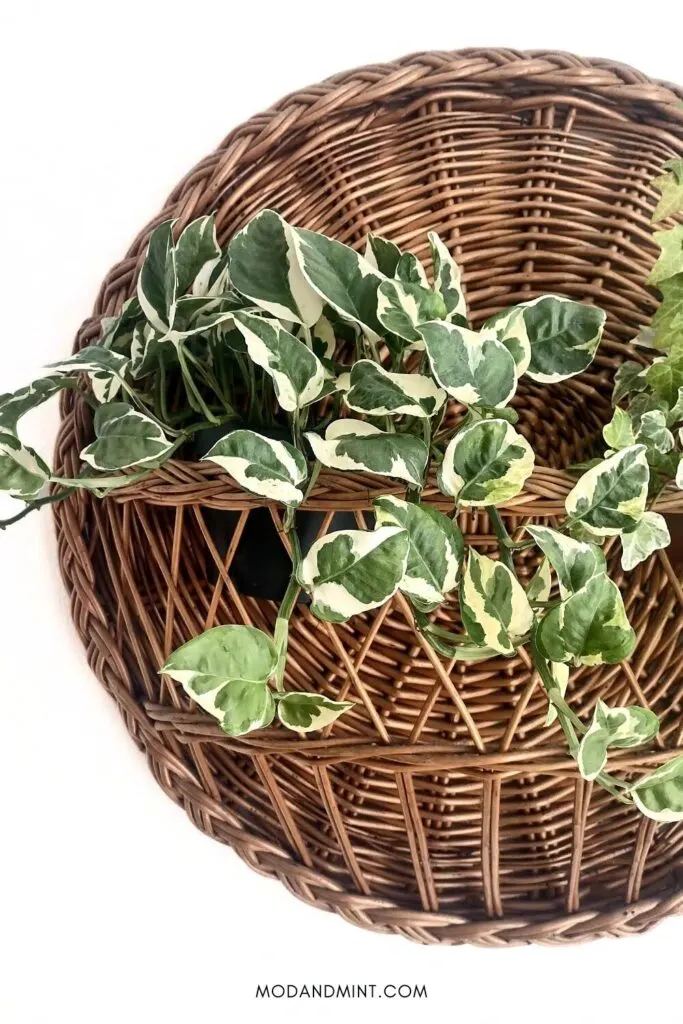
Epipremnum Pinnatum NJoy
The Pothos N’Joy is cultivated through mutations from the Epipremnum pinnatum ‘Marble Queen’ plant by Ashish Hansoti, and is patented under the name Epipremnum pinnatum ‘NJOY’.
The Pothos Njoy looks very similar to and is often mistaken for the Marble Queen parent plant, or the Pothos Manjula. All the variegated Pothos plants require the same care.
Need a plant care refresher? Check out the Beginners Guide to Houseplant Care.


Want to buy a Pothos N’joy? Find it for sale on Amazon!
Light Requirements
Give your indoor Pothos n joy plenty of bright, indirect light. Variegated plants require more and brighter light than regular green-leaved plants. The white leaves need more light to be able to photosynthesize.
When variegated pothos plants are grown in too little light, colors and variegation may fade. The leaves may even completely revert to green. Growth will slow down, and the plant can get leggy reaching toward the light. Consider getting a LED grow light if you can not give your plant enough natural light.
The Pothos Njoy can handle a few hours of morning sun. But avoid too much direct sunlight. Dry, brown spots on the leaves can be a sign of sunburn. Move your plant further away from the window, or filter the light with a sheer curtain.


Watering
Indoors, water your plant regularly to keep the soil slightly damp. The soil should feel like a well wrung-out sponge.
If the soil feels moist, don’t water but wait one or two days and check again. If the soil is dry, go ahead and water thoroughly to saturate all of the soil. Then allow the top layer of soil to dry out before watering again.
Overwatering can lead to yellow leaves and root rot, while underwatering can cause the leaves to wilt and droop. The leaves should feel firm and look healthy. If in doubt, don’t water yet. An underwatered plant is easier to revive than an overwatered plant.
If you are uncertain, you can use a moisture meter to help you out with when to water. And read up on the basics of watering your indoor plants.


Fertilizing
The Pothos Njoy doesn’t need a lot of fertilizer. But you can fertilize to supplement poor soil or give your plant a boost during the growing season.
Feed with a diluted organic liquid fertilizer once a month in spring and summer. You can also treat it to a specially formulated fertilizer for Pothos plants.
Be sure the soil is damp before fertilizing and don’t fertilize in winter when growth slows down.
Also never fertilize your plant if it is recently repotted or is having problems. Fertilizer is not a plant medicine. It will only stress out an already stressed-out plant. Analyze, adjust, and when your plant recovers, continue your normal care routine.


Related reading: Meaning and Symbolism of Pothos plants.
Humidity
The N-joy Pothos likes medium to high humidity. It can grow and survive in average household humidity levels. However, it will do better if you raise the humidity. Dry, brown leaf tips often indicate that the humidity is too low.
Mist frequently. This will temporarily up the humidity. Another option is to buy a small humidifier to place near your plant.
Keeping the humidity up is especially important in winter when the heaters go on and the air indoors is usually drier.


Hanging or Climbing Pothos N’Joy
The trailing vines make this a great indoor hanging plant. But in nature, Pothos plants use aerial roots to climb up on tree trunks and branches. In your home, you can give it climbing support in the form of a moss pole.
Place the pole in such a way that the aerial roots are touching it, or at least are very near to it. Mist frequently so the roots can attach themselves more easily.
Read more: How to attach a Pothos to a moss pole!
Soil and Repotting
Transplant your N-joy Pothos in a pot one size up when roots have filled the pot, or when you see roots growing from the bottom of the pot.
Even if your plant still has room to grow, you want to refresh the soil every two to three years in spring. The soil will have lost all its nutrients and will need to be replaced with fresh soil. A special aroid potting mix is a good choice for the Pothos N’joy.
Need a repotting refresher? Get all the tips on how to repot your plants.
Pruning
Pruning can be done all year long to help maintain size or remove leggy vines. Remove wilted leaves and trim long branches to encourage branching and grow a more bushy plant.
Avoid pruning too much at once. Do not remove more than one-third of your plant’s growth. Plants need their leaves to grow and thrive.


Pothos Njoy Propagation
Propagating a Pothos N’joy is an easy way to make more plants from the ones you already have.
BUT BE AWARE: As mentioned before, the NJoy is a patented plant, and propagating patented plants is prohibited by U.S. law. The patent document does not contain specific information about whether you are or are not allowed to propagate the plant for personal use.
However, as a general rule (not legal advice), the propagation of a patented plant without permission from the patent holder could be considered an infringement of the patent, even for personal use. This patent is set to expire in 2027.
If you are deciding to propagate your pothos njoy, using stem cuttings like you would propagating any Pothos is an easy way to do so. The cuttings can be rooted in water or soil.
Want to learn more about plant propagation? Read the complete guide explaining the 6 different ways to propagate all your plants.
Plant Pests
Epipremnum pothos plants are not very prone to pests, but just like any indoor plant, they can occasionally be affected.
Inspect your plant regularly for signs of bugs to catch a possible infestation before it becomes severe.
Learn more about common houseplant pests and what you can do to get rid of them.
Is the Pothos N’Joy Toxic to Cats?
Unfortunately, yes. Plants from the Epipremnum family are considered mildly poisonous to dogs and cats when ingested. It can cause irritation of the mouth, tongue, and lips, excessive drooling, vomiting, and difficulty swallowing.
Be safe and keep this plant out of reach of your pet.
Read more on the risks of toxic plants and your pets and if you should be worried or not.

