7 Tradescantia Plant Care Problems
The Tradescantia, commonly known as Spiderwort plant and previously Wandering Jew, is a popular indoor plant. This trailing plant needs some extra attention to avoid common care problems. Luckily it is a resilient plant and is fairly easy to bring back to life.
When you have all the general Tradescantia care issues covered, and your plant is still having problems, it’s time to troubleshoot and find out what is happening.
What’s Wrong with Your Tradescantia?
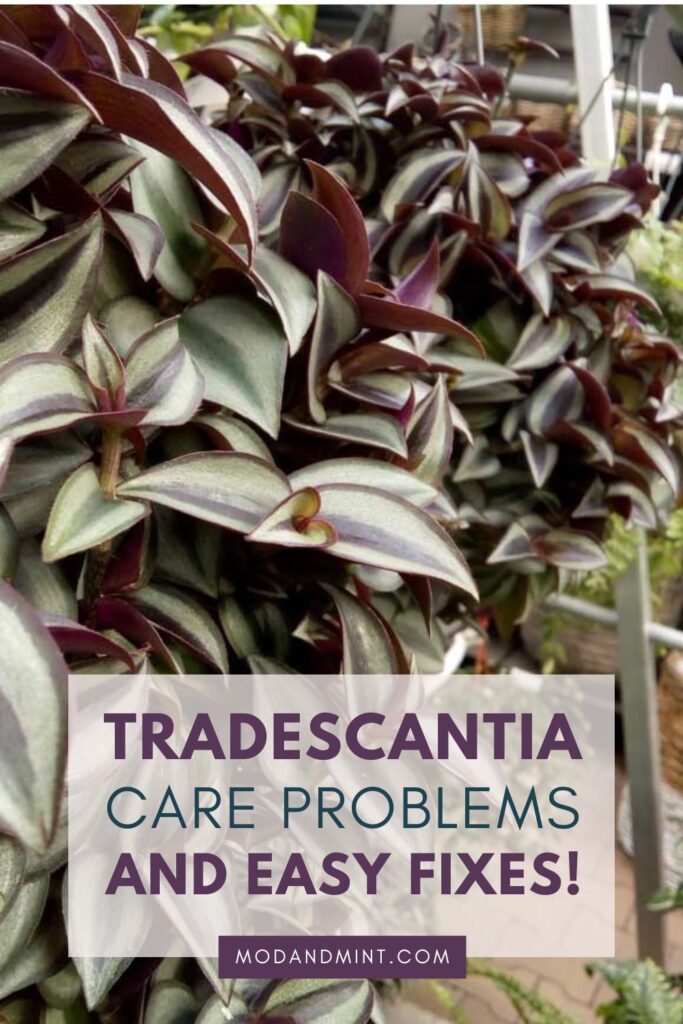
Here are 7 of the most common Tradescantia plant care issues. And what to do to fix them.
- Brown crispy leaf tips
- Leaves turning yellow
- Leggy stems
- Curling leaves
- Leaves loosing variegation
- Black or brown spots on the leaves
- Plant pests
Most problems can have multiple causes and are easily fixed by adjusting things like your watering schedule, or by moving your plant to another location with more or less light.
Don’t worry if your plant droops a little or drops a few leaves if you recently brought it home or after repotting. Your plant is adjusting to the new situation. Give it some time to settle in before you do anything else.
And don’t fertilize when your plant is struggling. Fertilizer is not plant medicine. It will only stress out an already stressed-out plant. Analyze, adjust, and when your plant recovers, continue your normal care routine.
Related reading: Beginners Guide to Houseplant Care.
Want to buy a Tradescantia plant? Find it for sale on Amazon!
1. Brown Crispy Leaf Tips
Brown, crispy leaf tips on a Tradescantia is often a sign that the humidity is too low or it has gotten too much fertilizer.
In their native habitat, the Tradescantia is used to a warm and humid environment. In our homes, the humidity is much lower. Mist your plant regularly or put a humidifier nearby. Misting will help to temporarily raise the humidity.
Brown leaf tips can also appear when the plant is given too much fertilizer. You don’t need to feed your Tradescantia more than once a month, and only in spring and summer.
2. Leaves Turning Yellow
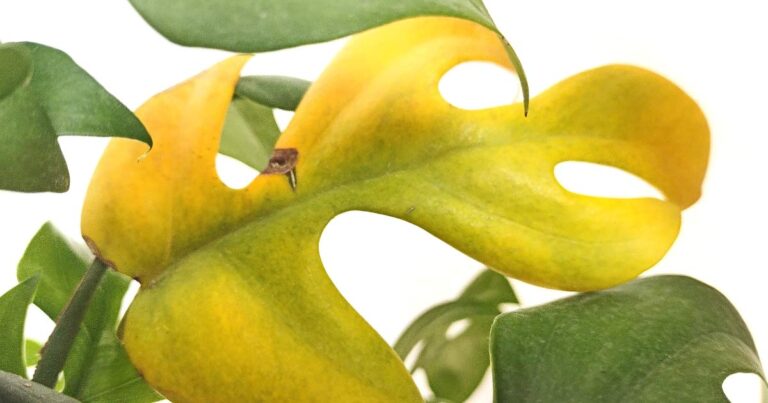
The biggest culprit of yellow leaves is overwatering. This means you are watering too often.
Tradescantias do like their soil to be slightly moist, but not soggy. Make sure the pot has drainage holes on the bottom and let the soil dry out slightly between watering, keeping it somewhat damp. You want the soil to feel like a well-wrung-out sponge.
You can buy a moisture meter to tell if it’s time to water. And read up on how and when to water your indoor plants.
You can save an overwatered Tradescantia by removing any remaining healthy stems and propagating those in water or soil
3. Leggy Stems
As your Tradescantia ages, the stems can grow quite long and straggly. This can be made worse by a lack of light. If they don’t get enough light, stems often grow very leggy.
Pinch off the leggy stems and move your plant somewhere with more light. If you can’t provide enough natural light, a grow lamp can do wonders.
Prune or start over by propagating stem cuttings. Pruning doesn’t just remove the leggy stems, it will also make your plant grow more bushy and compact.
4. Curling Leaves
Tradescantia leaves curl inwards when the plant is thirsty. Or when the plant is getting too much direct light.

5. Leaves Losing Variegation
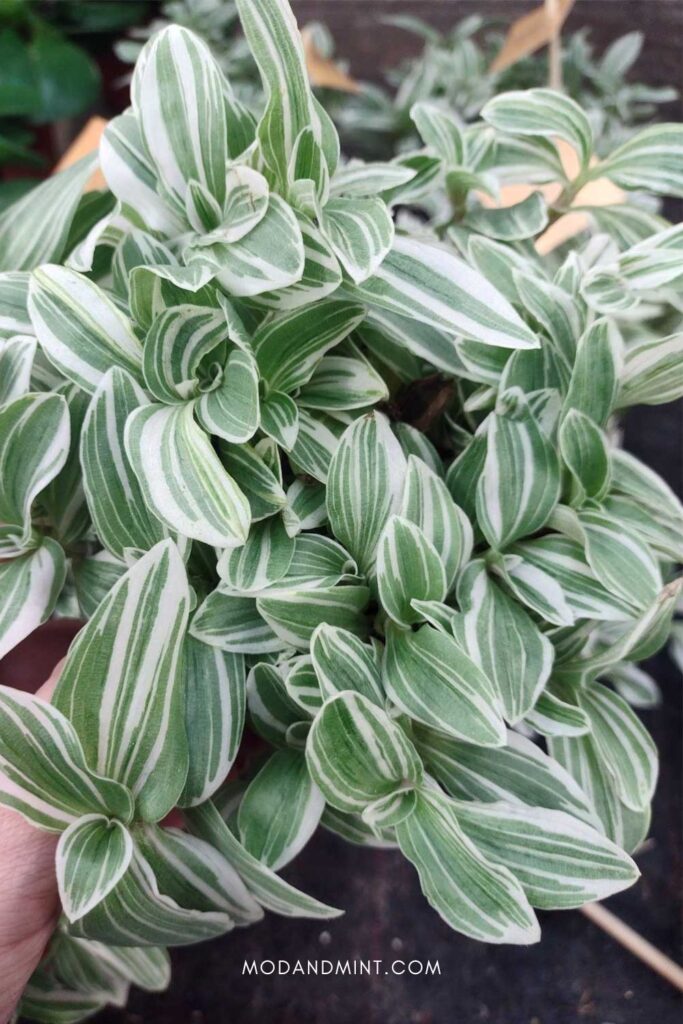
Variegated variations like the Tradescantia Tricolor or Nanouk can lose their pink or lilac variegation and turn solid green for different reasons.
Pink coloration often fades when the plant grows in insufficient light. It can also happen when it is too hot or too cold for the plant to grow its variegated leaves.
When the plant does not have the right conditions, it will revert to growing solid green leaves because it is trying to save energy. Growing those beautiful variegated patterns costs a lot of energy it just doesn’t have.
When the variegated leaves start turning a solid green, get pruning! Green leaves grow faster than variegated ones, so if you do not prune them, they will take over your entire plant. When all the solid green leaves are pruned, move your plant to a spot where it gets more light.
6. Black or Brown Spots on the Leaves
Avoid too much direct sunlight. Dry, brown spots on the delicate leaves can be a sign of sunburn. Move your plant to a location with less direct sun, or filter the light with a sheer curtain.
If entire leaves turn brown or black, it is almost always a sign of root rot because of overwatering. Make sure that you are not watering your Tradecantia plant so often that the roots drown in all that water.
7. Plant Pests
Indoor Tradescantia plants can be affected by any common household pests. Watch out for the usual suspects like spider mites, aphids, mealybugs, whiteflies, scale, thrips, and fungus gnats.
Keep the leaves clean and dust-free and inspect your plant regularly for signs of pests to catch a possible infestation before it becomes severe. Check under leaves and in axils where insects like to hide.
Further reading: How to get rid of common houseplant pests.