
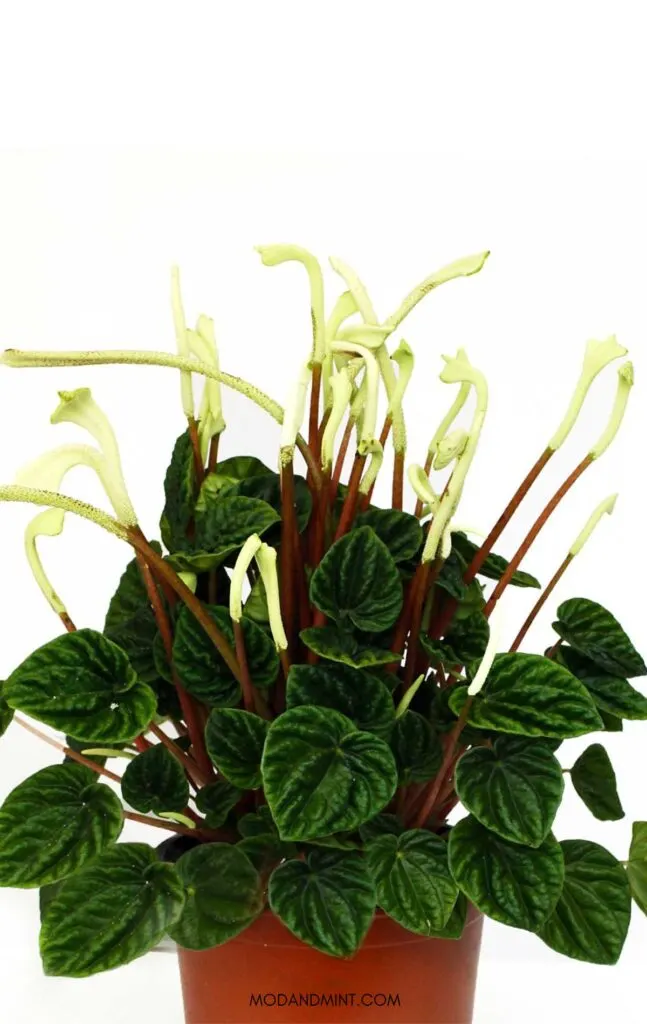
The Peperomia caperata is a popular Peperomia variety also called the Emerald ripple plant. It grows heart-shaped rippled leaves, red pink stems, and long white flower spikes.
Peperomias stay small and are easy to care for. These so-called radiator plants are perfect to put on shelves and in small spaces, like offices, dorm rooms, and window sills.


Want to buy a Peperomia Caperata? Find it for sale on Amazon!
How to Care for an Indoor Peperomia Caperata
The Peperomia caperata likes moist soil, dappled light, and high humidity.
Need a plant care refresher? Check out the Beginners Guide to Basic Houseplant Care. It has all the basics on how to care for your indoor plants.


Does Peperomia Caperata need sunlight?
The Peperomia caperata is native to Brazil where it grows in dappled or shaded light under the canopies of tall trees.
Indoors the best place for your Peperomia caperata is in a spot where it gets bright, indirect light, out of direct sunlight. An eastern window with a little morning sun is great.
Too much light can burn the leaves and cause dry, brown spots. Move your plant further away from the window, or filter the light with a sheer curtain.
The ripple Peperomia can grow in low light, but too little light will cause growth to slow down. It can also make your Peperomia grow leggy, reaching for the light.
Variegated Peperomia caperatas like the pink lady do like some more sun light so they don’t lose their beautiful variegation.
If you can not give your plant enough light, consider getting a grow light to help out.
Dust can collect on the leaves. The leaf pores get clogged making it harder to take in light. Occasionally wipe down the leaves with a damp cloth, or bring your plant to the sink or shower and treat it to a gentle room temperature shower.


Want more Peperomias? Start a collection and group them together. Start with the lovely and also easy to care for watermelon Peperomia and the Peperomia obtusifolia.
How Often to Water a Peperomia Caperata
The Peperomia caperata is drought resistant with fleshy, succulent-like leaves that store water inside.
Don’t water too often. Overwatering is the most common mistake with these plants. Allow the soil to dry slightly between waterings.
Stick your finger one to two inches below the surface of the soil. If it feels moist, don’t water but wait one or two days and check again. If the soil feels dry, go ahead and water thoroughly.
Water thoroughly and allow excess water to drain out of the bottom of the pot. Make sure the pot has drainage holes on the bottom. This is a must. Without those, excess water has no way to get out and will drown the roots.
Overwatering can cause root or stem rot. Leaves will wilt, feel soft and turn yellow. Eventually, the leaves will drop off.
If the leaves are dry and crispy before falling off it is usually due to underwatering. Your peperomia needs water! You can revive an underwatered drooping Peperomia by giving it a good soak. It should perk right up.
You can buy a moisture meter to help you out with when to water. And read up on How to water indoor plants for a quick refresher on houseplant watering.
How do you Fertilize Peperomia?
Use a diluted liquid plant fertilizer to feed your Peperomia caperata once a month in spring and summer.
Don’t fertilize in winter when growth slows down.
Also never fertilize your plant if it is having issues. Fertilizer is not a plant medicine. It will only stress out an already stressed-out plant. Analyze, adjust, and when your plant recovers, continue your normal care routine.


Humidity
The peperomia caperata is a great plant to grow in a closed terrarium because it loves high humidity. But they can grow in average indoor conditions as well.
Dry crispy leaf tips are a sign that your plant needs more humidity.
Don’t mist your Peperomia caperata. Water in the ripples of the leaves can cause rot.
You can group plants together, away from radiators, or put your plant on a tray with water and pebbles in such a way that the bottom of the pot doesn’t touch the water. The water will evaporate and raise the humidity around your plant.
Another option is to buy a hygrometer and a small humidifier to help with the humidity.
Repotting
Peperomias don’t grow very large so they won’t need to be repotted often.
If your plant has outgrown its pot, repot in spring or early summer. At the start of active growth, the plant will have the most energy to handle the changes of repotting.
Repot in a pot one size bigger than the original. Too large of a pot keeps the soil wet for too long for the roots to absorb. Make sure the pot has drainage holes on the bottom so excess water has a way out.
Peperomias grow well in most well-draining potting soil mixes. These emerald ripple plants have small and shallow root systems, so no need for a deep pot.
In need of a repot reminder? Read on for all the tips on how to repot your plants.
How to Propagate Peperomia Caperata
The easiest way to propagate your Peperomia caperata is to water propagate leaf stem cuttings. Large plants can also be propagated by division.
Single leaves can be propagated in soil instead of water. But it takes more time and the success rate is lower.
Propagating peperomia cuttings in water is simple and takes only a few steps.
- Remove a leaf with (part of) the stem attached.
- Place the cutting in a glass or jar with just enough water to cover the bottom.
- Keep it in bright, indirect light.
- Change the water regularly.
- Wait a few weeks for roots to appear. Pot them up when the roots are 1-2 inches long.
- Keep the soil slightly moist, not wet, until there is new growth. Resume regular care.
Read the complete guide on how to Water Propagate Plants if you want to learn even more about growing plant cuttings in water. And read more about the 6 different ways to propagate your plants.


Flowers on a Peperomia Caperata
If you are wondering what those long upward growing spikes are on your peperomia, those are the flowers.
Mature indoor peperomia caperata plants can flower when their overall care and conditions are right.
Don’t worry if your plant doesn’t grow flowers. Many indoor peperomias don’t bloom.
You can remove the flower spikes when they are done flowering. Or let them naturally fall off as they finish blooming.

Plant Pests
Peperomias are pretty much pest-free but can be affected by any of the common household pests.
Inspect your plant regularly. Watch out for the most regulars. Aphids, mealybugs, spider mites, whiteflies, thrips, scales, and fungus gnats.
Learn more about common houseplant pests and what you can do to get rid of them.
Is Peperomia Caperata Toxic to Cats and Dogs?
According to the ASPCA, the Peperomia caperata is considered non-toxic. It is safe to grow this peperomia at home around your cats or dogs.