
The Philodendron Brasil is a popular houseplant that grows beautiful heart-shaped leaves with a unique dark green and yellow-green variegation.
This cultivar of the well-known Heartleaf Philodendron can grow indoors in a wide range of conditions and looks great as a hanging plant, or climbing up on a moss pole!
I will share my favorite care tips on watering, light, humidity, propagation, and more, so you can successfully grow the Philodendron Brasil in your home!

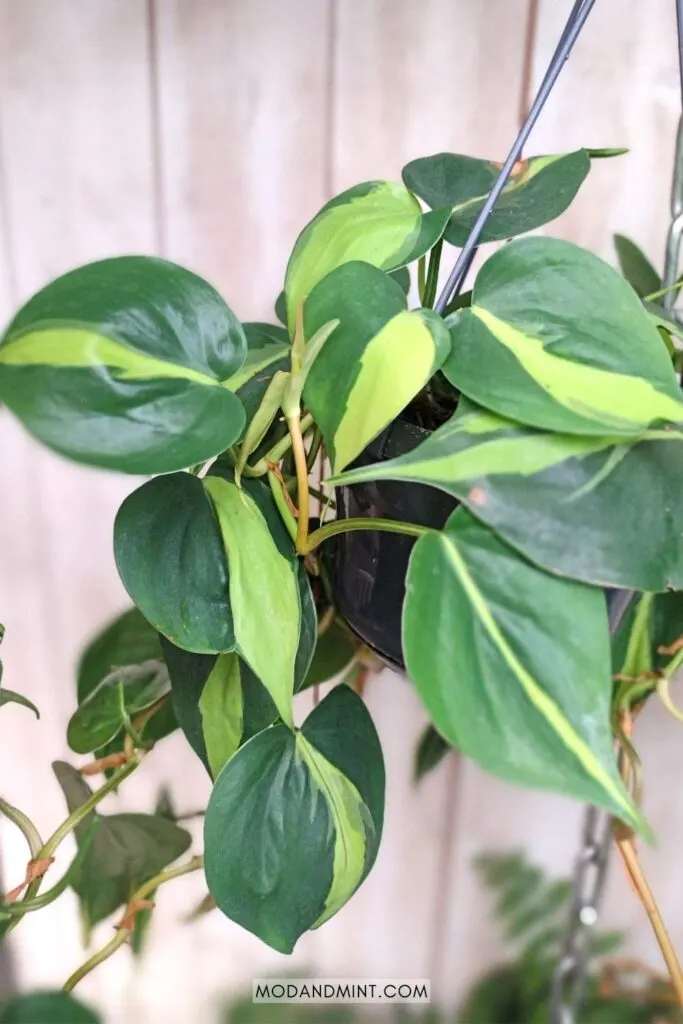
Want to buy a Philodendron Brasil? Find it for sale on Amazon!


Philodendron Hederaceum var. Brasil
The Philodendron Brasil was discovered in, yes, Brazil, in a controlled environment by Ruben Ernesto Acosta. Officially known by its botanical name, Philodendron hederaceum var. brasil, and patented as Philodendron scandens oxycardium var. brasil, its previous scientific name.
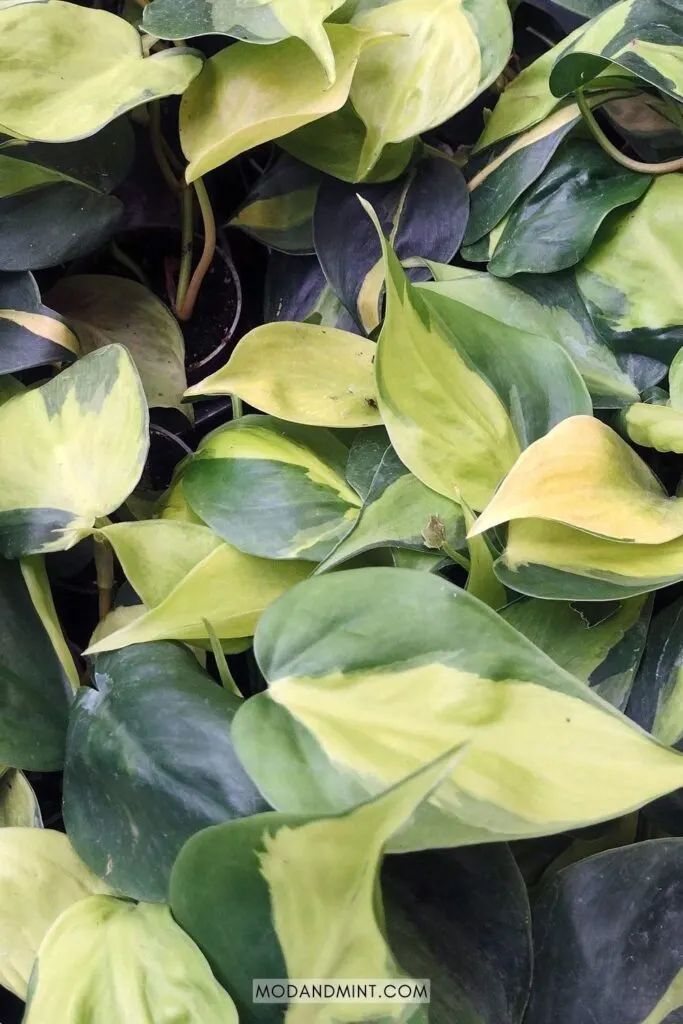
The vibrant variegated leaves have a yellow, lime-green stripe running down their center. This coloring and their resemblance to the Brazilian flag is what gave this plant its name.


Need a plant care refresher? Check out the Beginners Guide to Houseplant Care.
Light Requirements
Indoors, the Philodendron brasil plant prefers bright, indirect sunlight. A good spot is near an east-facing or north-facing window.
It can tolerate lower light situations. But semi-shade may cause the leaves to stay smaller, and maybe lose the variegation. Vines may also grow leggy with more space between the leaves reaching for the light.
Avoid too much direct sunlight, especially on hot summer days. Dry, brown spots on the leaves can be a sign of sunburn. Move your plant further away from the window, or filter the light with a sheer curtain.


Watering


In your home, water your Philodendron Brazil regularly to keep the soil slightly damp. The soil should feel like a wrung-out sponge.
If the soil feels moist, don’t water but wait one or two days and check again. If the soil is dry, go ahead and water thoroughly to saturate all of the soil. Allow all excess water to drain out of the bottom of the pot. Then allow the top layer of soil to dry out before watering again.
Overwatering can lead to yellow leaves and root rot, while underwatering can cause the leaves to droop, wilt, and dry out. Leaves should feel firm.
If in doubt, don’t water yet. An underwatered plant is easier to revive than an overwatered plant.

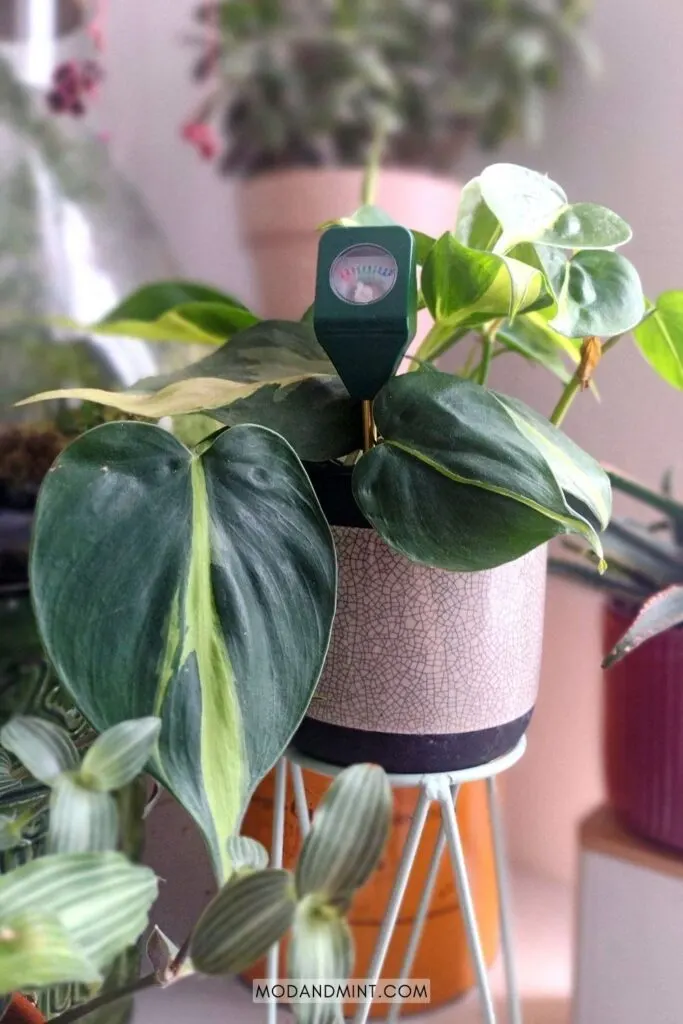
If you are uncertain, you can use a moisture meter to help you out with when to water. And read up on the basics of watering your indoor plants.


Fertilizer
Use a diluted liquid plant fertilizer to feed your Brasil Philodendron once a month in spring and summer. There are also fertilizers available specially formulated for Philodendron plants.
Be sure the soil is damp before fertilizing and don’t fertilize in winter when growth slows down.
Also never fertilize if your plant is recently repotted or is having problems. Fertilizer gives your plant a boost of nutrients when it is actively growing. It is not plant medicine.
Newly bought or recently repotted plants don’t need to be fertilized for at least the first 4-6 months. The potting mix usually already has slow-release fertilizer in it.


Humidity
The Philodendron Brasil likes warm temperatures and moderate to high humidity.
It can grow and adapt to average household humidity levels. However, they will do better if you raise the humidity.
Brown, crispy leaf tips are often a sign that your Philodendron needs more humidity.
A good place for a Philodendron brasil is in a bathroom or kitchen with a bright window. The steam from the shower or cooking will provide your plant with the humidity it loves.
The best way to raise the humidity is to place a small humidifier near your plant.


Philodendron Brasil Trailing vs Climbing


The trailing vines make this a great indoor hanging plant. But in nature, Philodendron plants use aerial roots to climb up on tree trunks and branches.
Indoors you can give your Brasil climbing support in the form of a moss pole.
Place the pole in such a way that the aerial roots are touching it, or at least are very near to it. Mist frequently so the roots can attach themselves more easily.
Read more: How to attach your plant to a moss pole!

Propagation
As mentioned before, the Philodendron brasil is patented, and patented plants are prohibited from propagation by U.S. law. Just like the Pothos Manjula and the Pothos NJoy. But unlike those patents, the Philodendron Brasil patent has already expired back in 2020. So go ahead, and let those cuttings root!
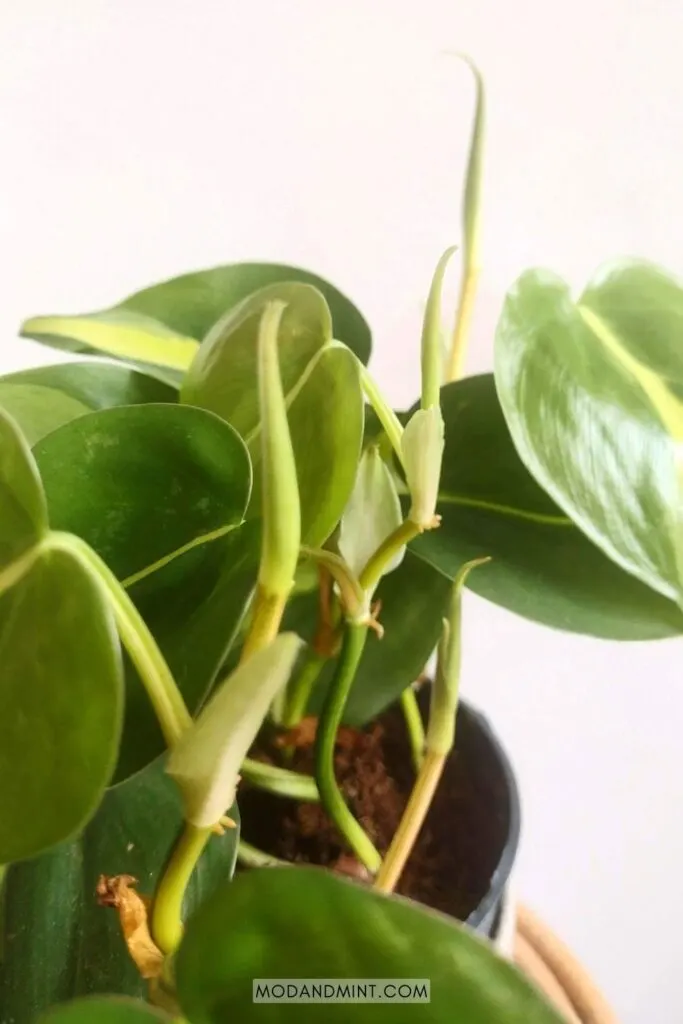
The easiest way to propagate a Philodendron Brasil is by taking stem cuttings and rooting them in water or soil.
Simply take a stem cutting with a few leaves. Remove the leaves from the lower part of the cuttings.
- To water propagate, place the cuttings in water and keep them in bright, indirect light. Change the water regularly and transplant to soil when roots have grown to about 1 – 2 inches.
- To propagate in soil, plant the cuttings in a small pot with well-draining soil. Keep in bright, indirect light. Mist or water very sparingly until you see new growth.
Roots grow relatively fast on this plant, usually in about 1-2 weeks. But you can still use a rooting hormone powder to speed up the propagation process and help in growing stronger roots.
Propagation may be done at any time of year but is best done during the active growing period in spring or early summer, as in winter growth slows down. The warmer weather and longer daylight will help encourage new growth.
While you’re at it, prune off any yellow or damaged leaves and leggy stems to encourage new growth.
Want to learn more about plant propagation? Read the complete guide explaining the 6 different ways to propagate all your plants.

Repotting
Repot in spring in a pot one size up when roots have filled the pot, and or when you see roots growing from the bottom of the pot.
Even if your plant still has room to grow, you want to refresh the soil every two to three years. The soil will have lost all its nutrients and will need to be replaced with fresh soil.
A well-draining special aroid potting mix is a good choice for your brasil Philodendron.
Gently remove your plant from the pot. If needed tap the pot to loosen the soil and roots. Support the plant in one hand, and use your other hand to carefully take the pot off.
Make sure the new pot has drainage holes on the bottom. This is a must. You want any excess water to have a way out.
Read more: How to repot your houseplants.


Is Philodendron Brasil Toxic to Cats?
The Philodendron Brasil, like many other Philodendrons, is considered slightly toxic to cats.
The plant contains calcium oxalate crystals which can cause irritation to the mouth and throat, excessive drooling, vomiting, and difficulty swallowing if ingested.
Although it is uncommon for pets to get seriously hurt from eating plants, keep this one out of reach of children and pets.
Read more: Keeping Your Pets Safe: Identifying Toxic Plants in Your Home.


Love Philodendron plants? Check out the care guides for the Philodendron melanochrysum, Philodendron Birkin, or the Philodendron pink princess.